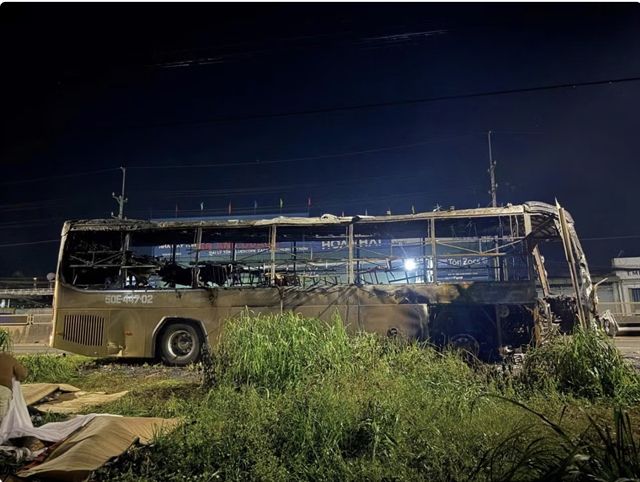
A devastating fire claimed seven lives aboard a sleeper bus in southern Vietnam's Dong Nai Province in the early hours of Monday, marking the second fatal coach accident to strike the country within seven days. The incident occurred at approximately 2:30am when the vehicle, operated by 41-year-old driver Tran Thanh Hai from Khanh Hoa Province, veered off National Highway 1 in Hung Thinh Commune and struck a roadside embankment. The coach subsequently collided with another embankment before the driver managed to bring the heavily damaged vehicle to a halt, but not before disaster had already set in motion.
With 33 people aboard including the driver, the sleeper bus was en route from Dong Nai to Ho Chi Minh City when flames erupted at the front of the vehicle. Witnesses and investigators indicate that the fire spread with alarming speed through the passenger compartment, rapidly consuming the interior and trapping multiple travellers in an inferno. While some passengers managed to escape the burning wreckage, others found themselves unable to flee as the blaze intensified beyond their capacity to react or navigate towards exits.
Local residents demonstrated considerable courage and initiative in the immediate aftermath, converging on the scene with whatever firefighting equipment they could locate. Using portable fire extinguishers and improvised tools, these neighbours attempted desperately to contain the spreading flames and rescue those still trapped inside. Their efforts, though valiant, proved insufficient against the ferocity of the fire, which had already begun consuming the entire structure of the bus by the time organised emergency services could arrive and deploy professional firefighting resources.
Authority response came swiftly following emergency calls to the dispatch centre. Fire brigades, rescue teams and specialised equipment were mobilised and dispatched to the location in Hung Thinh Commune, where emergency crews launched coordinated efforts to extinguish the blaze, extract survivors, and manage traffic control along the vital National Highway 1 corridor. The combined intervention of these professional responders eventually brought the conflagration under control, though by that point the sleeper coach had been reduced to a charred and almost completely destroyed wreck.
The Hung Thinh Commune People's Committee confirmed through preliminary reports that seven individuals had perished in the tragedy. The remaining survivors were transported to Thong Nhat General Hospital where medical staff provided treatment for injuries sustained during the incident. Of those hospitalised, at least one person who had sustained only minor injuries was subsequently discharged, indicating that while the death toll was severe, the survival rate among those who managed to escape the initial fire was more encouraging.
Investigative authorities have sealed the accident scene for forensic examination and evidence collection. Their ongoing investigation is focused on determining the precise cause of the fire, which may have resulted from the collision impact, fuel system rupture, electrical fault, or mechanical failure. Simultaneously, investigators are working to formally identify all seven victims and establish a comprehensive chronology of events surrounding the collision and subsequent conflagration.
This tragedy underscores a troubling pattern of serious coach accidents plaguing Vietnam's transport infrastructure. Just one week prior, on July 17, another sleeper bus returning travellers from Thien Cam beach in Ha Tinh Province to Thai Nguyen in the north veered catastrophically off an expressway in Hanoi and overturned, killing five people and leaving dozens more injured. The two incidents within such a short timeframe highlight systemic concerns regarding driver fatigue, vehicle maintenance standards, road safety protocols, and the regulatory oversight of long-distance coach operations across the country.
For Malaysian travellers and regional observers, these recurrent disasters in neighbouring Vietnam serve as a sobering reminder of the safety disparities that can exist in regional transport services. While sleeper buses represent a cost-effective and popular mode of intercountry travel throughout Southeast Asia—including routes connecting Malaysia to Vietnam—these incidents demonstrate the critical importance of passenger vigilance when selecting transport operators and the necessity of stronger international standards and enforcement mechanisms governing long-distance coach safety across the ASEAN region.
The frequency of such accidents has intensified public concern about whether existing regulatory frameworks adequately address the known hazards associated with long-distance overnight travel. Issues such as driver working hour limitations, mandatory rest periods, vehicle inspection regimes, and emergency equipment standards require continuous reassessment and strengthening. Furthermore, the apparent speed at which these fires spread raises questions about cabin design, fire suppression systems, and emergency exit accessibility in sleeper coach configurations.

