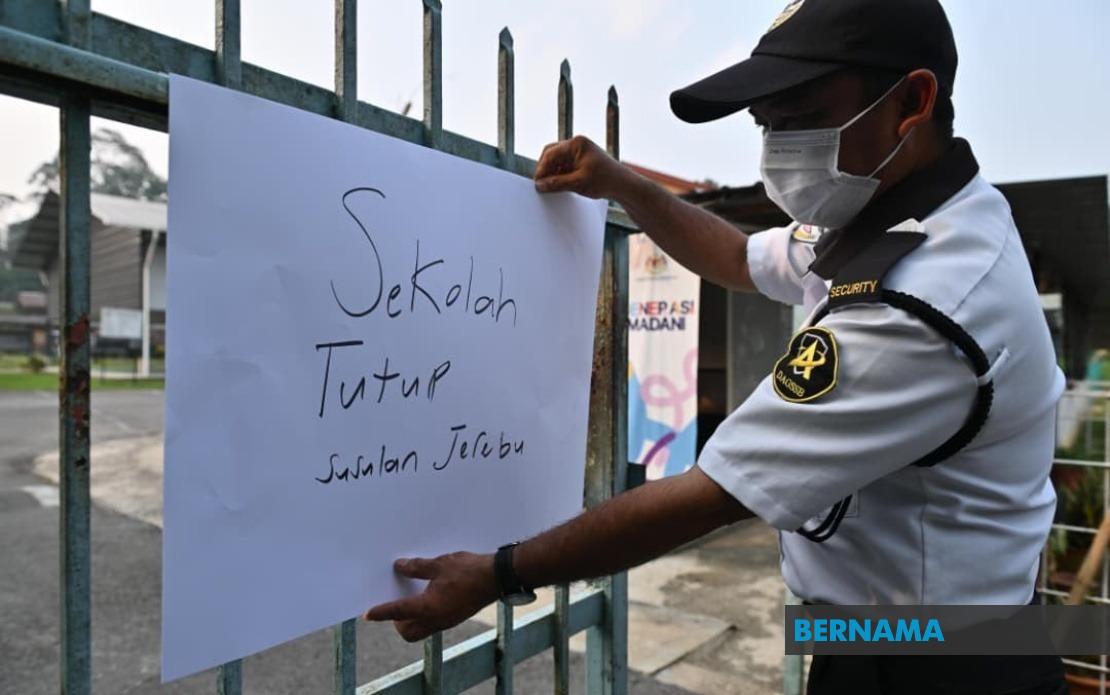
Air quality deterioration in Sarawak's Serian district has forced education authorities to prolong the suspension of classes through Friday, intensifying concerns about the region's recurring haze crisis. The Sarawak State Education Department announced the extension following consultations with school leadership across primary and secondary institutions under the Serian District Education Office's jurisdiction, reflecting escalating environmental pressures affecting the state's education sector.
The decision underscores the operational strain that transboundary air pollution places on Malaysia's educational infrastructure. By maintaining closures rather than attempting normal operations, administrators aim to shield teachers, students, and families from unnecessary exposure to hazardous particulates while reducing the logistical burden on institutions already managing crisis protocols. This approach acknowledges that continued classes would compound difficulties for school staff tasked with implementing safety measures whilst simultaneously delivering instruction, whilst placing additional stress on households navigating childcare arrangements during unexpected disruptions.
As of 4 pm on August 13, Serian's Air Pollution Index registered 178, firmly within the unhealthy category according to the Air Pollution Index Management System. This reading reflects the severity of smoke incursion originating from sources beyond Malaysia's borders, a recurring phenomenon that has periodically disrupted economic and social activities across Borneo. The persistence of such levels necessitates ongoing monitoring rather than isolated policy responses, highlighting how environmental challenges in Southeast Asia demand sustained attention from multiple government levels.
The Sarawak State Education Department's statement emphasized that educational institutions must maintain active awareness of real-time air quality data by consulting APIMS regularly, enabling administrators to make informed decisions about operational continuity. This responsibility places burden squarely on school principals and headmasters, who must balance educational continuity with student welfare whilst operating under uncertain environmental conditions. The directive essentially delegates critical decision-making to individual institutions, reflecting both resource constraints and the need for adaptive management during environmental emergencies.
For Malaysian policymakers and educators monitoring the situation, the Serian closures illustrate how effectively entrenched cross-border haze has become as a disruptive force in the region. Unlike isolated weather events, transboundary smoke episodes extend across multiple countries and persist for weeks, creating cascading complications for sectors ranging from transportation to healthcare to education. Students in boarding facilities face particular vulnerabilities, as they remain isolated from family support systems whilst enduring poor air quality—a consideration explicitly cited by authorities in justifying the closure extension.
The broader implications extend beyond temporary school disruptions. Repeated haze episodes impose cumulative educational losses, particularly for students in border regions who experience closures with greater frequency and duration than peers in unaffected areas. This geographic disparity in learning continuity creates equity concerns, potentially widening achievement gaps between students in affected versus unaffected districts. For families with limited alternative childcare options, sudden closures also generate economic friction as working parents scramble to adjust schedules.
Sarawak's vulnerability to transboundary haze reflects its geographic position within the Maritime Southeast Asian corridor, where agricultural burning in neighbouring jurisdictions regularly produces smoke that drifts across international borders. Unlike localized air pollution that individual nations can address through domestic regulation, cross-border haze requires coordinated regional responses and ongoing diplomatic engagement. Malaysia has repeatedly raised concerns through ASEAN channels, yet solutions remain elusive given competing economic and agricultural interests in source countries.
The air quality situation in Serian carries implications for broader planning across Sarawak's education sector. Authorities must consider whether current contingency protocols—emphasizing reactive closures—represent optimal responses, or whether preventative measures such as indoor air filtration systems in schools might reduce future disruptions. The costs of such infrastructure improvements would require substantial investment, yet the cumulative expenses of repeated closures, lost instructional time, and administrative burden suggest that proactive measures warrant serious evaluation.
Parents and students affected by the extension should monitor APIMS updates directly, as the department indicated that further information will be released as conditions evolve. The timing of announcements remains critical, as school families require sufficient notice to adjust arrangements. Schools themselves must prepare contingency plans for potential online instruction or alternative scheduling should closures extend beyond Friday, ensuring that the extension does not translate into unrecoverable learning losses.
The Serian situation exemplifies how environmental challenges increasingly intersect with social and economic governance across Malaysia. As climate variability intensifies and agricultural practices in the region continue generating biomass burning, educational systems must develop greater resilience and flexibility. This requires not only reactive crisis management by individual schools but systematic preparation at district and state levels, including investments in air quality monitoring, infrastructure improvements, and potentially regional coordination efforts aimed at addressing root causes rather than merely managing symptoms of environmental disruption.

