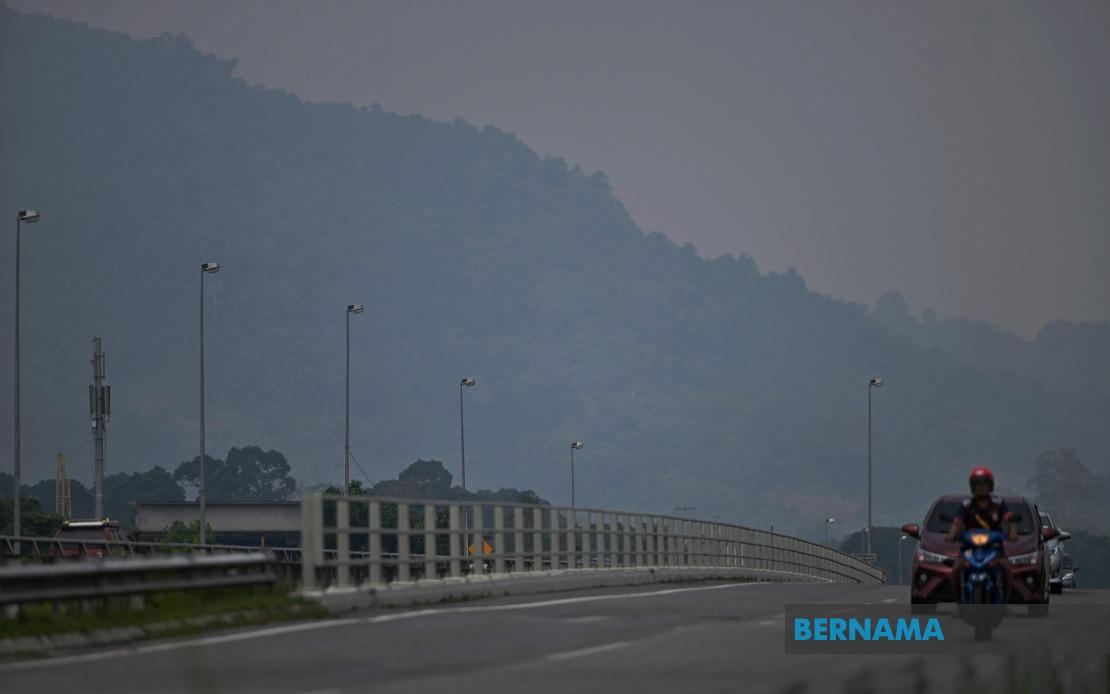
Air quality has deteriorated sharply across Sarawak, with Serian recording a critical Air Pollution Index reading of 227 as of 2 pm on August 21, placing it firmly in the very unhealthy category. The crisis has widened to encompass ten major population centres across the state, each reporting pollution levels that warrant caution and preventive measures from residents and businesses. This represents a coordinated atmospheric event rather than isolated pockets of poor air quality, reflecting the regional nature of haze challenges that regularly plague Southeast Asia during certain seasons.
The spatial distribution of unhealthy readings tells a story of haze movement patterns across Sarawak's diverse geography. Sri Aman emerged as the second-most affected location with an API of 187, trailed by Kuching at 176, Samarahan at 175, and Sarikei at 174. Further inland and downriver, Sibu registered 157, while the industrial zones of Bintulu and Samalaju both hit 154. The more remote settlements of Kapit and Mukah, traditionally less exposed to transboundary pollution, recorded 130. This clustering of readings reflects the atmospheric corridor through which smoke has been channelled, driven by prevailing wind patterns and topographical features that funnel pollutants along established pathways.
According to Azuri Azizah Saedon, deputy director-general (development) at Malaysia's Department of Environment, the deterioration stems from haze advancing from multiple directions, overwhelming the state's air quality in a matter of hours. The timing coincided with the release of satellite data from the ASEAN Specialised Meteorological Centre, which had detected 288 hotspots across Kalimantan, Indonesia's portion of the island, on August 20. Additional hotspots were identified in Sumatra with 53 fires, while Malaysian territory saw only two confirmed hotspots—one each in Sarawak and Terengganu—indicating that the primary source of pollution originates beyond Malaysia's borders.
The meteorological picture painted by the ASMC's regional analysis reveals the conditions enabling rapid haze accumulation. Most of southern ASEAN experienced sustained dry weather on August 21, with the notable exceptions of northeastern Borneo and northern Sumatra, where rainfall provided temporary relief from accumulating smoke. This geographical contrast is consequential: while parts of Sarawak remained dry and vulnerable to smoke accumulation, the very regions producing hotspots in West Kalimantan and nearby areas experienced conditions favourable to continued fire spread. The ASMC's regional haze map documented moderate to dense transboundary smoke plumes originating from West Kalimantan and advancing northward directly into western Sarawak—the precise pathway explaining why areas like Serian, positioned in that trajectory, experienced the worst impacts.
The scale of fire activity across Kalimantan underscores why Malaysian authorities remain perpetually vulnerable to transboundary haze events. With nearly 300 hotspots detected in a single province, the volume of smoke generation far exceeds what local wind patterns and atmospheric mixing can quickly disperse. Even if Indonesia implements enforcement against illegal open burning, the sheer extent of agricultural land clearing and slash-and-burn cultivation across Kalimantan creates a massive source inventory. For Malaysia, particularly Sarawak, this means periodic submission to air quality crises driven by factors beyond its direct control, necessitating reactive rather than proactive pollution management strategies during critical periods.
In response to the escalating situation, Malaysia's Department of Environment has activated both the National Open Burning Action Plan and the National Haze Action Plan, coordinating responses across multiple government agencies. These frameworks represent institutional acknowledgment that haze management requires sustained, multi-departmental effort rather than ad-hoc responses. Enhanced enforcement patrols have been deployed to areas with elevated open burning risk, while API monitoring has been intensified to track developments in real time. The activation of these plans signals to the public and private sectors that heightened vigilance regarding combustion activities is expected, even as authorities acknowledge that much of the current pollution originates beyond Malaysia's territorial reach.
For Sarawak residents and businesses, the public health implications of sustained very unhealthy and unhealthy readings carry immediate practical consequences. Individuals with respiratory vulnerabilities, including children, elderly persons, and those with chronic conditions, face elevated health risks during such episodes. Schools and outdoor activities face potential disruption, while workers in exposed occupations experience reduced productivity and occupational health pressures. Economically, sectors dependent on visibility—tourism, aviation, and outdoor recreation—suffer tangible losses during haze episodes, a cost borne by local communities rather than the entities responsible for the underlying fire activity.
The Department of Environment has appealed to the public to refrain from any open burning activities, recognising that even small-scale local fires compound the atmospheric burden during periods when transboundary pollution is already critical. Simultaneously, emergency reporting mechanisms have been publicised, directing citizens to contact the Fire and Rescue Department at 999 or the DOE's dedicated hotline at 1-800-88-2727 for suspected illegal burning or fires. This dual approach—prevention coupled with rapid response capability—represents the practical reality of haze management in Malaysia: authorities cannot eliminate transboundary pollution sources unilaterally, so they focus on controlling domestic contributions while building resilience and response capacity.
From a regional perspective, Sarawak's experience exemplifies the broader haze challenge confronting Southeast Asia, particularly during dry seasons when agricultural burning, land clearing, and forest fires proliferate across Indonesia. The ASEAN framework, including the ASMC's monitoring capabilities, provides early warning systems and atmospheric data, yet enforcement mechanisms remain constrained by national sovereignty and enforcement capacity challenges within source countries. For Malaysia, sustained diplomatic engagement and bilateral cooperation with Indonesia on fire prevention and haze mitigation remains essential, even as domestic preparation and emergency response frameworks continue developing.
The crisis unfolding across Sarawak's ten affected areas underscores an uncomfortable seasonal reality: regardless of Malaysia's own environmental stewardship, its air quality remains hostage to weather patterns and fire activity across a shared island. This structural vulnerability argues for continued investment in air quality monitoring infrastructure, public health preparedness, and public communication systems that enable residents to make informed decisions about outdoor activities and health precautions. While transboundary haze cannot be eliminated through Malaysian actions alone, the capacity to understand, forecast, and respond to such episodes remains improvable through sustained institutional and technological investment.

