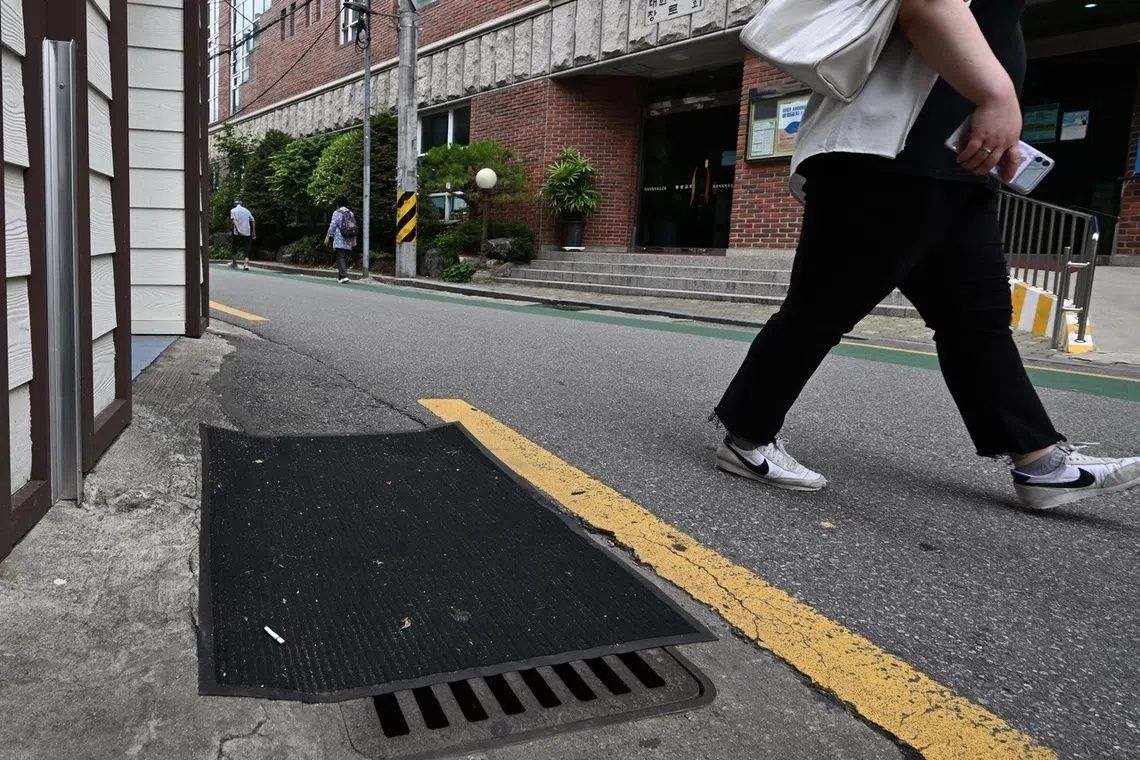
Visitors and residents of Seoul have grown accustomed to an unpleasant surprise: a sudden waft of foul odour as they navigate the city's bustling sidewalks or stand waiting for public transport. These sharp, fleeting smells—often likened to rotting eggs—vanish almost as quickly as they appear, yet they remain persistent enough to generate continuous grumbling across Korean and international online forums. The complaints reveal a tension between Seoul's image as a cutting-edge global metropolis and the reality of infrastructure challenges that the municipal government has struggled to resolve.
According to a 2025 report by the Seoul Institute, sewer-related odours account for approximately half of all civil complaints the city receives about bad smells. This finding underscores the scale of the problem, even as the city has invested considerable resources into odour reduction initiatives launched in 2015. The trajectory of complaints tells a sobering story: after initial improvements brought the number down from 3,095 in 2015 to 1,660 in 2020, figures climbed again to 2,302 by 2024. This rebound suggests that whatever solutions Seoul has implemented remain insufficient to address the underlying causes, raising questions about whether the current approach can ever fully solve the issue.
The primary culprit is hydrogen sulfide, a colourless gas that emerges when organic matter in sewage decomposes without sufficient oxygen. The chemistry is straightforward, but the origins are rooted in Seoul's urban development trajectory. As the city expanded rapidly, its sewer infrastructure could not keep pace with growth. Many buildings installed septic tanks as a stopgap measure, allowing solid waste to settle before wastewater flows into underground municipal sewers. However, this interim solution leaves dissolved organic compounds in the liquid waste—and those compounds eventually reach the main sewer network, where stagnant conditions in pipes create ideal environments for hydrogen sulfide production.
Weather patterns significantly influence odour intensity. During periods of heavy rainfall, increased water flow through the system helps flush decomposing matter downstream and prevents gas accumulation. By contrast, hot, dry spells with minimal rainfall create stagnant conditions where hydrogen sulfide builds up in pipes and escapes through storm drains, maintenance access points, and other openings. This seasonal dimension means Seoul's odour problem fluctuates in predictable ways, yet the city has struggled to develop targeted interventions that account for these patterns.
A more fundamental structural challenge complicates solutions further. Seoul operates a combined sewer system where wastewater from buildings and stormwater from streets share the same underground pipes. This design, common in many older cities, creates operational inefficiencies and contributes substantially to odour formation. Since the early 1990s, Seoul has recognised that separating these flows into distinct pipe networks would reduce problems, yet progress has been glacially slow. As of 2025, only 20.4 per cent of the city's total sewer network had been converted to a dual system. The obstacles are substantial: replacing underground infrastructure across a dense, developed metropolis is enormously expensive, disruptive, and technically complex, making it unattractive to elected officials facing budget constraints and shorter time horizons than the multi-decade commitment such projects require.
City officials acknowledge the complexity. One Seoul municipal representative noted that odours stem from diverse, interrelated factors and require case-specific expert diagnosis rather than one-size-fits-all solutions. The government has identified key culprits including drops in wastewater flow rates and accumulation of sediment inside sewer pipes. To address these, authorities are considering structural modifications and dredging operations. Yet the reactive nature of this approach—responding to accumulated sediment only after problems emerge—differs markedly from the proactive asset management practiced by leading international cities.
Ki Dong-won, a researcher at the Seoul Institute, crystallises the core weakness in Seoul's current strategy. The city relies predominantly on complaints to identify problems, which means authorities react rather than anticipate. More critically, Seoul lacks predictive models capable of forecasting how sewer odours disperse into the atmosphere above ground or understanding diffusion patterns. This knowledge gap makes it nearly impossible to identify vulnerable neighbourhoods beforehand or design targeted interventions. Sewer odour mapping projects are underway, but they remain disconnected from performance metrics or evaluation standards for mitigation facilities, leaving the city without rigorous benchmarks to assess whether investments are achieving measurable results.
The legal framework compounds these limitations. Current regulations focus on managing odours that exceed allowable thresholds rather than mandating proactive prevention. This compliance-based rather than performance-based approach provides limited incentive for municipal government to pursue ambitious, transformative solutions. Experts argue that a world-class city like Seoul should adopt a more aggressive posture, establishing clear long-term objectives and allocating resources accordingly rather than managing the problem reactively as complaints accumulate.
Park Seok-soon, an environmental engineering professor emeritus at Ewha Womans University, proposes a pragmatic interim solution while the city pursues longer-term infrastructure transformation. Rather than waiting for the expensive and disruptive conversion to separate sewer systems, Seoul could artificially circulate water through pipes using hydrants or other facilities to prevent wastewater stagnation and decomposition. This approach mirrors practices in Japanese cities and other developed nations, many of which continue operating combined systems but manage them far more rigorously. Park's suggestion highlights that Seoul's fundamental challenge may not be the system's design alone, but rather the intensity and sophistication of operational management.
For readers across Southeast Asia, Seoul's experience carries instructive value. Many regional cities face similar infrastructure pressures as rapid urbanisation outpaces capacity, and the costs of addressing legacy systems mount over time. Seoul's struggle illustrates how initial design compromises—septic tanks as temporary measures, combined sewers deferred rather than redesigned—accumulate into persistent problems requiring far greater expenditure to resolve. The city's halting progress toward modernisation suggests that once infrastructure systems become entrenched, retrofitting them demands political will and financial commitment that often exceeds what governments can muster, especially when daily operations consume most attention and budget.
Moving forward, Seoul faces a choice between incremental, targeted improvements that may extend the life of current systems without fundamentally resolving problems, and the more ambitious undertaking of systematic infrastructure transformation. The answer will likely combine both: more rigorous management of existing networks, acceleration of the sewer separation programme despite high costs, and development of predictive tools to guide investment. For now, residents and visitors should expect that occasional wafts of sewer odour will remain part of the Seoul experience—a reminder that even global cities built on advanced technology must ultimately contend with the unglamorous reality of aging infrastructure and the difficult choices about whether and how quickly to modernise.

