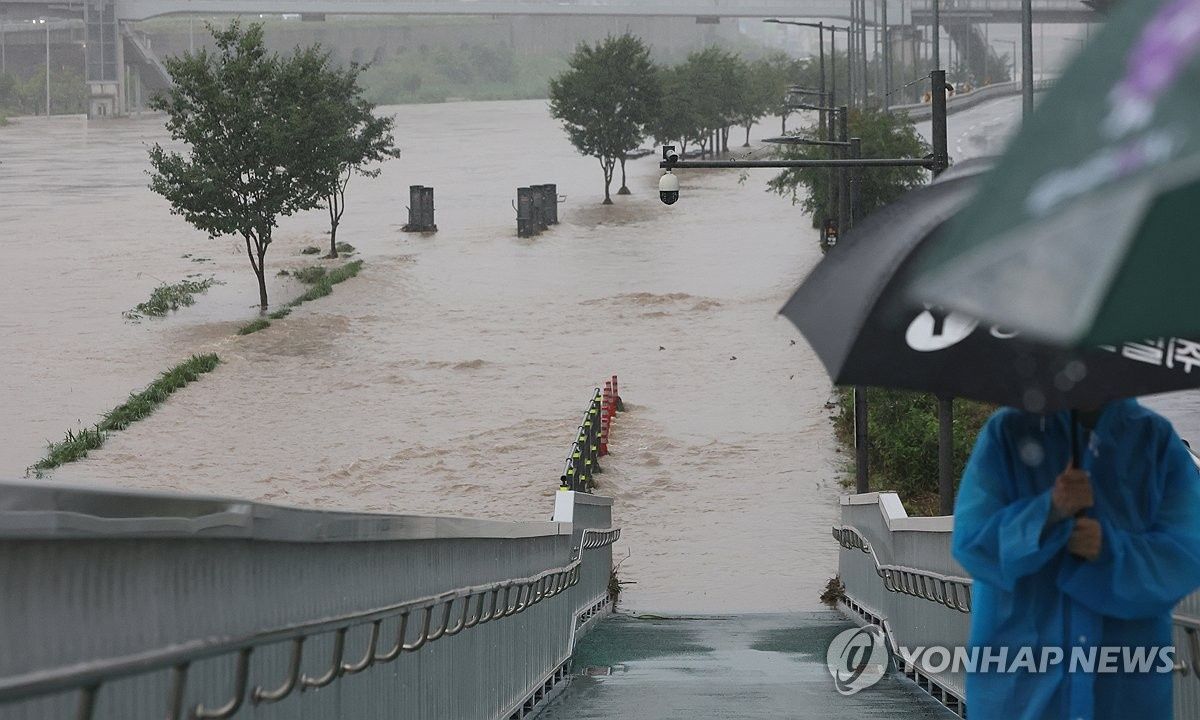
South Korea's capital region and surrounding eastern province experienced a deluge of unprecedented intensity overnight that overwhelmed drainage infrastructure and left hundreds of properties damaged. Seoul and Gangwon Province bore the brunt of the system between midnight and mid-morning on Saturday, with the Central Disaster and Safety Countermeasure Headquarters documenting comprehensive damage across the waterlogged landscape. The torrential conditions created a cascade of secondary hazards—submerged thoroughfares, collapsed vegetation, and destabilized terrain—that persisted well into daylight hours and prompted a coordinated emergency response from multiple government agencies.
Meteorological data revealed the staggering volume of water that descended on the region during the affected period. Paju recorded 192.5 millimetres, while nearby Dongducheon captured 189.5 millimetres, with Pocheon, Gimpo, and Cheorwon receiving 179, 166.5, and 159.5 millimetres respectively. These measurements far exceed typical rainfall volumes for comparable timeframes and underscore the exceptional nature of the weather system. The concentrated nature of the precipitation within a nine-hour window rendered conventional drainage systems inadequate, converting roads into temporary waterways and turning residential basement areas into collection points for runoff and debris.
The material toll of the overnight inundation extended across both urban and natural environments. Authorities catalogued 148 separate incidents involving flooded residences and thoroughfares, while an additional 392 cases involved downed trees and scattered debris obstructing pathways and streets. The aggregate count of approximately 540 property damage incidents reflects the broad geographical footprint of the disaster and the diversity of affected infrastructure. From submerged vehicles to water-damaged furnishings and structural compromise, the cumulative financial impact on residents and municipal services remained under assessment as cleanup operations commenced.
Despite the scale of the physical destruction, no deaths or serious injuries were initially reported from the overnight event. This fortunate outcome stemmed partly from precautionary evacuations that authorities implemented in advance of the heaviest precipitation. Ninety-five individuals from 44 separate households across six municipalities were temporarily relocated to safer locations, a preventative measure that officials credited with averting potential tragedy. The absence of fatalities, however, provided limited consolation to property owners confronting the aftermath of flooding and to communities facing extended service disruptions.
Access restrictions rippled across South Korea's outdoor recreation sector as authorities prioritized visitor safety over operational continuity. Ten national parks, including the popular Mount Bukhan destination in the Seoul metropolitan region, closed their gates to prevent hikers from encountering hazardous conditions on saturated trails and unstable slopes. Beyond the parks themselves, authorities shuttered 275 specific hiking pathways across the affected zones. The recreational suspension extended to maritime transport, with seven ferry services operating from the western coastal region suspended due to elevated sea conditions and visibility constraints caused by the atmospheric system.
Alerts and warnings remained active throughout the morning as meteorologists projected continued precipitation. Heavy rain alerts covered ten separate regions within Gangwon Province, while a more specific mudslide warning was issued for Pocheon, indicating terrain stability concerns in that locality. The persistence of these warnings signalled that the immediate threat had not entirely subsided and that secondary hazards—particularly earth movement on steep slopes saturated by the overnight deluge—remained plausible.
Forecast models indicated that the weather system would maintain its intensity through Sunday, with accumulations potentially reaching 300 millimetres per hour in particularly exposed areas. Such concentrations would represent dangerous conditions that could overwhelm additional drainage infrastructure and trigger rapid-onset flooding in low-lying zones. The extended timeline of heavy precipitation raised concerns about cumulative soil saturation and the structural integrity of embankments and retaining walls throughout the affected provinces.
Prime Minister Han Seong-sook convened an emergency response meeting to coordinate governmental resources and expedite recovery efforts. She directed authorities to mobilize equipment and personnel with urgency, emphasizing the need to minimize ongoing disruption to affected communities. While acknowledging the fortunate absence of fatalities, the prime minister expressed sympathy for residents confronting property losses and displacement. Her statement underscored the administration's recognition that even disaster responses that avoid loss of life still inflict substantial hardship on ordinary households and small businesses lacking comprehensive insurance coverage.
The prime minister specifically highlighted vulnerability in two additional provinces that faced incoming precipitation during subsequent hours. Chungcheong and Gangwon provinces were flagged as zones requiring enhanced preparedness for potential landslides, given the combination of forecasted heavy rainfall, topographical characteristics, and soil conditions typical of central and northeastern South Korea. Officials were instructed to position emergency response teams strategically and maintain heightened monitoring of slopes and waterways that displayed geomorphological susceptibility to failure under extreme hydrometeorological stress.
The overnight flooding episode underscores persistent challenges facing rapidly urbanized East Asian nations where dense population concentrations increasingly encounter extreme weather events amplified by climate variability. Infrastructure investment in drainage capacity, floodproofing standards for critical facilities, and early warning systems represents an ongoing policy priority for Seoul and provincial governments. The incident also highlights the interdependence between urban development patterns, natural landscape modification, and resilience to meteorological extremes—a dynamic particularly relevant to Malaysia and other Southeast Asian nations experiencing similar climate pressures and rapid urbanization trajectories.

