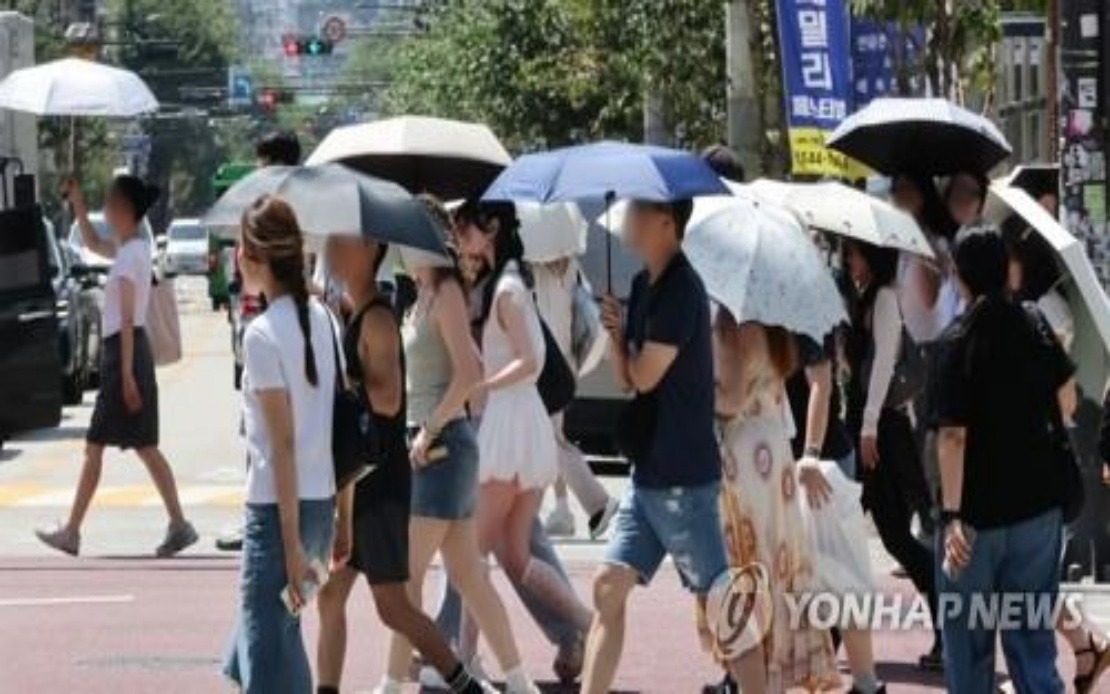
South Korea has been plunged into one of its most oppressive heat waves in recent years, with temperatures shattering the 40°C barrier across multiple cities on Friday. The Korea Meteorological Administration confirmed that the mercury climbed to 40.2°C in Seoul's northern Nowon district at mid-afternoon, a sobering reminder of the country's vulnerability to extreme weather patterns that have intensified in recent years. The reading represents a significant milestone: it is the first time since August 1, 2018, when the capital endured a sweltering 41.8°C, that Seoul has crossed this dangerous threshold.
Beyond the capital, the heat wave demonstrated its unrelenting geographic reach. Hanam's Deokpung district, situated just southeast of Seoul, recorded an even more punishing 40.7°C in the early afternoon, while Gwangyang, a city some 300 kilometres further south, also breached the 40°C mark at 40.2°C. In the interior regions, temperatures remained consistently punishing. Yeongweol county in Gangwon Province and Yeoju in Gyeonggi Province both struggled through conditions of 39.8°C, falling just short of the national-level emergency threshold but nonetheless reflecting the pervasiveness of the heat dome enveloping the entire peninsula.
The scale of this heat event becomes apparent when measured against historical benchmarks. From June 1 through the preceding Thursday, South Korea recorded an average of 14.8 heat wave days—occasions when daytime highs reached 33°C or above—marking the fourth highest frequency for this period since the meteorological service expanded its national observation network in 1973. More alarmingly, the number of tropical nights, defined as periods when minimum temperatures fail to drop below 25°C, reached a record-breaking 13 days. These overnight highs prevent human bodies from recovering during sleep, intensifying health risks and straining cooling systems that operate continuously without respite.
The meteorological administration's response reflects the gravity of the situation. Until Friday evening, Seoul and the eastern and southwestern regions of the country had been operating under a serious heat wave warning, the highest alert level available. This top-tier designation is triggered when apparent temperatures—a measure that accounts for humidity and wind—are projected to reach 38°C or higher, or when daily maximum temperatures hit 39°C or above, within zones already experiencing perceived temperatures of 35°C or higher for at least two consecutive days. The downgrade to an ordinary warning at 6 pm Friday represented a modest acknowledgement that conditions would ease, even if dangerously hot weather would persist.
Looking ahead to the weekend, the Korea Meteorological Administration offered a measured outlook that provides minimal comfort. Saturday morning temperatures are expected to range between 21°C and 26°C across the nation, while daytime highs are forecast to settle between 26°C and 35°C. While these figures represent some respite compared to the Friday extremes, they still leave South Korea solidly within uncomfortable territory, particularly given that many buildings lack the infrastructure and cost-effectiveness of comprehensive air conditioning systems found in countries with more prolonged hot seasons.
For regional observers and policymakers across Southeast Asia, South Korea's heat wave carries cautionary implications. The intensity of this event, combined with the frequency of such episodes in recent years, underscores a broader pattern of climate-driven temperature extremes affecting Northeast Asia. Malaysia, with its equatorial climate, faces different challenges but shares common vulnerabilities regarding heat-related health risks, infrastructure strain, and pressure on electricity grids. The Korean experience demonstrates how even developed nations with advanced cooling infrastructure struggle when heat waves of this magnitude arrive.
The human cost of extended heat exposure extends beyond discomfort. Medical facilities across South Korea have likely experienced surging demand for heat-related illnesses, from heat exhaustion to heat stroke, placing additional burdens on healthcare systems. Elderly citizens living alone in inadequately cooled housing face heightened risk, while construction workers, outdoor laborers, and others without access to air-conditioned environments endure dangerous working conditions. Public infrastructure, from transportation systems to electrical grids, faces stress from simultaneously elevated demand.
The downgrade in warning levels, while technically justified by the forecast improvement, risks creating a false sense of security. Regional meteorologists and public health officials emphasize that even ordinary heat wave conditions demand vigilance, particularly for vulnerable populations. The experience in Seoul and surrounding regions illustrates how the baseline for what constitutes dangerous heat has shifted upward in recent decades, a phenomenon increasingly attributed to broader climate change patterns affecting East Asia.
For Malaysian observers, the Korean heat wave provides important context for understanding how climate patterns evolve. While Malaysia's tropical monsoon climate differs fundamentally from South Korea's temperate pattern, both regions face intensifying extremes. The frequency with which South Korea now records multiple days exceeding 40°C represents an acceleration compared to historical norms, suggesting that the upper bounds of expected temperatures continue to expand. This pattern, if it persists across East and Southeast Asia, could reshape long-term planning assumptions for infrastructure, energy systems, and public health preparedness across the region for years to come.

