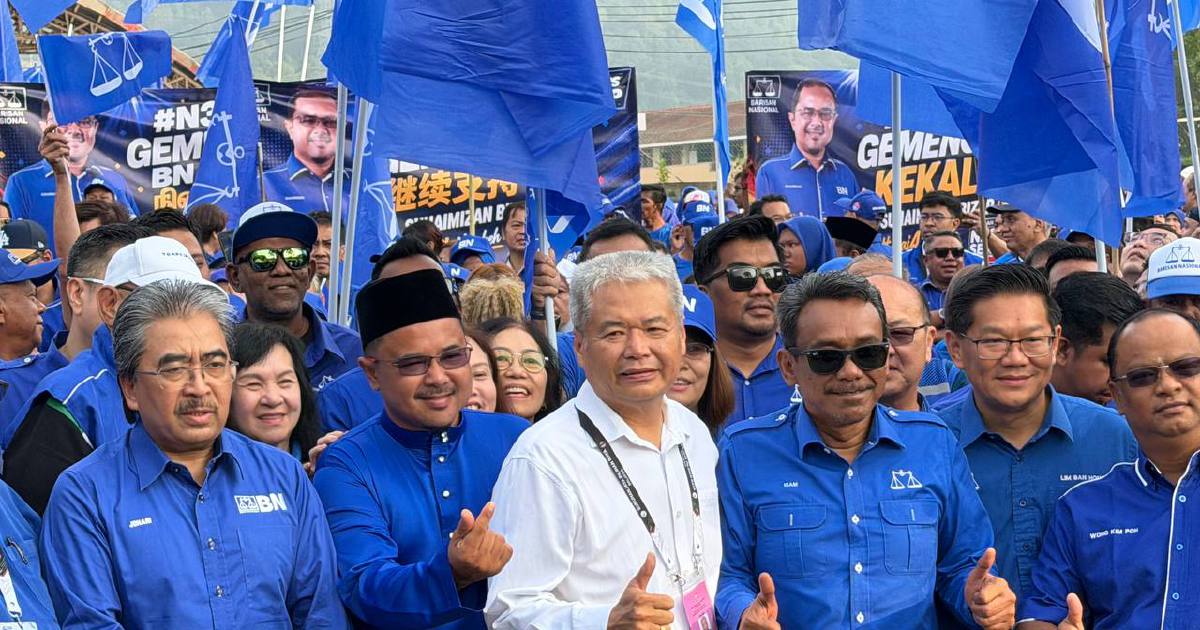
The presence of Umno vice-president Datuk Seri Johari Abdul Ghani and party treasurer Datuk Seri Tengku Adnan Tengku Mansor at Dewan Perdana Tampin on Friday morning signalled the ruling coalition's determination to project organisational strength ahead of the Negri Sembilan election. Their arrival to stand alongside Barisan Nasional candidates reflected a deliberate strategy to mobilise party machinery and demonstrate unified backing for the slate of contenders seeking state assembly seats.
The deployment of senior party figures to nomination centres has become a hallmark of Umno's electoral playbook in recent years. By positioning vice-presidents and treasurers at key campaign venues, the party seeks to convey operational cohesion and signal to grassroots members that leadership is actively invested in the outcome. In Negri Sembilan specifically, where Barisan Nasional has faced competitive challenges, this show of force carries particular significance as a message to the electorate about the coalition's seriousness and preparedness.
Tampin, a parliamentary constituency in Negri Sembilan's Jelebu district, has historically been a contested seat where voter sentiment can shift based on local issues and national political tides. The nomination centre serves as the formal venue where candidates lodge their papers and officially enter the race. The attendance of party heavyweights transforms what would otherwise be a procedural administrative event into a campaign spectacle, generating media attention and photo opportunities that extend the coalition's reach beyond those physically present.
Umno's decision to send its second-ranking officer alongside the party treasurer underscores the strategic importance the party places on the state election. Johari Abdul Ghani's role as vice-president puts him in a position of significant influence within Umno's decision-making structures, while Tengku Adnan Tengku Mansor's tenure as treasurer gives him oversight of party finances and resource allocation. Both roles position them as key figures in shaping electoral strategy and ensuring candidate support systems are adequately funded and coordinated.
For Malaysian voters monitoring the coalition's preparation, the presence of these officials offers insights into internal party dynamics and leadership confidence. When senior figures commit time and visibility to a particular state contest, it suggests the central party machinery believes the seat or state is winnable and worth senior-level intervention. Conversely, it also reflects awareness that Barisan Nasional cannot take any contest for granted, particularly in a political environment where voter preferences have become increasingly volatile across urban and semi-urban constituencies.
Negri Sembilan has been a proving ground for various political narratives over the past decade. The state saw Pakatan Harapan make significant inroads in 2018 before Umno-led Barisan Nasional rebounded in subsequent contests. The competitive nature of the state means neither coalition can assume electoral dominance, forcing both to invest heavily in ground organisation, candidate quality, and sustained campaign visibility. The appearance of national party leaders serves this visibility imperative while also signalling to local candidates that they have access to party resources and top-level support networks.
The nomination process itself is technically straightforward—candidates submit their documents and formally register as contenders. Yet the political theatre surrounding nominations has evolved significantly. Campaign teams now orchestrate coordinated arrivals of party leaders, organise supporter turnouts, and stage media opportunities to dominate news cycles during this period. Such activities feed into the broader campaign narrative, shaping perceptions about which coalition appears more organised, more energised, and more capable of delivering electoral victory.
For observers in Malaysia and across Southeast Asia watching how Umno navigates post-2023 general election politics, the Negri Sembilan exercise provides data about the coalition's competitive positioning. Umno's capacity to field senior leaders for state-level campaigns, maintain party discipline across multiple contests, and sustain campaign momentum in non-federal elections reveals much about its institutional health and electoral strategy sophistication. The party's willingness to commit leadership bandwidth to Negri Sembilan suggests internal confidence about the state's political trajectory.
The nomination centre appearance also functions as a morale-boosting exercise for grassroots party members and local candidates. Campaign infrastructure depends heavily on volunteer energy, party members' willingness to donate time and resources, and candidates' personal networks. When vice-presidents and treasurers appear in person to acknowledge and support local contestants, they reinvigorate volunteer commitment and signal that party hierarchies care about individual candidacies, even in seats that may not garner national headlines. This interpersonal dimension of electoral politics often proves decisive in determining the quality of ground-level campaign execution.
The broader context of Malaysian state elections has shifted considerably since the COVID-19 pandemic disrupted electoral calendars. States that held elections during economic uncertainty and public health concerns witnessed voter punishments of incumbent coalitions. As Negri Sembilan heads to the polls, both Barisan Nasional and Pakatan Harapan recognise that economic conditions, cost-of-living pressures, and local governance performance increasingly shape voter calculations. The appearance of senior party officials therefore serves not merely as ceremonial support but as a tangible reminder to constituents that party leadership recognises their concerns and is committed to delivering on electoral promises.
Looking forward, the campaign dynamics in Negri Sembilan will likely reflect broader national political trends while retaining state-specific dimensions. The nomination period sets the tone for what voters will experience over subsequent weeks. Umno's projection of organisational strength through visible senior leadership suggests the party intends to wage a serious, well-resourced campaign across the state's constituencies. Whether this translates into electoral success will depend on ground-level execution, candidate quality, and ultimately whether voters perceive the coalition as deserving continued or renewed support.

