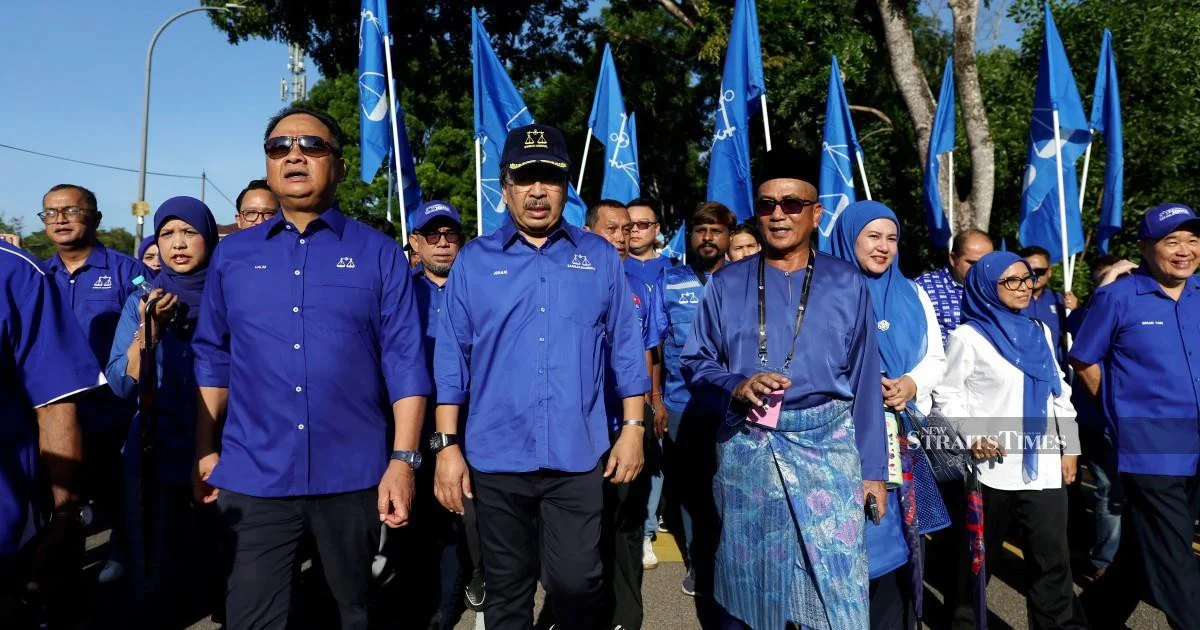
The race for Johor's Tiram state seat is intensifying as Umno vice-president Datuk Seri Johari Abdul Ghani threw his considerable political weight behind the Barisan Nasional candidate, making a high-profile appearance at the Taman Pelangi Indah community hall in Johor Baru to energise the coalition's ground campaign.
The deployment of senior Barisan figures in competitive state seats reflects the coalition's determination to consolidate its base and reclaim momentum in a state where electoral fortunes have proven volatile in recent years. Johari's presence signals that party strategists regard the Tiram contest as sufficiently significant to warrant intervention from the national leadership, underscoring the stakes involved in managing Barisan's representation across Johor's diverse constituencies.
Timely reinforcement from the Umno hierarchy typically aims to bolster candidate profiles and reassure grassroots supporters of the coalition's cohesion and organisational strength. For Tiram voters, such visits establish direct lines of communication with decision-makers positioned at the apex of Umno's power structure, creating symbolic acknowledgment of local concerns at the highest levels of party governance.
Johor's electoral landscape has demonstrated considerable fluidity over the past decade, with different coalitions capturing state power and losing it again through successive contests. The region remains fundamentally important to Barisan's national numerical strength, since Johor's parliamentary and state assemblies collectively represent a substantial bloc of constituencies that can determine overall coalition viability. This makes every individual seat competitive and worthy of high-level attention.
The Tiram seat itself reflects broader demographic and socioeconomic patterns visible across urban and periurban Johor constituencies, where voters juggle concerns ranging from cost-of-living pressures and infrastructure quality to education access and employment opportunities. Barisan's capacity to address these practical governance challenges while maintaining internal discipline across its diverse component parties remains a central consideration for electorates evaluating coalition performance.
Umno's organisational machinery and its dominance within Barisan's structure means that campaigns in marginal seats frequently feature coordinated appearances by party leaders at various administrative levels. Johari's engagement reflects this layered approach, where national visibility combines with on-the-ground mobilisation by local division networks and branch-level party members who maintain daily contact with constituents.
The Barisan coalition's internal dynamics have evolved substantially following the 2018 federal election shock, which saw power transfer away from Umno-led governance for the first time in Malaysia's independent history. Though Barisan subsequently reclaimed federal office in 2021 and has remained entrenched in several state administrations, the experience created ongoing awareness that electoral assumptions cannot be taken for granted, necessitating sustained campaign investment even in traditionally competitive territory.
State-level contests in Johor carry particular significance for Umno's organisational prestige, since the party has historically drawn substantial membership, financial resources and electoral legitimacy from the state's substantial Malay-Muslim population and concentration of party loyalists. Maintaining and expanding the party's state assembly representation directly affects its capacity to distribute patronage networks, secure lucrative corporate opportunities for party-linked entities, and ensure that party leaders can translate numerical strength into tangible governing authority.
For voters in Tiram and surrounding areas, the proliferation of such high-level campaign visits typically generates optimism about responsiveness to local needs, though historical experience suggests that campaign promises require sustained pressure and community mobilisation to translate into implemented policy outcomes. The experience of Malaysian constituencies across both peninsula and East Malaysia indicates that electoral engagement by senior leaders often achieves maximum impact when combined with systematic mechanisms for residents to hold representatives accountable between elections.
The broader Johor electoral environment remains competitive across numerous contested constituencies, making it increasingly difficult for any single coalition or party to establish commanding majorities. This fragmentation explains Barisan's need to contest virtually every available seat with maximum organisational commitment and to deploy its most recognisable figures wherever races appear tight or where rival coalitions have mounted credible challenges.
Looking ahead, Johor's electoral trajectory will substantially influence perceptions of Barisan's viability as a governing force at both state and federal levels. Constituency-by-constituency performance in highly contested terrain like Tiram will shape aggregate outcomes and potentially determine which coalition eventually holds state power, making each individual campaign appearance strategically meaningful within the broader political competition unfolding across Malaysia.

