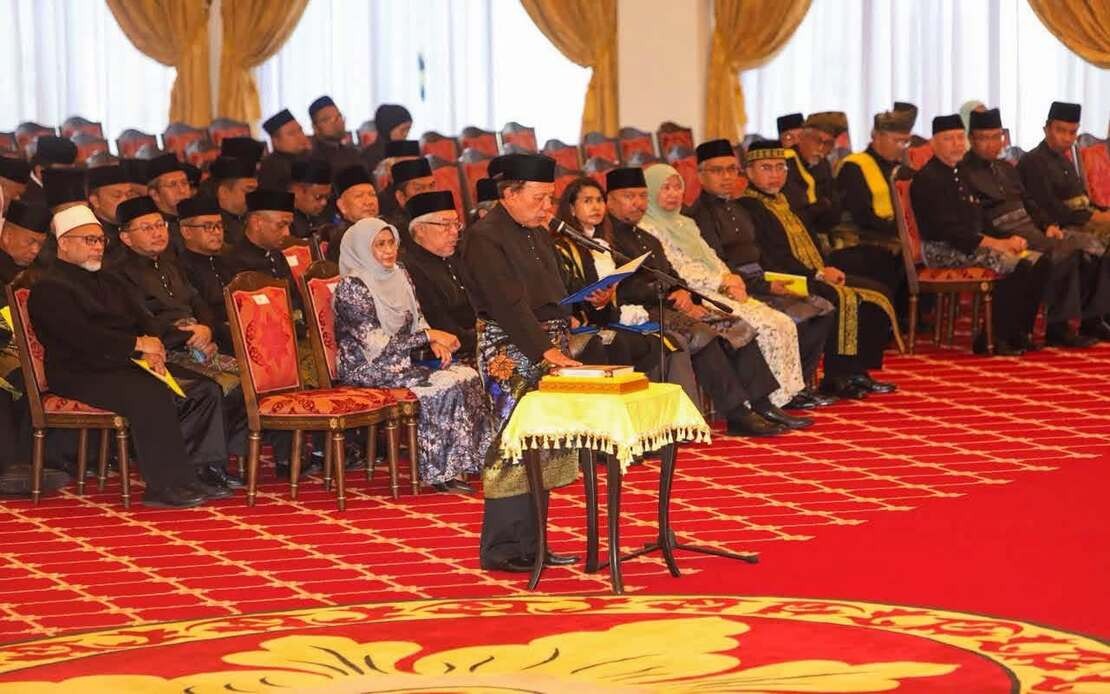
Datuk Ismail Lasim, the Juasseh state assemblyman, was formally sworn in as Negeri Sembilan's new Menteri Besar on August 2, marking a significant leadership transition in the central Malaysian state. The 67-year-old took his oath of office before the Yang Dipertuan Besar of Negeri Sembilan, Tuanku Muhriz Tuanku Munawir, at the Balairong Seri of Istana Besar Seri Menanti, in a ceremony that underscored the constitutional processes governing state leadership changes in Malaysia's constitutional monarchy system.
Deputy Prime Minister Datuk Seri Dr Ahmad Zahid Hamidi, who also serves as Minister of Rural and Regional Development, was among the first senior government figures to publicly acknowledge the appointment. Through a Facebook post, Ahmad Zahid extended warm congratulations to Ismail Lasim, emphasising the significance of the responsibility now shouldered by the incoming Menteri Besar. The DPM's message stressed confidence in Ismail's ability to steer Negeri Sembilan toward greater prosperity and development, framing the appointment within the broader narrative of advancing the state's fortunes under new leadership.
Defence Minister Datuk Seri Mohamed Khaled Nordin similarly voiced his support for the incoming administration, highlighting the public trust invested in Ismail as the foundation upon which continued state development must rest. Mohamed Khaled's statement, released via social media, conveyed optimism that the new leadership structure would enable Negeri Sembilan to maintain its trajectory of stability and shared prosperity across all community segments. His remarks reflected a broader institutional endorsement from the federal government toward the state's fresh political direction.
Plantation and Commodities Minister Datuk Seri Dr Noraini Ahmad characterised Ismail's appointment as a defining moment for Negeri Sembilan's governance, one that would usher the state into a new phase of development and administration. In her own statement, Noraini Ahmad called for divine guidance and strength for the newly appointed Menteri Besar, invoking religious sentiments that resonate deeply within Malaysia's Muslim-majority society and reflect the spiritual dimension often woven into public life at the state and federal levels.
Ismail Lasim brings substantial political experience to his new role, having maintained a continuous presence in Negeri Sembilan politics for nearly three decades. His entry into elected politics dates back to 1999, when he first secured a state assemblyman position representing his constituency. This extended tenure at the state level has provided him with deep familiarity with Negeri Sembilan's governance structures, development priorities, and the complex interplay of local political dynamics that shape policy implementation.
Prior to his elevation to Menteri Besar, Ismail served in various capacities within the state executive council, first appointed to the Exco in 2004. He subsequently maintained his position in the state administration across three consecutive terms, extending his influence in state governance until 2018. Throughout this extended period in the state executive, Ismail held responsibility for the education portfolio, positioning himself at the centre of policy formulation and implementation in human capital development, a sector critical to Negeri Sembilan's long-term competitiveness and social advancement.
His portfolio responsibilities during his Exco tenure allowed Ismail to shape educational policy directions and oversee the development of frameworks designed to enhance human capital in the state. This background suggests that his administration may prioritise similar developmental agendas, building upon institutional knowledge and relationships cultivated over his years in the education sector. For Malaysian observers, Ismail's education-focused background potentially signals a continued emphasis on skills development and institutional strengthening within Negeri Sembilan's governance approach.
The congratulatory messages from federal ministers underscore a pattern of institutional support flowing from Kuala Lumpur toward state-level leadership transitions. Such public affirmations from senior cabinet figures serve multiple purposes: they legitimise new state leadership within broader federal-state governance frameworks, signal continuity in cooperative federalism between Putrajaya and state governments, and demonstrate alignment on developmental priorities across administrative tiers. For Negeri Sembilan residents and stakeholders, these endorsements carry practical implications regarding the state's access to federal resources and support mechanisms.
Ismail Lasim's appointment represents continuity within Negeri Sembilan's political landscape while simultaneously introducing new leadership at the helm of state administration. His elevation from assemblyman to Menteri Besar reflects the selection of a figure with deep institutional knowledge and proven experience navigating state-level governance challenges. Whether his administration can sustain the developmental momentum and stability priorities highlighted by federal ministers will become apparent through upcoming policy announcements and budgetary allocations in the months ahead.

