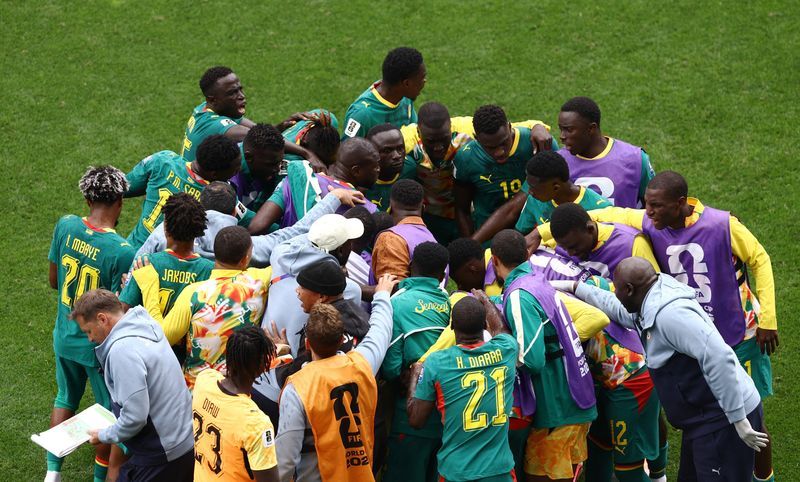
Following Senegal's disappointing performance at the World Cup in North America, the country's football federation has triggered a contentious row over the medical support provided to players, with federation president Abdoulaye Fall asserting that the team doctor possessed inadequate qualifications for his role. Fall disclosed at a press conference on Monday that the physician's background was in gynaecology rather than sports medicine, an issue that reportedly came to light only late in the tournament preparations and generated substantial anxiety among squad members regarding the calibre of medical care accessible to them.
The revelation points to a broader concern that had apparently been festering within the camp. Fall explained that players expressed insufficient confidence in the doctor's ability to manage their health concerns, prompting the federation to scramble for additional medical personnel to restore morale. He underscored that locating credible medical expertise became essential to reassure the athletes, emphasising that player welfare superseded all other considerations. This acknowledgment suggests that the federation had become aware of a genuine confidence gap between the playing staff and their medical team, a situation that could have undermined preparations during a critical tournament.
However, the Senegalese Association of Sports Medicine moved swiftly to defend the doctor's reputation, issuing a statement late Monday that characterised Fall's allegations as "unfounded and defamatory." The association highlighted that the doctor in question, Abderahmane Fediore, holds a specialist diploma in sports medicine and sports biology from Cheikh Anta Diop University's faculty of medicine, credentials that directly contradict the federation chief's characterisation. This contradiction raises uncomfortable questions about whether Fall's account was accurate or whether misunderstandings had clouded the issue.
Fediore's professional history lends weight to the sports medicine association's rebuttal. The doctor previously managed the physiotherapy department at Fann Hospital, one of Senegal's leading medical institutions, and had served as the national team's physician since 2017. His tenure encompasses three World Cup tournaments and five Africa Cup of Nations competitions, suggesting substantial experience managing elite athletes at the sport's highest level. The depth of this background makes Fall's claims appear either misinformed or exaggerated, or alternatively suggests that concerns about Fediore's qualifications may have been overblown or mischaracterised.
The timing of this dispute proves particularly awkward for Senegal's football establishment. The country had entered the tournament brimming with confidence following their triumph over Morocco in January's Africa Cup of Nations final, results that positioned them as potential challengers in North America. That optimism has evaporated entirely following a disastrous group stage, with defeats to France and Norway eliminating any realistic chance of progression. The frustration stemming from these results appears to have prompted a search for culprits, with medical support becoming a convenient target.
The tournament itself saw Senegal squander an exceptional opportunity in their final group encounter against Belgium. Leading two goals to nil with merely five minutes remaining, the team inexplicably faltered, conceding three unanswered goals in extra time to suffer a heartbreaking 3-2 defeat. This collapse exemplifies the broader malaise afflicting the squad throughout their campaign—a tendency toward self-destruction at critical moments that no amount of medical personnel could have prevented.
In response to the overall debacle, the federation moved decisively by dismissing coach Pape Bouna Thiaw on Saturday, determining that a managerial change was necessary given the tournament's poor outcomes. This decision understandably sought to address systemic failures that had manifested on the pitch. Yet the subsequent allegations regarding medical support suggest that fault-finding has extended beyond tactical and strategic shortcomings to encompass support infrastructure.
For Malaysian and broader Southeast Asian observers, this situation illuminates how elite sports organisations occasionally resort to scapegoating when confronting disappointing results. Medical staff, particularly those without direct influence over match outcomes, become convenient recipients of blame when tournaments fail to meet expectations. The dispute also underscores the importance of transparency and professional communication within national sports federations—issues that resonate across Asian football establishments grappling with similar governance challenges.
The controversy raises pertinent questions about credential verification processes within African football administration. If genuine concerns existed regarding Fediore's qualifications, these should have been identified during recruitment rather than surfacing during tournament preparations. The federation's apparent failure to thoroughly vet the doctor's background before enlisting him, or conversely, Fall's misrepresentation of credentials now under pressure, reflects poorly on institutional competence either way.
Senegal's football federation faces reputational damage as this dispute unfolds, with the organisation appearing either incompetent for hiring an inadequately qualified doctor or vindictive for fabricating concerns post-tournament. The Senegalese Association of Sports Medicine's vigorous defence of Fediore, coupled with his substantial professional track record, suggests that Fall's allegations lack substance. Moving forward, the federation must rebuild credibility through transparent communication and systematic evaluation of why their World Cup campaign failed so dramatically.
Ultimately, this episode serves as a cautionary tale regarding the hazards of reflexive blame-shifting following tournament disappointments. While managerial changes may be justified and medical support legitimately scrutinised, accusations must rest upon solid foundations rather than tournament frustration. For Senegal's football programme to recover from this campaign, the federation would be better served addressing deeper tactical and preparation issues rather than engaging in acrimonious disputes with medical professionals over credentials.

