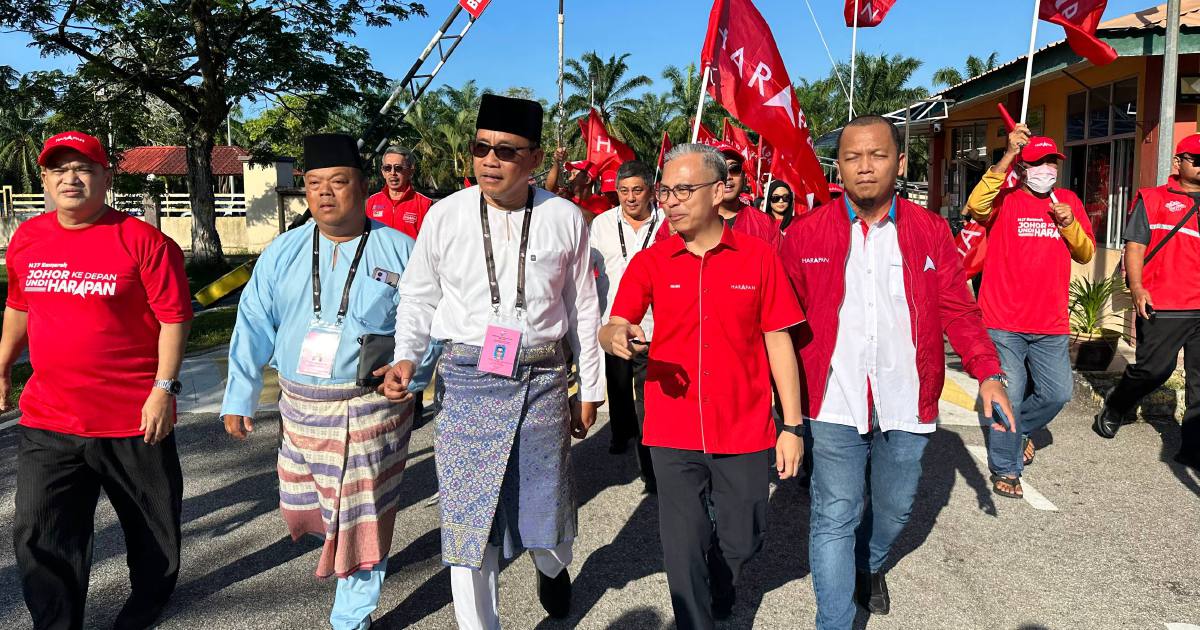
The Semerah constituency in Johor is bracing for an intensely competitive electoral confrontation, with indications pointing strongly towards a repeat showdown between Barisan Nasional and Pakatan Harapan candidates. The composition of nominees filing during Tuesday's nomination proceedings at Dewan Mahkota, Maktab Rendah Sains Mara in Batu Pahat, reflects the persistent polarisation that has defined Malaysian politics in recent years, particularly in Johor where demographic shifts and urban-rural divides continue to reshape electoral dynamics.
The energy surrounding the nomination day proceedings was palpable, with supporters gathering to demonstrate backing for their favoured contenders. Chants of "Reformasi" and religious invocations, or selawat, reverberated through the venue as candidates made their official entries into the contest. This visible enthusiasm underscores the significance Johor voters attach to state-level representation, where bread-and-butter issues including economic opportunities, infrastructure development, and social services increasingly dominate campaign discourse.
A rematch scenario carries considerable weight in understanding Malaysian electoral psychology. Semerah voters have previously demonstrated clear preferences, and the return of competing candidates from the same coalitions suggests both major political blocs remain confident in their appeal within the constituency. This continuity allows observers to gauge shifts in voter sentiment more precisely, as demographic changes, performance records of incumbent administrations, and emerging policy priorities create a measurable baseline for assessment.
For Barisan Nasional, maintaining Semerah represents a critical component of its strategic ambitions in Johor, a state that historically anchors coalition strength in the peninsular heartland. The bloc's machinery and grassroots networks, despite recent setbacks at federal level, retain considerable organisational capacity in constituencies with established support bases. However, complacency carries significant risk, as demonstrated by electoral outcomes across Malaysia since 2018 when previously secure seats became contested terrain.
Pakatan Harapan's competitive positioning in Semerah reflects broader shifts in urban and semi-urban voting patterns, particularly among younger cohorts and professionals who prioritise institutional reform, anti-corruption measures, and transparent governance. The coalition's ability to field candidates capable of translating these aspirations into local constituency relevance remains pivotal to its electoral prospects throughout Johor and the broader region.
The nomination proceedings themselves offer crucial intelligence regarding candidate calibre, party unity signals, and unresolved internal competitions. Any unexpected withdrawals, late-minute substitutions, or fractious nomination processes would reveal deeper organisational challenges or tactical recalibrations. Conversely, smooth processions suggest confident party machinery and settled internal disputes, though this shouldn't obscure ongoing tensions within both coalitions regarding resource allocation and candidate selection methodology.
Semerah's electorate encompasses diverse demographic segments that rarely align monolithically behind single candidates. Rural constituencies within the broader area often favour development-focused candidates promising infrastructure investment and agricultural support, whilst growing urban clusters increasingly respond to social policy platforms and economic diversification arguments. Candidates successfully navigating this terrain must articulate messages resonating across these disparate constituencies whilst maintaining coalition discipline and broader party platform consistency.
The historical context of Semerah elections illuminates patterns potentially influencing this contest. Previous electoral swings in the constituency have frequently reflected broader Johor state trends, though local factors including community relations with incumbent representatives, specific development grievances, and personality-driven voting dynamics can occasionally diverge from wider state trajectories. Understanding these particularities remains essential for realistic assessment of likely outcomes.
With nominations now officially lodged, the campaign phase commences, bringing intensive engagement with constituents through town halls, community visits, and media appearances. Both coalitions will deploy their respective campaign machineries, emphasising contrasting visions for national governance, state development priorities, and local constituency matters. The density and quality of these engagements often determine swing voter preferences in closely-contested seats.
Semerah's significance extends beyond its individual parliamentary value. Electoral performance across comparable Johor constituencies provides national implications for coalition strategies heading into broader political cycles. A Barisan Nasional hold would reinforce claims of electoral viability and state dominance, whilst a Pakatan Harapan capture would validate reform narrative momentum and challenge assumptions about peninsular electoral reliability for established power structures.
The contest also illuminates broader Malaysian electoral evolution. Voter sophistication continues increasing, with electorate less susceptible to simplistic messaging and more demanding regarding substantive policy detail. Candidates succeeding in 2024's environment typically combine personal credibility, demonstrated constituency service records, and clear policy articulation addressing pressing local concerns. Generic campaigning increasingly yields diminishing returns.
As campaign activities intensify, international observers will monitor Semerah alongside other competitive Johor contests as indicators of democratic health and electoral competitiveness. Malaysian politics' trajectory depends substantially on whether periodic elections genuinely allow voters meaningful choice between contending visions or increasingly function as managed exercises conferring legitimacy on predetermined outcomes. Semerah's competitive positioning suggests the former remains operative, though sustained vigilance regarding electoral integrity mechanisms remains warranted.

