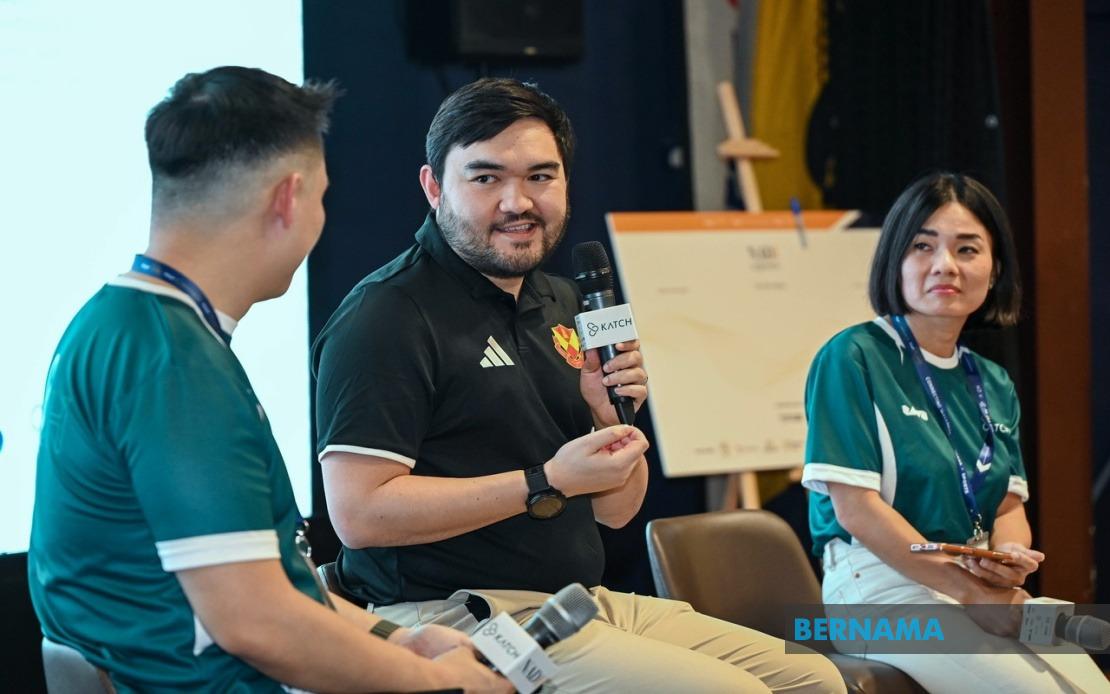
Selangor's commanding victory at the Malaysia Games 2026, where the state claimed 101 gold medals alongside 73 silver and 71 bronze, has prompted the Raja Muda of Selangor, Tengku Amir Shah Sultan Sharafuddin Idris Shah, to call for a fundamental shift in how the nation develops sporting talent at community level. Rather than allowing the success to become a isolated achievement, he contends that the momentum must be channeled into establishing robust platforms for grassroots competition that keep young athletes engaged year-round.
The crux of Tengku Amir Shah's argument centres on a straightforward but often overlooked principle: competitive experience breeds excellence. Speaking at the NADI Connecting Wellness, Fitness and Sports With RMS event in Petaling Jaya, the royal patron emphasised that regular competitions—ideally conducted every weekend—serve as the foundation upon which sustained athletic development is constructed. Without such consistent opportunities to test their abilities against peers, young athletes lack the tangible targets necessary to structure their training and maintain motivation across the longer competitive calendar.
Beyond mere participation, Tengku Amir Shah identifies the psychological dimension as equally critical. He argues that exposure to competitive environments at the grassroots level instills a winning mentality and goal-oriented perspective that transcends sport itself. This mindset, he suggests, becomes the engine driving broader sporting advancement across all disciplines. The implication is profound: Malaysia's future medal-winning athletes may well be forged not in elite academies alone, but through consistent engagement in weekend neighbourhood competitions where hunger and determination are first cultivated.
The Raja Muda's conviction on this matter is grounded in practical experience. His previous establishment of the Selangor Champions League—a community-level football initiative designed to unite active social teams across the state—demonstrated tangibly how grassroots platforms can simultaneously identify latent talent and elevate overall competitive standards. By creating a structured tournament framework for teams operating at the community level, the league served dual purposes: it offered recognition and advancement pathways for promising players while simultaneously raising the technical and tactical standard of football being played at ground level.
This model, Tengku Amir Shah suggests, possesses scalability potential far beyond football. Sports experiencing rising popularity among Malaysian communities—particularly pickleball and chess—could benefit from similar competitive architecture. The opportunity lies not merely in replicating a single successful formula, but in recognising the underlying principle: communities require accessible competition platforms that are neither too elite nor too casual, but calibrated to nurture developing athletes while maintaining engagement and enjoyment.
The selection of specific sports for inclusion in Selangor's SUKMA 2026 contingent represented, in his assessment, a strategic recognition of this principle. By offering young athletes the opportunity to represent their state across diverse disciplines, the Games framework created multiple pathways for demonstrating quality, sportsmanship and competitive ability. This diversification matters particularly in a state as populous and geographically dispersed as Selangor, where concentrating resources on a narrow sporting base would leave vast segments of youth talent undiscovered.
From a regional perspective, Tengku Amir Shah's advocacy carries implications extending beyond Selangor's borders. Southeast Asian sporting development often reflects similar structural challenges: elite national programmes exist alongside fragmented community-level activity, with insufficient bridging infrastructure. Malaysia's experience—both successes and gaps—offers instructive lessons for neighbouring nations also seeking to optimise their talent identification and development pipelines. The principle that regular grassroots competition strengthens the entire sporting ecosystem rather than cannibalising elite performance has gained increasing acceptance in sports science and management literature globally.
The timing of this intervention proves significant. With SUKMA 2026 now concluded and Selangor's medal tally secured, the natural tendency would be to celebrate and move forward. Instead, the Raja Muda is deliberately steering conversation toward systemic requirements for sustaining and building upon such success. This reframing—from event-focused achievement to process-focused development—suggests a maturation in how Malaysian sporting leadership conceptualises long-term competitive advantage.
The NADI event itself, bringing together fifty wellness, fitness and sports sector leaders, provided the forum for crystallising this vision into actionable direction. Such convening of stakeholders creates opportunity for translating aspirations into coordinated initiatives. Whether through state sporting associations, municipal authorities, or private sector partners, the infrastructure exists to expand weekend competitions substantially across Selangor's districts.
Implementing Tengku Amir Shah's vision would require coordination across multiple levels of governance and resources. State sports councils, district authorities, schools, and community organisations would need to align calendars and establish funding mechanisms ensuring competitions run consistently and professionally. The financial investment, while non-trivial, pales against the potential return: a generation of Malaysian youth with developed competitive instincts, improved technical abilities across diverse sports, and expanded pathways toward elite representation.
Moreover, the social dimension warrants consideration. Structured grassroots competitions provide youth with constructive weekend engagement, community connection, and goal-oriented activity—benefits extending well beyond athletic metrics. In an era of increasing screen-based distraction, creating compelling competitive reasons for young Malaysians to engage in regular physical activity represents a public health intervention disguised as sports development.
Looking forward, the challenge will involve translating Tengku Amir Shah's clearly articulated vision into concrete programming and sustained commitment. SUKMA's four-year cycle offers natural windows for implementation, allowing grassroots competitive infrastructure to mature sufficiently that subsequent Games benefit from deeper talent pools and higher baseline athletic standards. Should Selangor and other states embrace this approach systematically, the cumulative effect across the decade could substantially alter Malaysia's sporting trajectory, transforming today's individual medal successes into systematic competitive superiority.

