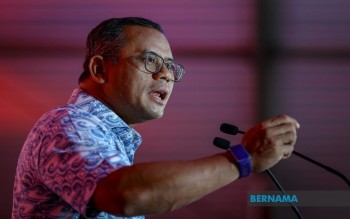
Selangor has extended its commanding position as Malaysia's economic engine, with its gross domestic product expanding by RM28 billion year-on-year to reach RM460.1 billion in 2025. The achievement, announced by Menteri Besar Datuk Seri Amirudin Shari citing official data from the Department of Statistics Malaysia, underscores the state's unmatched economic dynamism compared to every other Malaysian state and federal territory. The RM28 billion increase alone represents a scale of growth that dwarfs the annual economic output of smaller states, positioning Selangor as the undisputed centre of Malaysia's commercial and industrial activity.
The state's expanding footprint within the national economy is reflected in Selangor's rising contribution to Malaysia's overall GDP, which climbed from 26.2 percent to 26.5 percent. This seemingly modest percentage point gain masks the absolute magnitude of economic activity: Selangor's economy now stands at more than 1.7 times the size of Kuala Lumpur's RM265.1 billion economy and exceeds Johor's output by nearly three-fold. For Malaysian policymakers and investors, these figures highlight an increasingly concentrated pattern of economic power in the Klang Valley region, raising questions about balanced regional development across the federation.
Selangor's growth trajectory significantly outpaced Malaysia's national expansion rate, with the state recording a 6.3 percent increase compared to the country's 5.2 percent economic growth. This differential suggests that while the broader economy faces headwinds, Malaysia's most developed state continues to attract capital, talent, and commercial activity at accelerating rates. The performance also exceeded projections produced jointly by Universiti Putra Malaysia and the Selangor Research Institute, which had forecast state GDP of approximately RM455.3 billion, demonstrating stronger-than-anticipated momentum in business investment and consumer spending.
Three economic sectors drove Selangor's exceptional performance. The services sector contributed RM15.9 billion to the state's growth, reflecting the ongoing transition toward higher-value activities in finance, professional services, hospitality, and information technology. Manufacturing added RM5.3 billion, maintaining the state's status as a major industrial hub despite global trade uncertainties and supply chain volatility. Construction contributed RM3.7 billion, fuelled by ongoing property development, infrastructure projects, and the expansion of commercial spaces across the greater Klang Valley metropolitan region.
Selangor's dominance within specific economic sectors has intensified considerably. The state now accounts for 35.9 percent of all construction activity nationwide, commanding more than one-third of the country's building and infrastructure development. Its share of national manufacturing expanded to 32.8 percent, consolidating Selangor's role as Malaysia's primary industrial base. The services sector contribution climbed to 27.1 percent of the national total, establishing the state as the leading hub for tertiary economic activities including finance, business services, and advanced professional services.
The state government attributes this sustained growth to implementation of the First Selangor Plan (RS-1), a comprehensive five-year socioeconomic development blueprint covering 2021 through 2025. Over this planning period, Selangor's economy expanded by 33.94 percent—more than one-third—representing an absolute increase of RM116.6 billion. The state's GDP rose from RM343.5 billion at the plan's inception to the current RM460.1 billion, demonstrating how strategic planning and coordinated policy interventions can accelerate economic expansion and attract sustained investment.
Looking ahead, Selangor's leadership has articulated an ambitious vision of becoming Malaysia's first state to achieve a RM500 billion economy. Reaching this milestone would require approximately RM40 billion in additional economic output, a target that appears achievable given recent growth rates but would demand continued productivity improvements across the public and private sectors. The announcement signals the state administration's intention to maintain policy continuity and investment momentum beyond the current planning cycle, while avoiding the complacency that could accompany already-impressive achievements.
Menteri Besar Amirudin has emphasised that economic expansion must translate into tangible improvements in residents' quality of life, acknowledging an implicit tension between aggregate growth metrics and household welfare. As Selangor's economy expands faster than most of Malaysia, questions naturally arise about whether benefits distribute equitably or concentrate among affluent segments and successful corporations. The administration's stated commitment to improving living standards suggests recognition of this challenge and a determination to ensure that rising GDP reflects genuine broad-based prosperity rather than wealth concentration.
Invest Selangor, the state's investment promotion agency, characterised the 2025 performance as part of a consistent upward trajectory. The state achieved RM406.1 billion in 2025, then surpassed RM400 billion again in 2025, becoming the first Malaysian state to exceed this threshold in consecutive years. This consecutive achievement reinforces investor confidence and establishes psychological momentum that may attract additional foreign and domestic capital seeking locations within Malaysia's most economically dynamic jurisdiction.
For Malaysian policymakers and Southeast Asian observers, Selangor's economic trajectory presents both lessons and challenges. The state's success reflects effective governance, strategic infrastructure investment, business-friendly policies, and geographic advantages as the commercial core of Malaysia's most populous and developed metropolitan region. Yet the concentration of economic activity in Selangor raises broader questions about regional inequality and whether other Malaysian states can develop comparable growth engines. For multinational corporations and investors throughout Southeast Asia, Selangor's performance confirms the region's continued attractiveness as an investment destination, particularly for manufacturing, services, and technology-driven enterprises seeking footholds within Malaysia's developed economy.

