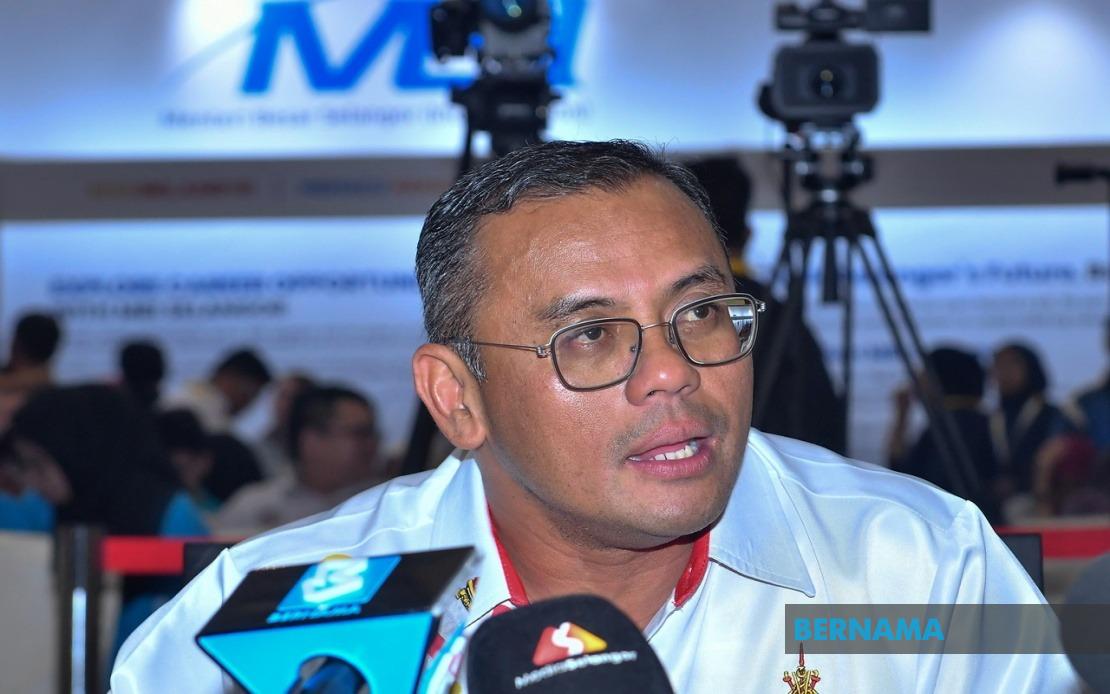
Selangor's government will hold discussions with workers facing redundancy from the anticipated closure of television manufacturing operations at Panasonic AVC Networks Kuala Lumpur Malaysia Sdn Bhd, moving to address employment transitions and relief measures in the coming week. Menteri Besar Datuk Seri Amirudin Shari announced that V. Papparaidu, who leads the state's Human Resources, Poverty Alleviation, Indigenous and Minority Affairs Committee, will lead the engagement alongside representatives from the Social Security Organisation (PERKESO) to gather information directly from those whose livelihoods are at stake.
The proactive approach reflects growing concerns about manufacturing sector volatility in Malaysia's industrial heartland. Panasonic Malaysia Sdn Bhd confirmed in a statement that production for two specific product lines will cease, displacing approximately 400 employees by the end of March 2025. This timeline gives affected workers several months to prepare, yet the scale of potential job losses underscores the challenges facing Malaysia's manufacturing workforce amid shifting global production patterns and technological changes in consumer electronics.
Selangor's intervention strategy combines immediate humanitarian support with longer-term employment solutions. The state government has committed to distributing food baskets as an early intervention measure, recognising that workers facing retrenchment often experience financial strain during the transition period. However, the broader focus remains on facilitating alternative employment pathways that allow affected workers to maintain the standard of living they have established in Selangor over their tenure with Panasonic.
A significant component of the support framework involves PERKESO's financial protection mechanisms designed specifically for retrenchment scenarios. Papparaidu highlighted the organisation's income replacement scheme, which provides staged payments to unemployed workers. The structure begins at 80 per cent of base salary during the first month of joblessness, tapering to 50 per cent in the second month, then declining to 30 per cent thereafter. This graduated approach aims to cushion the immediate economic shock while incentivising workers to secure new employment without prolonging dependency on state assistance.
The initiative represents part of PERKESO's broader modernisation of worker protection frameworks, offering what amounts to a job-seeking allowance that extends beyond traditional severance arrangements. For Selangor residents, where manufacturing employment remains a substantial income source despite economic diversification, such safety nets carry particular importance. The systematic approach acknowledges that retrenchment extends beyond the individual worker to affect families, household stability, and local economic resilience.
Contextually, the Panasonic situation emerges as Selangor simultaneously launches its Selangor Mega Jobcare 2026 programme, a large-scale employment initiative featuring 147 participating employers and more than 11,000 available positions. The timing suggests deliberate coordination between crisis response and opportunity generation. Notably, 62.2 per cent of advertised vacancies offer monthly compensation exceeding RM3,000, positioning the job fair as a potentially viable channel for workers seeking equivalent or comparable employment following retrenchment.
The career fair, running at Shah Alam Convention Centre and organised in partnership with MYFutureJobs, targets participants between 18 and 60 years old. This broad age range accommodates Panasonic workers across different career stages, from mid-career professionals seeking lateral transitions to older workers approaching retirement who may require bridging employment. The programme's scale and timing indicate strategic planning to leverage existing recruitment momentum for managing displaced manufacturing workers.
The Panasonic closure reflects broader sectoral challenges affecting Malaysia's electronics manufacturing base. Global supply chain reorganisation, automation expansion, and shifting consumer demand patterns have pressured traditional television production. Malaysia's role in this industry, while historically significant, faces intensifying competition from lower-cost jurisdictions and the gradual transition toward smart television platforms requiring different manufacturing capabilities. Plant closures in specific product segments therefore represent sectoral reorientation rather than anomalies.
For Malaysia's industrial policy framework, such events highlight the necessity of workforce transition mechanisms and continuous skills development. The Selangor government's intervention model, combining immediate relief with employment facilitation and income protection, offers a template for managing manufacturing sector disruptions that will likely recur. The approach acknowledges that market forces necessitate plant adjustments while governmental action can mitigate social and economic consequences through coordinated assistance.
The Panasonic situation also underscores the importance of maintaining robust local employment markets capable of absorbing displaced workers. Selangor's economic diversification into services, technology, and higher-value manufacturing creates absorption capacity that less-diversified regions might lack. The government's emphasis on alternative employment reflects confidence that Selangor's labour market can reallocate workers without sustained unemployment, provided transitions receive adequate institutional support.
Workers affected by the closure represent a skilled manufacturing cohort with established productivity records and sector experience. Rather than experiencing permanent workforce exit, many may transition to adjacent manufacturing specialisations, technology roles, or service sectors where their problem-solving capabilities and production discipline hold value. The state's intervention strategy therefore attempts to convert what initially appears as employment loss into workforce redeployment.
Looking forward, the outcomes of next week's meetings will inform whether state-level coordination successfully facilitates worker transitions or whether broader structural support becomes necessary. PERKESO's involvement suggests a recognition that financial mechanisms alone prove insufficient without complementary employment services. The integration of multiple state agencies and private sector participation through the career fair reflects contemporary understanding that retrenchment management requires ecosystem-level responses rather than isolated administrative interventions.
Ultimately, the Selangor government's response to the Panasonic closure demonstrates evolved governance approaches to manufacturing sector disruptions. By combining immediate humanitarian assistance, income protection mechanisms, and employment facilitation through structured job fairs, authorities attempt to transform potential labour market crises into managed transitions. The success of this model will likely inform how other Malaysian states address similar manufacturing challenges in coming years as global industrial reorganisation continues.

