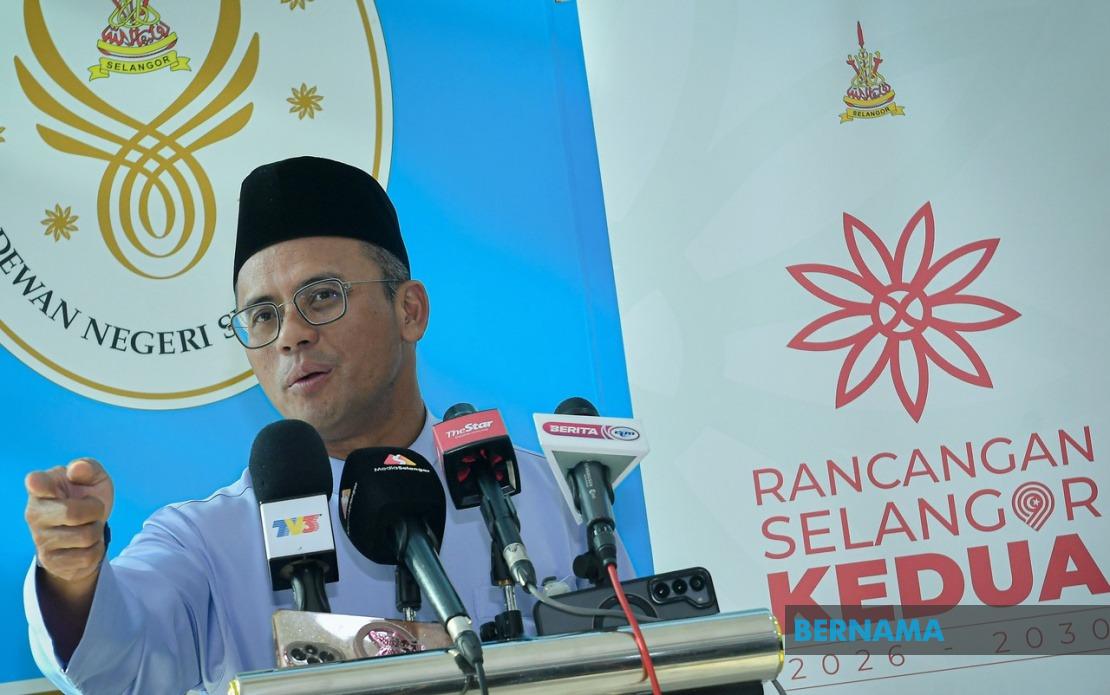
Selangor's pursuit of mass affordable housing has taken on fresh momentum with the unveiling of an expanded initiative that seeks to deliver 200,000 homes to residents across the state. Menteri Besar Datuk Seri Amirudin Shari outlined the ambitious residential development strategy during the Selangor State Legislative Assembly sitting in Shah Alam on August 7, positioning the programme as central to the government's housing affordability agenda.
The scale of progress achieved to date underscores the initiative's trajectory. A total of 64,188 units have reached completion, while a further 69,014 properties remain under active construction, collectively accounting for 133,202 units across the targeted 200,000-unit objective. This progress represents a substantial commitment of resources and planning effort, though it also highlights the substantial work still required to meet the full target in coming years.
Central to the scheme's appeal is a rent-to-buy mechanism that addresses a persistent barrier facing lower-income Malaysian households. Under this arrangement, the Selangor Housing and Property Board, known locally as LPHS, will retain 30 per cent of tenants' monthly rental disbursements and convert these accumulated savings into a down payment when occupants transition from rental to homeownership. This innovative approach helps bridge the financial gap that typically prevents rental-dependent families from accessing property ownership, a challenge that resonates across Malaysia's urban centres where upfront deposits remain prohibitively expensive.
The broader policy framework encompasses measures designed to track programme effectiveness and ensure resources reach intended beneficiaries. The state government is establishing a dedicated statistical monitoring unit that will introduce a comprehensive household assistance index. This evaluation mechanism will assess the real-world impact of support programmes at regular twelve and twenty-four month intervals, creating a feedback loop that enables authorities to identify which interventions drive meaningful improvements in residents' circumstances.
Transport connectivity has emerged as a critical component of the affordable housing vision. Selangor recognises that housing affordability becomes hollow if residents lack efficient access to employment and services, a lesson learned across rapidly urbanising Southeast Asian economies. The state plans to augment public transport frequency, particularly services connecting residents to LRT and MRT network nodes, addressing the so-called first-mile and last-mile problem that constrains mobility for lower-income households.
Walkability has become an explicit planning objective, with the government committing to construct covered walkways at every transit station. This seemingly incremental improvement carries significant practical value in Malaysia's equatorial climate, where unshaded pedestrian infrastructure deters usage regardless of nominal distance. By ensuring that journeys to and from stations remain protected from weather exposure, the state aims to increase transit adoption rates among populations that might otherwise depend on costlier private transport options.
Every new residential development under the Rumah Selangorku Harapan and Rumah Selangorku Idaman branded initiatives will henceforth incorporate dedicated bus stops within their boundaries. This requirement reflects sophisticated planning that recognises integrated public transport access as foundational to liveable communities rather than an afterthought. Housing projects will no longer be permitted to develop in isolation from broader mobility networks, a planning discipline that enhances both functionality and long-term property values.
The government intends to leverage technology infrastructure to optimise transport planning at granular levels. Data analytics will identify residential areas exhibiting the highest traffic volumes and serving as natural gathering points, enabling precise assessment of where smaller bus stop facilities could deliver maximum utility. This evidence-based approach to infrastructure placement contrasts with older top-down planning methodologies and reflects contemporary urban development thinking that emphasises responsiveness to actual usage patterns.
For Malaysian observers, Selangor's integrated approach offers lessons in aligning housing policy with broader urban livability goals. Rather than treating affordable housing as an isolated welfare intervention, the state positions it within a constellation of complementary policies spanning transport, statistical oversight, and pedestrian infrastructure. This holistic framing acknowledges that homes divorced from accessible employment, education, and services fail their fundamental purpose regardless of nominal affordability.
The programme's trajectory also illuminates persistent supply challenges in Malaysia's residential sector. Despite substantial construction volumes, the gap between the 133,202 units already realised and the 200,000-unit target demonstrates the ongoing tension between housing demand and delivery capacity. Similar pressures constrain affordable housing programmes across Klang Valley competitors and increasingly across secondary cities, suggesting that Selangor's experience will inform regional strategies elsewhere in Malaysia.
Stakeholders monitoring the initiative will watch closely whether the rental-to-ownership conversion mechanism generates the anticipated uptake. International evidence suggests such schemes successfully reduce barriers to ownership, though Malaysian implementation will depend on programme administration quality, tenant awareness, and sustained commitment to maintaining the savings vehicles across economic cycles. The scheme's success could establish a replicable model for other states navigating comparable affordability challenges.
Longer-term sustainability will hinge on whether Selangor can maintain construction momentum while absorbing costs associated with enhanced transport infrastructure and pedestrian amenities. The government's commitment to integrated planning is commendable, but execution complexity multiplies considerably when multiple agencies coordinate across housing, transport, and urban design domains. Success will require sustained political prioritisation and budgetary discipline extending beyond the typical electoral cycle.

