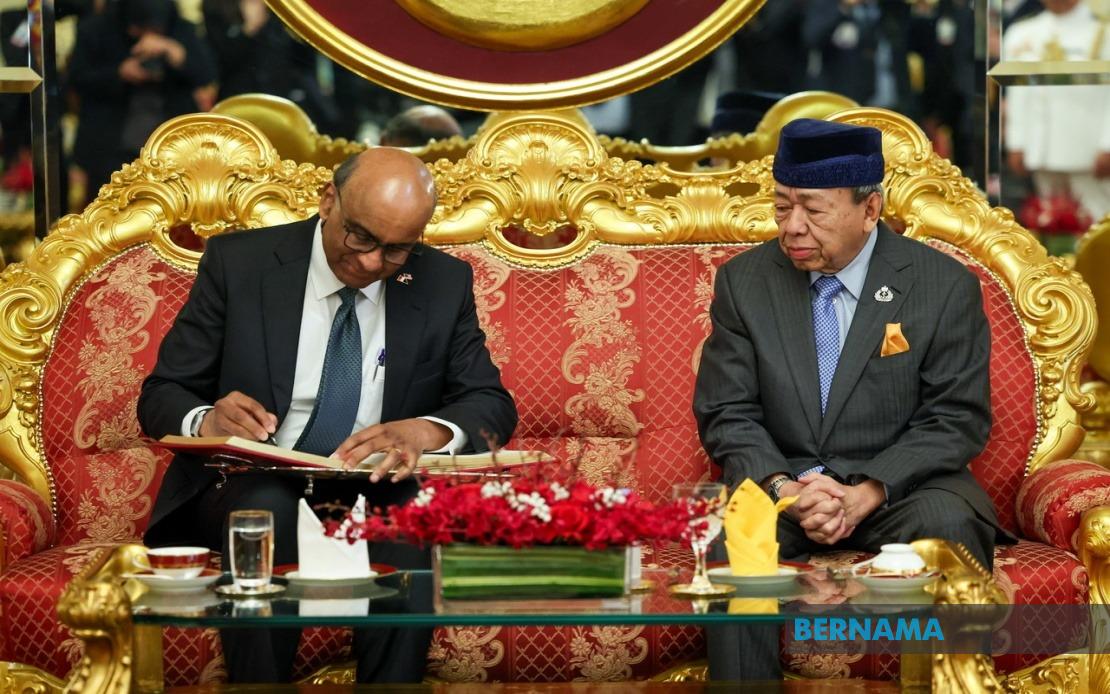
Sultan Sharafuddin Idris Shah, the reigning Sultan of Selangor, received Singapore President Tharman Shanmugaratnam in formal audience at Istana Alam Shah in Klang on July 14, marking a significant moment in bilateral relations between Malaysia and Singapore during the president's ongoing state visit. The meeting, which commenced at 11 am, saw the Singapore president warmly received by the Raja Muda of Selangor, Tengku Amir Shah, underscoring the diplomatic importance attached to the engagement by the Selangor royal household.
The formal audience lasted approximately one-and-a-half hours, concluding at 12.40 pm before President Tharman's departure from the palace. The extended duration of the meeting reflected the depth of bilateral matters under discussion between the two neighbours. Notably, Entrepreneur Development and Cooperatives Minister Steven Sim was present throughout the proceedings in his capacity as minister-in-attendance, signalling the Malaysian government's commitment to ensuring smooth diplomatic protocols and substantive dialogue during this high-level visit.
The current visit represents a strategic reciprocation of diplomatic courtesy. President Tharman is undertaking a three-day state visit to Malaysia spanning July 13 to 15, conducted at the formal invitation of His Majesty Sultan Ibrahim, King of Malaysia. This visit directly reciprocates the state visit made by Sultan Ibrahim to Singapore on May 6 and 7, 2024, demonstrating the customary diplomatic exchange that characterises relations between the two nations at the highest levels.
The timing and nature of such state visits carry considerable significance for bilateral relations. These formal engagements provide occasions for heads of state to discuss matters of mutual concern, explore avenues for enhanced cooperation, and reinforce the bonds between neighbouring countries. For Malaysia and Singapore, which share complex historical ties and intricate economic interdependencies, such high-level interactions serve as barometers of diplomatic health and commitment to maintaining stable, forward-looking relations.
Singapore's strategic importance to Malaysia extends considerably beyond ceremonial considerations. The city-state remains Malaysia's second-largest trading partner globally, underscoring the commercial vitality of their bilateral relationship. More notably, Singapore stands as Malaysia's largest trading partner among all member states of the Association of Southeast Asian Nations, a position that reflects the intensity and sophistication of their economic engagement across multiple sectors including finance, trade, manufacturing, and services.
This economic interdependence creates multiple layers of interaction between the two nations, necessitating regular high-level dialogue to address trade-related concerns, investment opportunities, and infrastructure coordination. The audience between the Sultan and the Singapore President provides an informal yet significant setting for preliminary discussions that may subsequently be formalised through diplomatic and ministerial channels. Such royal interactions often serve to elevate bilateral matters beyond routine bureaucratic handling, signalling commitment to resolving contentious issues or advancing mutually beneficial initiatives.
The presence of the Raja Muda of Selangor in the receiving protocol reflects the particular relationship between the Selangor state government and Singapore. As the most developed and economically vibrant state in Malaysia, Selangor maintains extensive commercial ties with Singapore, with numerous joint ventures, investments, and logistical arrangements spanning the Strait of Malacca. The formal recognition accorded to the Singapore President at the state level demonstrates awareness of these interconnections and the importance of maintaining cordial relations at all governance levels.
The involvement of the Entrepreneur Development and Cooperatives Ministry in the visit proceedings hints at potential discussions concerning small and medium-sized enterprises, cooperative ventures, or innovation initiatives that may benefit from enhanced Singapore-Malaysia collaboration. This ministerial focus suggests that beyond traditional trade and diplomatic matters, the two countries may be exploring contemporary economic opportunities in emerging sectors, perhaps including digital economy initiatives, sustainable business practices, or knowledge transfer arrangements.
Regionally, the Singapore President's visit to Malaysia carries implications beyond bilateral concerns. Within the ASEAN framework, Malaysia and Singapore together represent significant economic and political weight, and their relationship serves as a stabilising force for broader regional cooperation. The maintenance of strong institutional ties, as evidenced by state visits and formal audiences, contributes to the overall coherence and effectiveness of ASEAN as a regional organisation committed to dialogue, cooperation, and peaceful resolution of differences.
The formal protocols observed during this audience—the timing, the participants, the duration—reflect established diplomatic conventions designed to underscore mutual respect and strategic partnership. For Malaysian readers, such events affirm the country's standing in regional affairs and its capacity to engage at the highest levels with important neighbours and trading partners. The visit also provides reassurance that bilateral relationships, despite occasional tensions or differing perspectives on regional issues, remain grounded in institutional frameworks and mutual commitment to dialogue.
Looking forward, the outcomes of President Tharman's three-day visit will likely be articulated through joint statements or communiqués detailing areas of enhanced cooperation, commitments to ongoing dialogue, and perhaps specific initiatives in trade, connectivity, or cultural exchange. The audience at Istana Alam Shah represents the ceremonial anchor of this visit, with substantive discussions typically occurring through parallel diplomatic channels involving foreign ministries, trade representatives, and sectoral specialists working to advance the bilateral agenda across multiple fronts.

