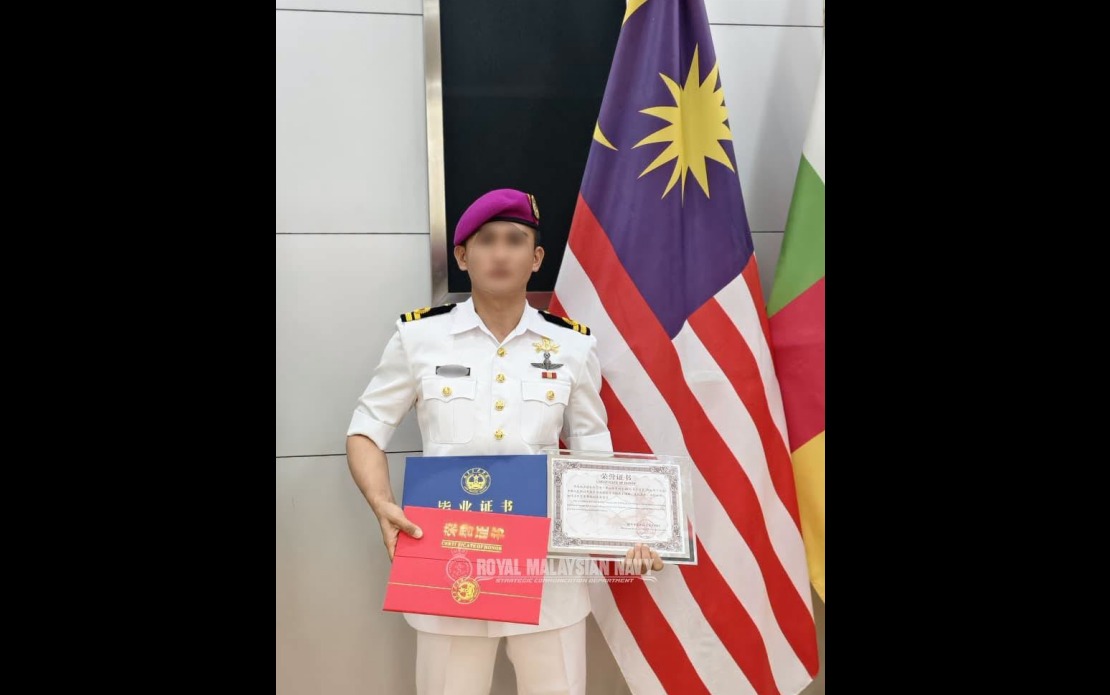
Sultan Sharafuddin Idris Shah, who holds the ceremonial position of Captain-in-Chief of the Royal Malaysian Navy, has publicly recognised a serving PASKAL officer for his exceptional performance at an advanced military training programme in Hebei Province. The officer distinguished himself during the Sniper Infantry Course held at the PLA Infantry Academy's Shijiazhuang Campus between March and July this year, emerging as the top-ranked student among a large international cohort.
The recognition reflects Malaysia's deepening military cooperation with China, particularly in specialised training and capability development. The inclusion of a Malaysian naval commando in a prestigious Chinese military institution demonstrates the expanding defence partnerships between the two nations, which have grown considerably over the past decade. Such exchanges allow Southeast Asian armed forces to benefit from cutting-edge instruction while simultaneously strengthening bilateral relations through professional military channels.
The achievement carries particular significance given the competitive nature of the course. Drawing participants from more than 24 countries, the programme presented a rigorous testing ground where the Malaysian officer competed against elite military personnel from diverse nations. His selection as the Excellent Student Award recipient, coupled with recognition as Excellent Cadre and the awarding of a Silver Badge Medal, underscores both his personal dedication and the quality of training provided by Malaysia's naval special forces.
PASKAL, the Royal Malaysian Navy's specialist commando unit, maintains demanding standards for personnel development and overseas training opportunities. The selection of this particular officer to attend such a prestigious course reflects his standing within the force and the confidence placed in him by senior command. Success in advanced international training programmes enhances not only individual operational capabilities but also elevates the professional credentials of Malaysia's maritime special operations community.
The Sultan's statement emphasising national pride extends beyond individual achievement to encompass broader implications for Malaysia's military standing. His explicit mention of the officer serving as an exemplar for other PASKAL personnel suggests institutional encouragement of continuous professional development and excellence-seeking behaviour within the force. This approach to recognising and celebrating overseas training accomplishments contributes to cultivating a culture of advancement and high performance standards across the naval special forces.
The course duration and structured assessment methodology indicate substantial investment in comprehensive sniper training protocols. Spanning five months and encompassing multiple evaluation criteria, the programme represents the type of intensive, specialised military education that typically requires careful coordination between defence ministries and their respective military academies. Malaysia's participation through PASKAL officers suggests confidence in the training standards offered by China's military institutions and a willingness to expose personnel to diverse instructional approaches and tactical perspectives.
From a regional security perspective, the presence of Malaysian naval commandos in Chinese military training environments contributes to interoperability and mutual understanding between regional navies. Such exchanges facilitate the development of shared operational concepts and compatible procedures, which can prove valuable during multilateral maritime exercises or coordinated responses to regional security challenges. The emphasis on sniper training specifically points to Malaysia's interest in enhancing precision engagement capabilities within its special forces structure.
Admiral Tan Sri Dr Zulhelmy Ithnain, the serving Chief of the Royal Malaysian Navy, likewise received the Sultan's commendation for supporting this international engagement. Senior naval leadership's involvement in recognising overseas achievement signals institutional commitment to continuing professional development and the exploration of training opportunities with capable defence partners. The broader acknowledgment of RMN personnel underscores the navy's role as a primary instrument of Malaysia's maritime security strategy and defence diplomacy.
The international composition of the course—with trainees from over two dozen nations—reflects the PLA Infantry Academy's status as a centre of military excellence attracting global interest. For Malaysia, participation in such programmes demonstrates both the capabilities of its personnel and the nation's strategic approach to capability development through engagement with major military powers. The strong performance of the Malaysian officer enhances Malaysia's reputation within international military training networks and may encourage future bilateral cooperation in specialised defence fields.
Looking forward, this achievement illustrates the tangible returns available through structured international military engagement. As regional maritime challenges become increasingly complex, the development of highly trained specialist personnel through overseas programmes provides Malaysian defence forces with enhanced operational options. The recognition accorded by the Selangor Sultan places this achievement within a framework of national service and institutional advancement, reinforcing the value the armed forces place on international professional development and cross-border knowledge exchange in maintaining military readiness.

