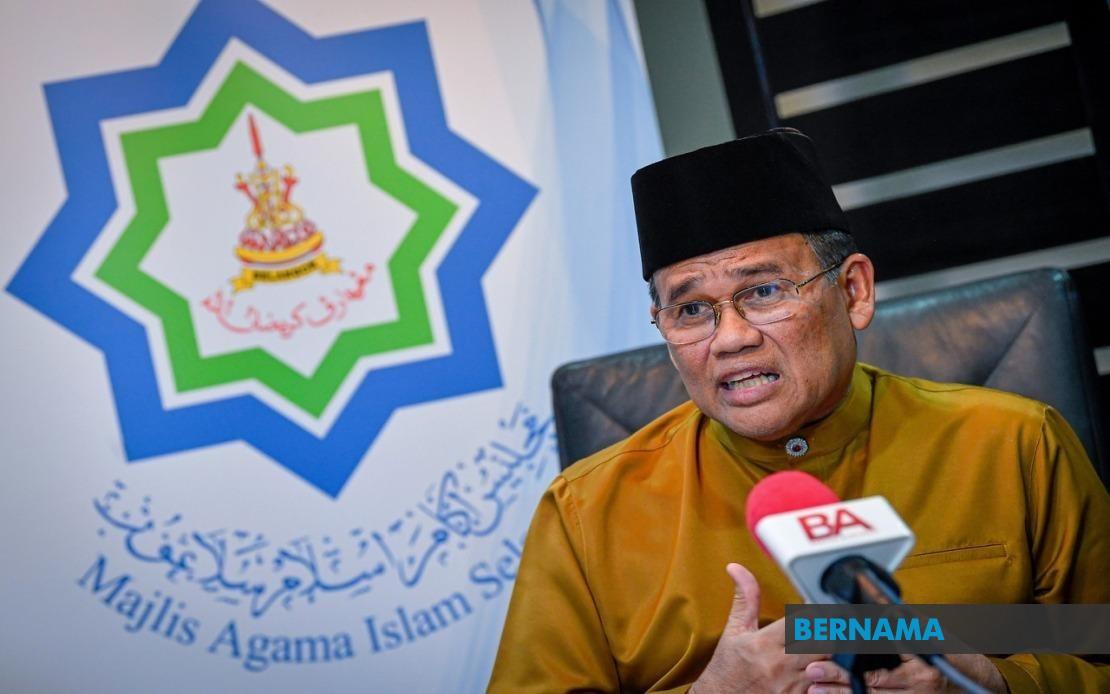
The Sultan of Selangor, Sultan Sharafuddin Idris Shah, has declined to grant consent for surau and musolla facilities operating within shopping malls across the state to conduct Friday prayers at present, according to a statement released by the Selangor Islamic Religious Council (MAIS). The decision reflects carefully considered concerns about the long-term implications of such a development on the fabric of Islamic religious practice in the state.
DAIK Salehuddin Saidin, MAIS chairman, explained that the royal decision pivots on the necessity of maintaining mosques and existing authorised surau as the bedrock of congregational worship for Muslims throughout Selangor. The council views Friday prayers conducted in commercial venues as potentially undermining institutional efforts to strengthen these traditional worship centres, which have historically served as the spiritual and communal anchors of Muslim life.
The fundamental worry centres on a well-documented pattern observed elsewhere: when alternative prayer venues become available in convenient locations such as shopping malls, attendance at formal mosques and designated surau tends to decline. Salehuddin noted that this shift would jeopardise the religious vibrancy and community cohesion that mosques have traditionally fostered. The existing network of 448 mosques and 379 surau already authorised to conduct Friday prayers in Selangor appears sufficiently distributed to serve the state's Muslim population without requiring additional commercial venues to assume this role.
Convenience arguments, whilst superficially compelling, proved less persuasive to the Sultan's council than broader religious considerations. Many shopping malls already sit in close proximity to existing mosques and surau, meaning that Muslims seeking to perform Friday prayers need not travel extensively. This geographical reality suggests that the infrastructure for congregational worship already exists in accessible locations, making the addition of mall-based facilities redundant from a practical standpoint.
Beyond demographic and spatial considerations, MAIS raised governance and administrative concerns that would inevitably arise from permitting shopping mall surau to host Friday prayers. The appointment of qualified imams, bilals, and other religious personnel would require oversight mechanisms to ensure doctrinal consistency and regulatory compliance. Without MAIS directly appointing and supervising these personnel, the council fears an inability to monitor the preparation and delivery of Friday sermons, potentially leading to theological inconsistencies or deviations from established Islamic educational standards across the state's prayer facilities.
Yet the decision exhibits pragmatism rather than absolute rigidity. MAIS acknowledged one existing case in which a shopping mall surau in Selangor has received temporary authorisation to conduct Friday prayers—a concession made specifically because no mosque existed in proximity to serve the local Muslim community adequately. This temporary approval carries an explicit sunset clause: should a conventional mosque eventually be constructed nearby and gain capacity to accommodate worshippers, the mall surau's Friday prayer permission would be revoked. Such flexibility demonstrates that the Sultan's position responds to genuine local religious needs whilst maintaining the principle that permanent institutional worship should occur in dedicated facilities.
The Sultan's decree aligns with broader Islamic theological principles emphasising the mosque's exalted status in Muslim spiritual life. Islamic teachings historically elevate mosques beyond mere prayer spaces, recognising them as centres of religious education, Islamic knowledge dissemination, community cohesion, and dakwah activities. Concentrating these functions in dedicated institutions rather than dispersing them through shopping malls preserves their sanctity and educational mission, reinforcing their role as vital pillars of Islamic civilisation within the state.
The authority to make this determination rests unambiguously with Selangor's state authorities rather than federal government bodies. The Constitution's Ninth Schedule clearly delineates that mosques, surau, and musolla fall within state jurisdiction. Sultan Sharafuddin, as the Head of the Islamic Religion in Selangor, possesses constitutional prerogative over Islamic religious administration within his domain. The Section 97 provision of the Administration of the Religion of Islam (State of Selangor) Enactment 2003 requires prior written MAIS approval for any building's use as a mosque, surau, or musolla, cementing this state-level control.
The Selangor decision emerges within a broader national conversation about Islamic facility management. Minister in the Prime Minister's Department (Religious Affairs) Dr Zulkifli Hasan has previously articulated the federal government's perspective on nationwide proposals to establish shopping mall surau authorised for Friday prayers. MAIS has taken formal note of this federal position whilst asserting that each state's religious leadership must determine applications according to local circumstances and religious principles. This federalism approach respects both the constitutional framework and the spiritual leadership roles that state Sultans occupy.
For Malaysian Muslims and religious policymakers, the Selangor decision illustrates how tradition and modernity must be carefully balanced. The state's religious leadership recognises that whilst contemporary shopping malls offer convenient prayer spaces, permitting them to host Friday prayers risks eroding the institutional strength of established Islamic centres. The council's call for Muslims to continually revitalise mosques and surau emphasises individual religious responsibility—the onus rests not merely on state authorities to provide facilities, but on the faithful to actively participate in congregational worship at designated religious institutions.
This position will likely influence discussions across other Malaysian states as shopping mall operators increasingly request approval to establish prayer facilities. States may reference Selangor's thoughtfully articulated reasoning when evaluating similar proposals. The decision ultimately reflects a judgement that preservation of institutional Islamic worship spaces merits priority over commercial convenience, even as exceptions remain possible where genuine geographical or demographic necessities arise. Moving forward, the understanding that Friday prayers belong fundamentally in mosques rather than shopping centres appears to have secured royal and religious institutional endorsement in Southeast Asia's largest Islamic state.

