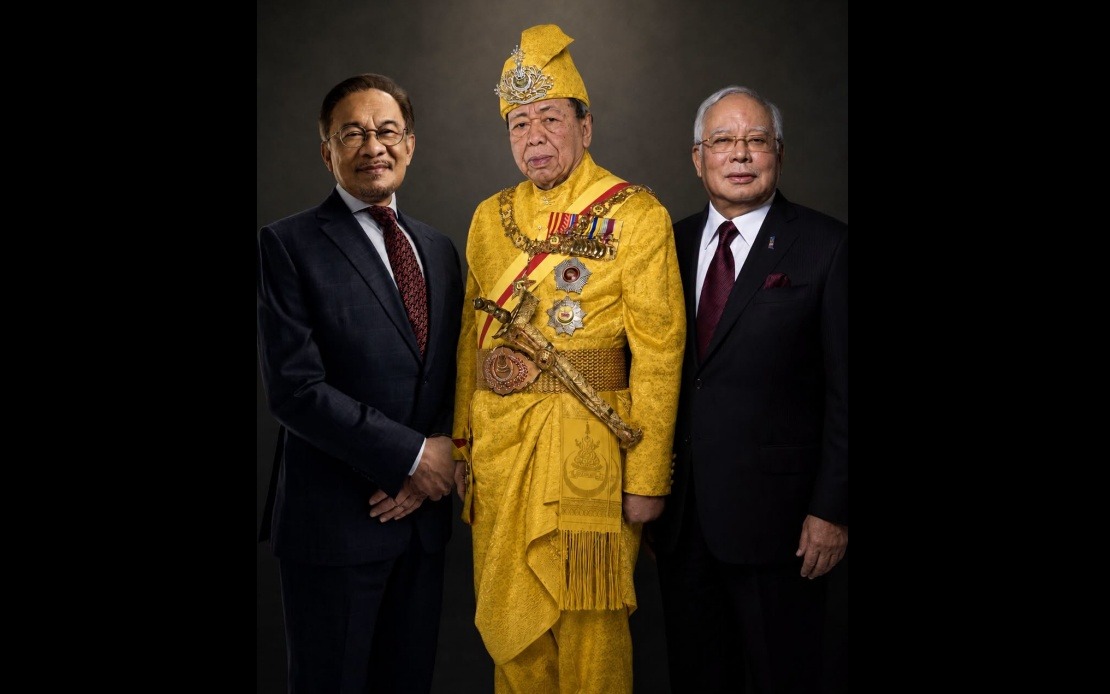
The Sultan of Selangor, Sultan Sharafuddin Idris Shah, has publicly acknowledged the crucial role played by Prime Minister Datuk Seri Anwar Ibrahim in ensuring the Shah Alam Line LRT3 project reached completion and began serving commuters on Monday. His statement represents a significant political acknowledgement of the current administration's contribution to a major infrastructure initiative that has been years in the making, reflecting the complex interplay of political will, public demand, and institutional commitment required to deliver such projects in Malaysia.
In his remarks, the Sultan highlighted several specific interventions undertaken by Anwar since assuming the dual position of Prime Minister and Finance Minister in 2022. Most notably, the current administration reinstated five stations that had previously been cancelled due to budget constraints and scope limitations. Beyond the restoration of these stations, the government also championed the development of affordable housing initiatives near LRT3 stations, recognising that modern transport infrastructure's value extends beyond connectivity alone to encompass broader considerations of housing accessibility and socioeconomic inclusivity for the communities it serves.
The Sultan's acknowledgement of Anwar's directive to prevent further obstacles to the project carries particular weight in the Malaysian context, where infrastructure timelines have historically been subject to political disruptions and shifting priorities. This emphasis on removing bureaucratic and institutional barriers underscores the reality that major projects often face resistance from various quarters, whether through changed procurement procedures, realigned budgetary allocations, or altered governmental priorities following electoral transitions. The Sultan's public reference to ensuring smooth progression suggests that such challenges had indeed complicated the LRT3's trajectory.
The origins of the LRT3 project reveal important insights into how major transport infrastructure priorities emerge in Malaysia. Rather than being conceived as a top-down governmental initiative, the Shah Alam Line stemmed directly from public grievances, particularly from residents—notably housewives who bore witness to their husbands' daily struggles with severe traffic congestion. This ground-up genesis reflects genuine urban mobility challenges facing the Klang Valley, one of Malaysia's most economically vital and traffic-congested corridors. The Sultan's willingness to champion this initiative based on constituent concerns demonstrates the important role traditional rulers continue to play in articulating public interests to governmental authorities.
The transportation crisis that prompted the LRT3's conception was exacerbated by severe structural constraints in the region. Klang had relied on merely two bridges spanning the Klang River, creating critical bottlenecks during peak commuting hours and constraining economic activity across this strategically important area. The severity of congestion prompted the previous Najib Tun Razak administration to take the interim measure of abolishing the Batu Tiga and Sungai Rasau toll plazas in 2018, demonstrating the desperation of authorities to provide short-term relief while longer-term solutions were developed.
The project's timeline reveals the substantial obstacles that derailed this infrastructure initiative. Following the 2018 governmental change, the LRT3 experienced a more than 18-month delay as new administrations reassessed priorities and budgetary allocations. Subsequently, the COVID-19 pandemic introduced an additional 19-month postponement that extended through 2021, during which the project's scope was significantly reduced. Train coach numbers were cut, station sizes were downsized, and the five additional stations were cancelled altogether—a contraction that reflected the fiscal pressures facing Malaysia during the pandemic period and the difficult choices required to maintain essential projects.
The Sultan's characterisation of the LRT3 as fundamentally a public welfare initiative rather than a prestige project carries important implications for how Malaysian infrastructure is evaluated and prioritised. In many developing nations, transport megaprojects become vehicles for political grandstanding and monumental architecture divorced from actual utilisation needs. By explicitly stating that the LRT3 was never intended as such a vanity project, the Sultan articulated a principle of infrastructure governance oriented toward practical public benefit. This framing is particularly relevant for Southeast Asian readers considering how their own nations balance ambitious development aspirations with genuine connectivity needs.
The successful completion of the Shah Alam Line addresses a crucial connectivity gap linking Klang, Shah Alam, and Kuala Lumpur—three centres of distinct economic importance within Malaysia's most developed region. The Sultan's hope that the LRT3 would reduce traffic congestion while providing faster, safer commuting reflects the tangible benefits expected to flow from the project. For the approximately 400,000 daily passengers the line is expected to accommodate, the railway offers not merely transportation but improved quality of life, reduced commuting stress, and potentially enhanced labour market access as workers can more easily reach employment centres across the corridor.
The Sultan's explicit statement that credit should not be attributed to any single individual or political party merits careful consideration in Malaysia's contemporary political context. This intervention represents a deliberate attempt to place the project above partisan contestation, emphasising instead the importance of institutional continuity, sustained commitment, and inter-administrative cooperation. The Sultan suggested that the LRT3 represents the accumulated effort of multiple administrations with differing political complexions, all contributing to planning, refinement, and eventual execution. This perspective counters the tendency in Malaysian politics to weaponise infrastructure achievements as partisan accomplishments.
The operational commencement of the Shah Alam Line represents a watershed moment for regional transport development and signals the potential for major infrastructure projects to successfully navigate Malaysia's complex political economy. For Malaysian readers and those across Southeast Asia observing the region's development trajectory, the LRT3's completion demonstrates that despite significant institutional, financial, and environmental obstacles, coordinated governmental effort can deliver tangible improvements to urban mobility. The project's success may also provide a template for addressing similar transport challenges in other Malaysian cities and neighbouring nations grappling with rapid urbanisation and severe congestion.
Looking forward, the Sultan emphasised the critical importance of continuous maintenance and efficient service management by Prasarana Malaysia Bhd, recognising that infrastructure value depends entirely on sustained operational excellence. The LRT3's ultimate success will be measured not merely by its opening but by whether it consistently provides reliable, safe, and comfortable service across the coming years and decades. This concern about long-term stewardship reflects a sophisticated understanding that infrastructure projects represent only the beginning of a much longer commitment to public service delivery.
The broader significance of the Sultan's statement extends beyond acknowledgement of governmental achievement to encompass important principles about how infrastructure governance should function in Malaysia. By publicly endorsing the current administration's handling of the LRT3 while also crediting prior administrations, the Sultan modelled a vision of national development transcending narrow political rivalries. As Malaysia continues developing its transport infrastructure networks and competing for investment with neighbouring Southeast Asian economies, this commitment to multi-partisan infrastructure development may prove increasingly valuable for ensuring that strategic projects proceed on merit rather than suffering disruption through electoral cycles.

