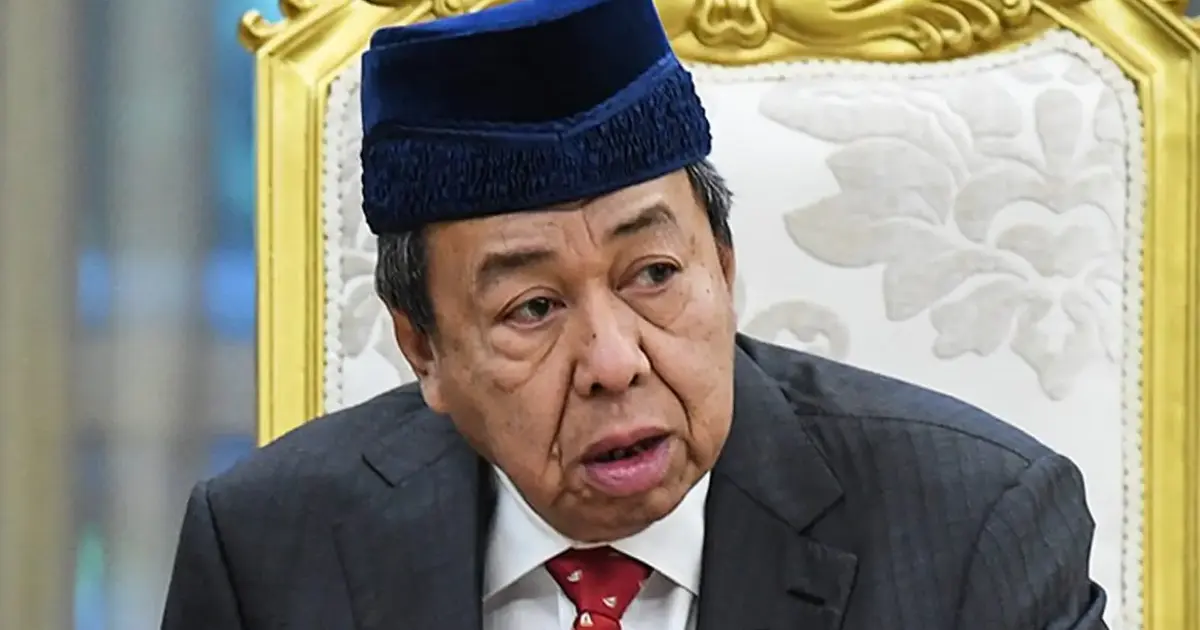
Sultan Sharafuddin of Selangor has delivered a measured assessment of the Light Rail Transit 3 (LRT3) project, allocating credit to both Najib Razak and Anwar Ibrahim while reserving sharp criticism for specific Democratic Action Party officials. The sultan's dual acknowledgment reflects the complex political dynamics surrounding a major infrastructure undertaking that has spanned multiple administrations and involved considerable public investment in the state's transportation network.
The LRT3, which connects key areas within Klang Valley, represents one of the most significant public transport expansion initiatives in recent Malaysian history. The project's trajectory through different political eras has made it a touchstone for evaluating how successive governments have managed major capital expenditure. By publicly recognising contributions from leaders across the political spectrum, the sultan appears to be advancing a narrative that transcends partisan divisions when evaluating infrastructure outcomes that directly benefit Selangor residents.
Najib's role in initiating or advancing the LRT3 framework during his tenure as Prime Minister has been acknowledged by the ruler. This recognition carries particular weight given that Najib's later years in office were marked by significant political and legal challenges. The sultan's willingness to credit his tenure on the LRT3 suggests a separation between evaluating specific policy achievements and broader governance records—a nuanced position that reflects institutional approaches to assessing public works independent of political fortunes.
Anwar Ibrahim's contribution, meanwhile, appears connected to his current administration's handling of the project. As Prime Minister, Anwar's government has inherited responsibility for completing and optimising the LRT3 within the broader vision of enhancing public transport accessibility across Selangor. The sultan's acknowledgment of his role suggests satisfaction with the current trajectory or at least recognition of genuine efforts to advance the initiative within existing constraints and budgetary realities.
The sultan's criticism of Lim Guan Eng and Tony Pua introduces a different dimension to the assessment. Lim, a senior DAP figure who previously served as Finance Minister, and Pua, another prominent DAP politician known for his engagement with fiscal and economic matters, have been positioned by the ruler as deserving of particular scrutiny. The specific nature of their involvement with LRT3 and the grounds for criticism remain central to understanding the sultan's intervention in this infrastructure narrative.
The LRT3 project has historically faced funding challenges, timeline extensions, and escalating costs—common features of large-scale Malaysian infrastructure ventures. These complications often generate disputes over accountability and resource allocation decisions. The sultan's targeted criticism suggests that certain individuals bore particular responsibility for either decisions that complicated project execution or inadequacies in how the initiative was managed during their periods of influence.
For Malaysian readers and particularly Selangor residents, the sultan's statement carries implications beyond the immediate political theatre. LRT3 remains essential to daily commuting for thousands of Klang Valley inhabitants, and public transport reliability directly affects economic productivity and quality of life. The ruler's intervention in crediting or criticising officials responsible for the project reflects the institutional role that Malaysian sultans play in representing public interest in major state matters, even when these involve sensitive political evaluations.
The statement also illuminates broader trends in Malaysian political discourse. Rather than polarising commentary typical of partisan politics, the sultan's approach acknowledges that infrastructure projects transcend individual political parties and administrations. This perspective aligns with how institutional voices in Malaysia increasingly attempt to navigate highly fragmented political landscapes by appealing to shared interests in competent governance and effective service delivery.
The DAP's particular prominence in Selangor governance—the party leads the state government—adds significance to criticism directed at its senior members. Any assessment of LRT3 management naturally implicates those who held decision-making authority at critical junctures. The sultan's willingness to differentiate between individuals and parties demonstrates that institutional accountability extends beyond general political affiliations.
Moving forward, the sultan's statement may influence how different political actors frame their contributions to major projects and how they respond to criticism. Public infrastructure increasingly becomes a measure of governmental competence, particularly when completion extends across multiple administrations. The LRT3 will ultimately serve as a tangible marker of how effectively Malaysia's fractured political system can coordinate ambitious undertakings.
The broader significance for Southeast Asian observers lies in understanding how constitutional monarchies within diverse democracies balance diplomatic neutrality with making substantive judgments about governance. Sultan Sharafuddin's approach—crediting officials across political lines while identifying specific shortcomings—represents a measured institutional response that attempts to maintain impartiality while ensuring accountability for public resources remains a central conversation in Malaysian governance circles.

