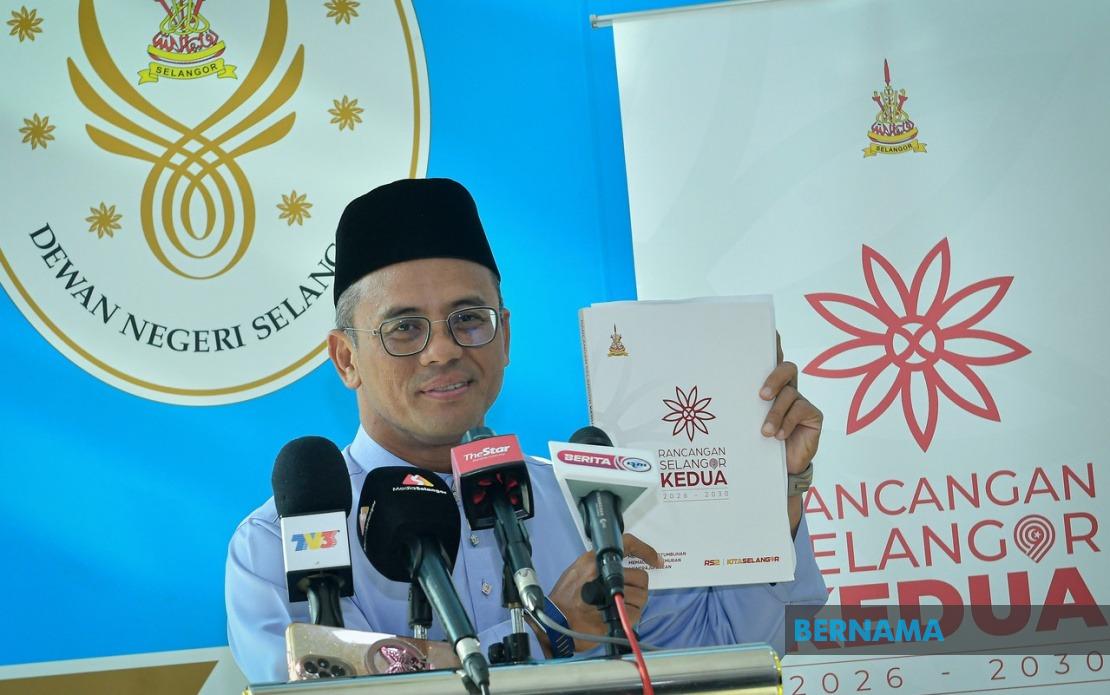
Menteri Besar Datuk Seri Amirudin Shari has set an ambitious target requiring every local authority in Selangor to attain and sustain a 95 per cent performance score under the PBT Star Rating System by 2030, marking a significant step in standardising municipal governance across Malaysia's wealthiest state. The declaration, made during the tabling of the Second Selangor Plan (RS-2) at the State Legislative Assembly, signals the government's determination to eliminate disparities in service quality that have long characterised local administration across different council areas.
The initiative represents a deliberate policy choice to extend excellence beyond pockets of high performance to encompass all residents regardless of their locality. Currently, service quality among Selangor's diverse municipalities varies considerably, with some councils delivering exemplary standards whilst others struggle with basic infrastructure maintenance, complaint resolution and administrative efficiency. Amirudin's directive seeks to flatten this performance hierarchy by instituting uniform accountability mechanisms that bind all authorities to the same rigorous benchmarks. This approach acknowledges that citizens in less developed or politically peripheral areas have equal entitlement to competent governance and responsive public services.
Critically, the 95 per cent target is not merely a numerical goal but reflects broader governance philosophy embedded in RS-2, which prioritises citizen-centric service delivery as foundational to economic development and social cohesion. The Menteri Besar emphasised that local authorities must fundamentally shift their operational mindset, treating service improvement and administrative efficiency not as supplementary concerns but as primary institutional objectives. This cultural reorientation requires councils to reimagine their relationship with residents, moving beyond passive service provision to proactive engagement with grievances and suggestions raised through diverse channels including social media platforms that have become primary communication conduits for increasingly digitally-savvy populations.
Complementing the rating system overhaul is an aggressive digitalisation agenda targeting 85 per cent coverage of end-to-end digital government service delivery by 2030. This technological push addresses persistent frustrations among Selangor residents who encounter fragmented, paper-dependent processes even within the nation's most developed state. By establishing seamless digital pathways for government interactions—from licence applications to permit approvals—authorities aim to reduce bureaucratic friction, accelerate response times and create auditable trails that enhance transparency. The digital framework also facilitates real-time data sharing between government agencies, enabling coordinated service delivery and eliminating the duplication and confusion that currently plague residents navigating multiple departments.
Beyond performance metrics, RS-2 grapples with Selangor's structural fiscal vulnerability, a dimension often overlooked in discussing local governance. The state's overwhelming dependence on land-based revenues—constituting approximately 75 per cent of total income through premiums and rental charges—creates precarious finances vulnerable to real estate market fluctuations and long-term constraints as development land becomes scarcer. Amirudin's recognition of this dependency as a strategic risk indicates sophisticated economic thinking that extends governance reform into revenue diversification. The plan proposes establishing an integrated State Investment Holding Company that would consolidate government-linked enterprises under coherent direction, reducing operational redundancy and improving returns on public capital invested across multiple subsidiary entities.
The alignment of government-linked companies represents a pragmatic response to the sprawl of parastatals that has characterised Malaysian governance for decades. These entities frequently operate with unclear mandates, overlapping jurisdictions and minimal coordination with state development priorities, creating inefficiencies that drain public resources and dilute strategic impact. By consolidating GLCs under unified governance structures, Selangor seeks to repurpose these entities as instruments for advancing technology-based and service-sector economic diversification. This reorientation moves away from traditional, land-dependent revenue generation towards knowledge-intensive activities where the state possesses competitive advantages through its proximity to Kuala Lumpur, established infrastructure and concentration of skilled workforce.
The implications for Malaysian public administration extend beyond Selangor's boundaries, as the state frequently serves as testing ground for governance innovations subsequently adopted nationally. The PBT Star Rating System and associated accountability frameworks could inform federal approaches to local government evaluation currently fragmented across various assessment mechanisms. Neighbouring states like Perak and Pahang, which share Selangor's challenges of municipal fragmentation and varying service standards, may draw lessons from this standardisation effort. Moreover, the revenue diversification strategy addresses fiscal challenges confronting most state governments dependent on narrow income sources, suggesting that Selangor's institutional innovations could offer transferable models for fiscal sustainability.
Implementing these targets, however, faces considerable practical challenges that extend beyond policy pronouncements. Local authorities across Selangor possess vastly different resource bases, professional capacities and infrastructural inheritances. Councils serving affluent suburban areas can more readily mobilise digital infrastructure investments and attract experienced administrators than those serving lower-income communities where basic service delivery remains inconsistent. Achieving uniform 95 per cent ratings requires targeted capacity-building, strategic resource allocation and potentially controversial decisions about consolidating or restructuring poorly-performing authorities. The state government must develop comprehensive support mechanisms including training programmes, technology infrastructure grants and performance improvement frameworks that distinguish between authorities requiring genuine assistance versus those exhibiting insufficient commitment.
The timeline extending to 2030 acknowledges the transformative scope of required changes whilst permitting gradual implementation and course corrections. This decade-long trajectory allows local authorities incremental progression through increasingly stringent performance standards whilst building institutional capacity and embedding cultural change within bureaucratic structures notoriously resistant to transformation. Amirudin's explicit emphasis on complaint management and multi-channel responsiveness reflects lessons from contemporary governance failures where citizens perceive councils as unresponsive to community concerns despite formal administrative structures. By mandating systematic attention to feedback received through social media and direct channels, RS-2 recognises that legitimacy increasingly depends on perceived responsiveness rather than merely technical competence.
The strategic positioning of GLCs within this governance framework reflects recognition that private sector participation alone cannot address infrastructure deficits and service gaps affecting Selangor's growing population. Government-linked enterprises, when properly governed and strategically deployed, can mobilise capital and expertise complementing public sector capabilities. However, this approach requires transparency mechanisms ensuring that GLC participation doesn't become vehicle for political patronage or opaque wealth transfers. The integrated holding company structure theoretically improves oversight, though success ultimately depends on appointment processes, board compositions and accountability mechanisms remaining insulated from political interference.
For Malaysian readers and businesses, RS-2's implementation carries tangible consequences. Improved local authority performance directly affects operational costs for enterprises navigating permit systems, licensing requirements and infrastructure coordination. Enhanced digital government services reduce transaction costs and permit greater business agility. Revenue diversification by Selangor, if successful, could stabilise state finances and reduce pressure for property tax increases or reduced service provisioning that ultimately affect business environment competitiveness. The technology-and-services sector focus aligns with national economic diversification objectives, potentially creating employment opportunities in high-value sectors where Malaysia aims to build competitive advantages.
Looking forward, the success of RS-2 hinges not merely on ambitious targets but on governance culture genuinely embracing citizen-centric accountability and performance management discipline. Selangor's elected and administrative leadership must demonstrate sustained commitment through resource allocation, personnel decisions and public communication reinforcing that service excellence constitutes non-negotiable institutional priority rather than rhetorical aspiration. The integration of rating systems with political accountability—ensuring that mayors and council presidents face consequences for persistent underperformance—will prove crucial for translating policy directives into tangible improvements experienced by residents navigating municipal services.

