With more than six in ten rail operations and corporate headquarters concentrated within its borders, Selangor has identified rail transportation as a strategic growth sector offering substantial employment and economic potential for the state's future. Mentri Besar Datuk Seri Amirudin Shari outlined this vision while attending the official rebranding of Metro System Academy at Universiti Tun Hussein Onn Malaysia in Sungai Buloh on Wednesday, signalling the state government's determination to position itself as the nation's rail industry hub.
The transformation of MSA UTHM into RailX represents more than a mere name change; it underscores Selangor's strategic pivot toward developing homegrown expertise in an increasingly technical and knowledge-intensive sector. By establishing dedicated platforms for training and accreditation, the state aims to cultivate a competitive advantage in attracting rail infrastructure investments while ensuring the workforce required to operate and maintain these systems draws predominantly from local talent pools. This approach addresses a persistent challenge across Southeast Asia's rapidly modernising transport sectors, where skills shortages frequently become bottlenecks to infrastructure development.
To coordinate this broader initiative, Selangor has established the Selangor State Rail Council, an institutional mechanism designed to map industry needs, identify skills gaps, and align educational offerings with employer requirements. Rather than allowing market forces to dictate workforce development haphazardly, the council enables systematic planning that connects secondary and tertiary education with industry practitioners. This deliberate orchestration reflects growing recognition among Malaysian policymakers that infrastructure projects fail not merely from engineering challenges but from insufficient preparedness of human capital to sustain operations over decades.
The RailX academy itself operates through a partnership between UTHM and Mass Rapid Transit Corporation, creating a direct conduit between educational institutions and the operators responsible for managing rail networks serving millions of commuters. This configuration ensures curriculum remains contemporary and responsive to operational realities rather than becoming stale within ivory towers. Workers and students enrolled in MSA UTHM programmes receive training tailored to modern rail systems, public transport integration, and emerging mobility technologies—knowledge increasingly indispensable as cities across the region embrace multimodal transport ecosystems.
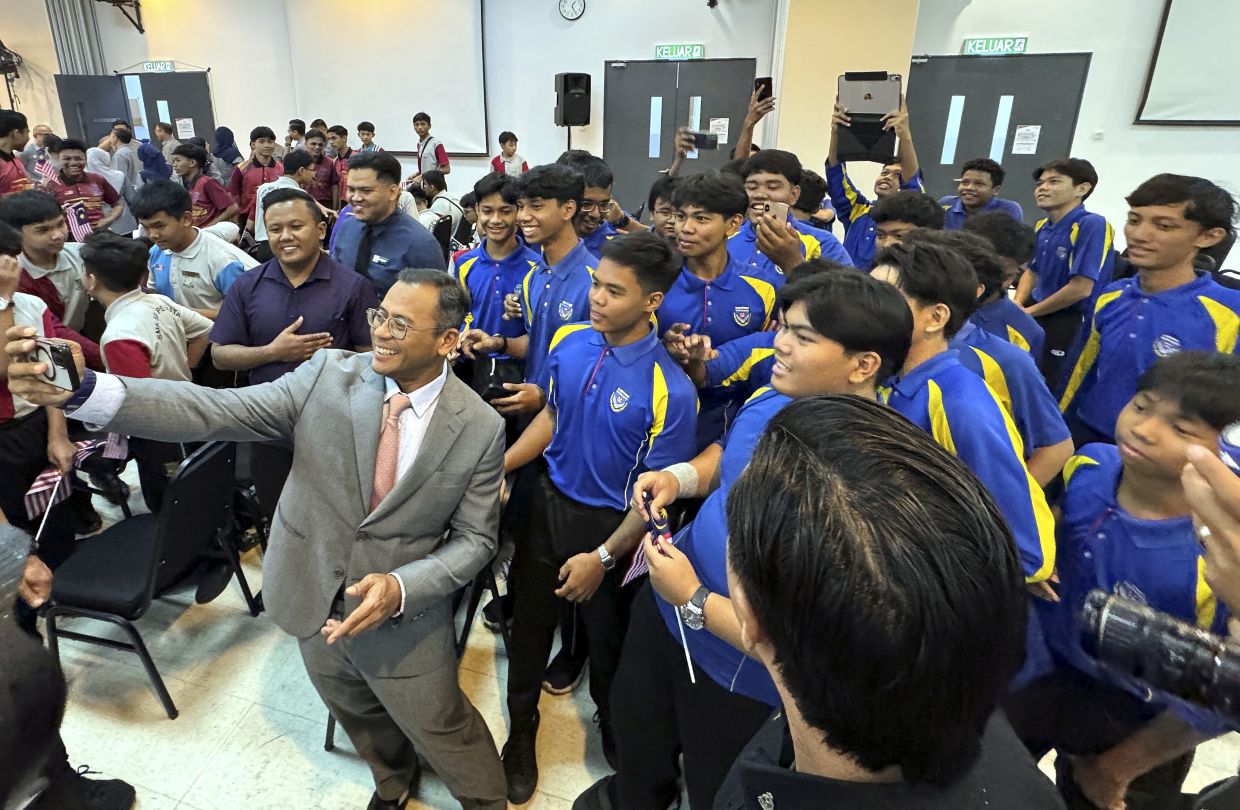
To engage younger generations with rail sector opportunities, the academy launched an interactive treasure hunt involving secondary school students from ten districts across Selangor. Participants experienced firsthand the infrastructure spanning Gombak, Petaling, Hulu Langat, Sepang, Klang, Sabak Bernam, and Kuala Selangor, transforming abstract concepts of rail transport into tangible workplace environments. Such experiential learning, particularly targeting students during formative career-planning years, cultivates informed interest in technical vocations that frequently suffer from perception problems compared to white-collar professions.
Amirudin positioned these initiatives within the framework of Malaysia's Education Plan 2026–2035, suggesting alignment between state-level rail development strategy and national education policy. The initiative reflects broader efforts to introduce secondary school cohorts to industry pathways beyond traditional university degrees, acknowledging that modern economies require robust technical and vocational education channels. By connecting educational trajectories directly to identified employment opportunities within expanding sectors, Selangor attempts to reduce the persistent mismatch between skills developed through training institutions and skills demanded by employers.
The state's commitment extends across its expanding public transport portfolio, encompassing the Light Rail Transit Line 3, East Coast Rail Link, and Mass Rapid Transit system. These concurrent infrastructure projects represent unprecedented demand for skilled personnel across engineering, operations, maintenance, and management disciplines. Concentrating workforce development efforts now ensures these megaprojects proceed with adequate staffing rather than encountering implementation delays attributable to labour constraints—a common phenomenon across Southeast Asia's infrastructure boom.
Crucially, the state has constructed a coherent pathway from vocational training through tertiary education via the Selangor Technical Skill Development Centre. STDC graduates can articulate into diploma and bachelor's programmes at UTHM, creating a comprehensive pipeline extending from foundational technical competency to advanced professional qualification. This stratified approach acknowledges that not all workers require university degrees, yet career progression should remain accessible to high-performing technicians who develop aspirations for advancement into supervisory or specialist roles.
The collaboration between government, universities, and commercial operators like MRT Corp and Rapid Rail exemplifies what policymakers term "triple helix" synergy—a model increasingly advocated by development economists as essential for competitive advantage in knowledge-intensive sectors. Government establishes enabling policy and funding frameworks; universities provide instructional capacity and research capabilities; industry partners supply operational expertise and employment outcomes. Such partnerships function optimally when relationships persist beyond ceremonial launches, embedding accountability mechanisms that ensure alignment persists as external circumstances evolve.
For Malaysian observers and regional analysts, Selangor's approach offers instructive lessons regarding state-level capacity to catalyse sectoral development beyond merely hosting infrastructure projects. Rather than treating rail networks as external impositions requiring passive labour absorption, Selangor frames transport infrastructure as anchor for deliberate human capital accumulation. This reorientation carries implications for how Malaysia's other states and neighbouring economies might approach emerging sectors, suggesting that competitive advantage increasingly accrues to jurisdictions that proactively develop specialist workforces rather than assuming workers will spontaneously materialise when employment opportunities emerge.

