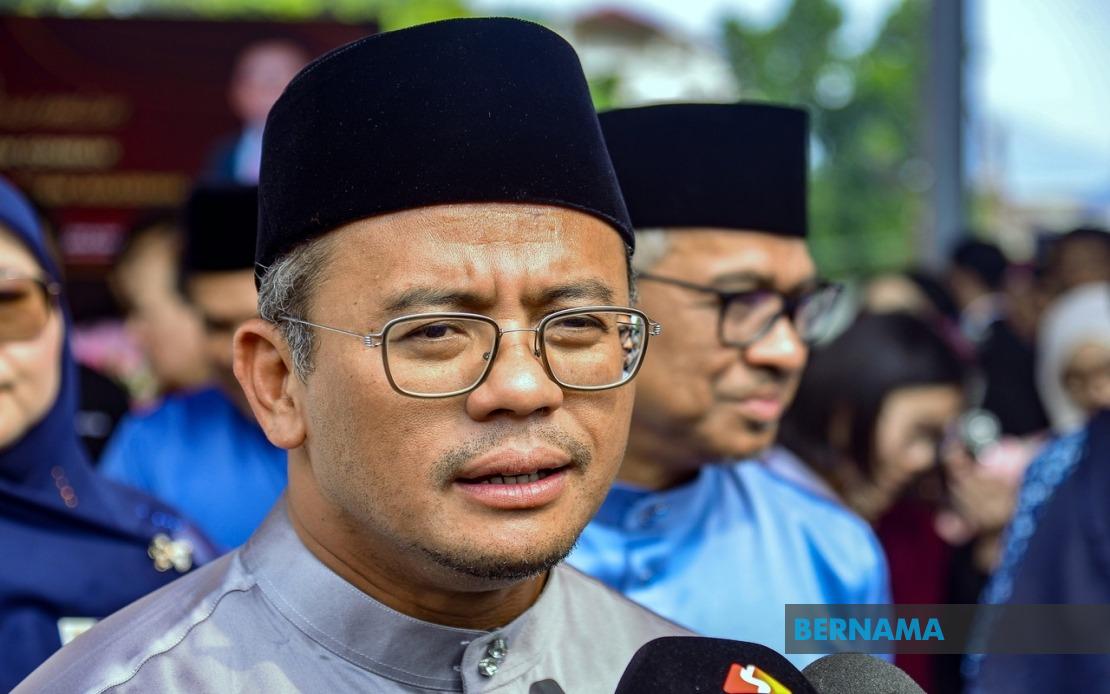
The Selangor state government has committed to prioritising education support systems and expanding Science, Technology, Engineering and Mathematics programmes as part of its 2027 budget strategy, according to Menteri Besar Datuk Seri Amirudin Shari. The announcement signals a deliberate policy shift towards human capital development in Malaysia's most economically developed state, where educational outcomes increasingly intersect with the region's technological advancement and competitiveness in the global economy.
Amirudin emphasised that the budget framework would centre on maintaining academic excellence while simultaneously broadening student engagement in STEM disciplines. This dual focus reflects growing recognition that traditional academic metrics alone insufficient to prepare young Malaysians for careers in an increasingly technology-driven labour market. The Menteri Besar's statement underscores a strategic acknowledgement that educational quality directly translates into workforce productivity and innovation potential.
The significance of Selangor's education portfolio cannot be understated. With approximately one million students enrolled across the state's schools, the ripple effects of policy improvements extend far beyond individual academic achievements. Amirudin explicitly linked educational outcomes to broader societal and national benefit, suggesting that enhanced performance among Selangor's student population would strengthen Malaysia's competitive position. This reasoning reflects a systems-thinking approach where state-level educational investments contribute measurably to national development priorities.
Regarding infrastructure enhancements, the state government is currently in an information-gathering phase to accurately assess facility requirements across its school network. Officials indicated that finalisation of infrastructure allocation targets will occur between September and October, following a comprehensive audit of existing conditions and future needs. This methodical approach, while potentially slower than immediate deployment, aims to ensure that allocated resources address genuine gaps rather than responding to incomplete data or competing agendas.
A notable initiative supporting the STEM and education agenda is Himpunan Pelajar Tingkatan Enam Selangor, commonly known as HIPSTERS, a platform designed to facilitate Form Six students' transition to higher education. The programme represents innovation in state-level student support, extending beyond traditional academic instruction to encompass resource provision. HIPSTERS distributes book vouchers and provides complimentary internet data to participating students, recognising that digital connectivity and reading materials constitute essential infrastructure for contemporary learning.
The expansion of HIPSTERS demonstrates evolving policy thinking within Selangor's education portfolio. Originally conceived to serve university-bound students, the programme has been restructured to target Form Six cohorts earlier in their academic journeys. In 2026, approximately 10,000 Form Six students received book vouchers through the scheme, substantially enlarging the initiative's reach and demonstrating the state's willingness to scale successful programmes. This expansion strategy acknowledges that intervention at secondary level potentially yields greater cumulative benefits than support offered only at tertiary stage.
Amirudin indicated openness to further extending HIPSTERS coverage to additional Form Six schools, contingent upon demonstrated demand and alignment with identified requirements. This conditional expansion approach balances fiscal prudence with responsiveness to grassroots needs, avoiding the pitfall of over-ambitious rollout while maintaining flexibility to grow programmes proven effective. Such measured scaling reflects mature policy implementation where success metrics inform subsequent investment decisions.
For Malaysian and Southeast Asian observers, Selangor's education strategy carries broader implications. As the region's most populous and economically significant state, Selangor's policy directions often establish templates adopted elsewhere within Malaysia. The emphasis on STEM and structured support systems signals state-government recognition that educational competitiveness increasingly determines regional economic positioning. Countries throughout Southeast Asia face similar demographic and economic pressures, making Selangor's approach instructive for policymakers evaluating education investment priorities.
The 2027 budget framework also reflects Selangor's response to national skills shortages in technical disciplines. Malaysia has experienced persistent gaps between labour-market demand for engineering, technology, and scientific professionals and domestic supply of qualified graduates. By intensifying STEM participation at secondary level, Selangor addresses this challenge upstream, potentially increasing the pool of students proceeding to tertiary technical education. Such preventive investment in pipeline development represents more efficient long-term strategy than reactive efforts to fill professional vacancies through immigration or intensive retraining.
Beyond quantitative metrics, the stated commitment to allowing students to contribute to community through their learning suggests integration of civic engagement within educational objectives. This dimension implies that Selangor's vision for its one million students encompasses not only individual achievement and economic productivity but also social responsibility and community participation. Such holistic educational philosophy aligns with evolving global understanding that sustainable development requires technically skilled populations also possessed of ethical grounding and commitment to collective welfare.
The infrastructure audit process, though appearing procedurally routine, carries significance for equitable education access across Selangor's diverse municipalities. Rural and semi-urban schools often face greater facility deficits than well-resourced urban institutions. A comprehensive information-gathering exercise preceding budget allocation offers opportunity to identify and prioritise schools with greatest infrastructure needs, potentially reducing educational disparities within the state. Transparent allocation methodologies also enhance public accountability and stakeholder confidence in government resource management.
Looking ahead, the successful implementation of Selangor's 2027 education agenda will require coordinated effort across multiple government agencies and educational institutions. HIPSTERS programme expansion, infrastructure improvements, and STEM participation increases cannot succeed through budget allocation alone; they demand teacher professional development, curriculum alignment, community engagement, and sustained political commitment. The Menteri Besar's public emphasis on education priorities signals such commitment exists at leadership level, though execution will ultimately determine whether pledges translate into tangible improvements in student outcomes and educational infrastructure.

