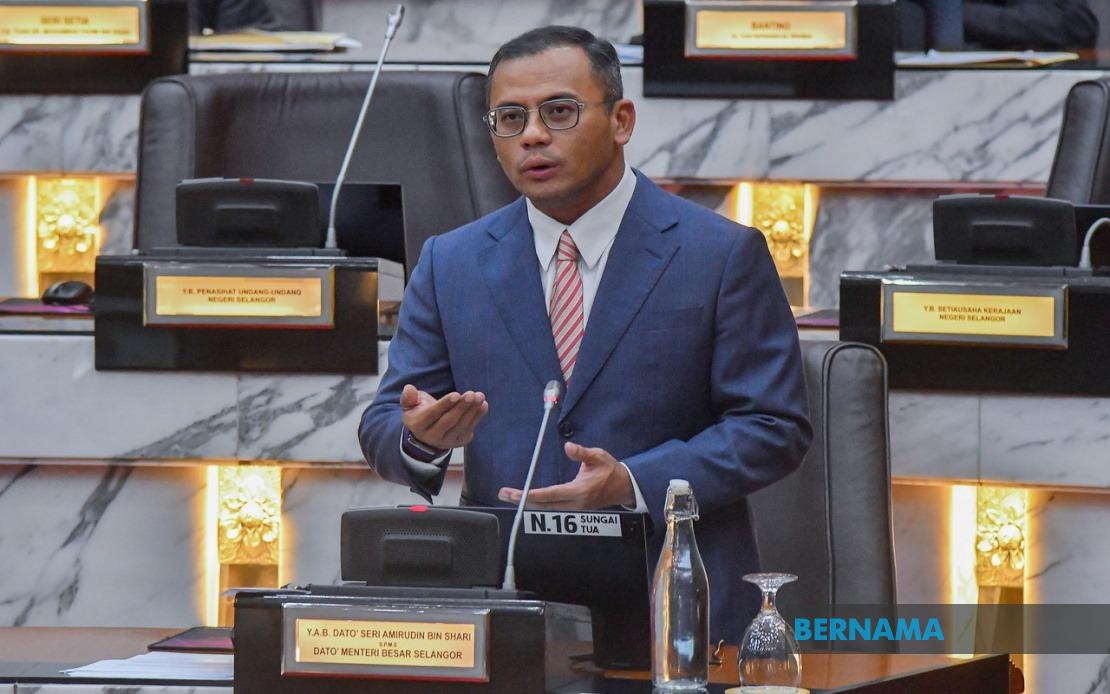
Selangor's top administrator has moved to address mounting complaints about fragmented public transport connections by ordering all local authorities to conduct comprehensive reviews of transit infrastructure and pedestrian facilities. Speaking in the State Legislative Assembly on June 23, Menteri Besar Datuk Seri Amirudin Shari signalled the state government's readiness to inject fresh funding into closing connectivity gaps that discourage residents from using public vehicles and force them towards private transport alternatives.
The directive comes amid growing social media visibility of first-mile and last-mile connectivity problems, particularly around the light rapid transit system. Danial Al-Rashid Haron Aminar Rashid, assemblyman for Batu Tiga, had raised the issue during legislative proceedings, highlighting how poor links between transit hubs and surrounding communities create friction in the mobility chain. The problem has resonated widely across digital platforms, reflecting genuine frustration among regular commuters navigating Selangor's sprawling urban landscape.
MB Amirudin emphasised that local authorities must demonstrate greater initiative in identifying and resolving these gaps rather than waiting for complaints to accumulate on social media. His remarks underscore a broader governance challenge facing rapidly developing Malaysian states—the need for transit planners to stay ahead of urban growth patterns and anticipate accessibility issues before they become entrenched. The comment about social media platforms including X and Threads signals an expectation that officials should be actively monitoring public sentiment and responding proactively.
Crucially, the state government has committed to providing additional financial support to improve pedestrian infrastructure, including safer and more comfortable walkways connecting residential areas to transit nodes. This funding pledge reflects understanding that public transport adoption depends not merely on frequency and reliability of services, but on the entire ecosystem of accessibility. A commuter's decision to use the LRT, bus, or monorail is shaped by whether they can safely and conveniently walk or cycle from their home or workplace to the nearest station.
However, Amirudin cautioned that infrastructure improvements alone are insufficient without coordinated operational changes from transit operators. He has instructed Ng Sze Han, chairman of the State Investment, Trade and Mobility Committee, to convene all public transport operators serving Selangor and develop service mapping that identifies specific connectivity deficiencies. This systematic approach moves beyond reactive problem-solving toward data-driven planning that can pinpoint exactly where additional bus routes, extended operating hours, or station improvements are needed.
The subsidies that Selangor offers transit operators carry implicit conditions, according to the MB. If authorities provide financial support to reduce operational costs but operators fail to adjust service patterns to serve connectivity-starved areas, the subsidy becomes mere transfer rather than genuine investment in mobility. Amirudin's frank assessment suggests frustration with operators who accept state assistance without reciprocally improving service coverage during critical commuting periods.
For Malaysian urban planners and transit advocates, Selangor's approach offers important lessons about the interdependence of funding, regulation, and service quality. Many Malaysian cities struggle with the classic public transport challenge: without users, services cannot be sustained financially, yet without improved accessibility, potential users remain deterred. Breaking this cycle requires simultaneous investment across multiple fronts—physical infrastructure, operational coordination, and subsidy mechanisms that incentivise rather than merely support operators.
The emphasis on listening to council members and stakeholders reflects a recognition that local representatives and community groups often identify problems before they gain viral traction. By shifting official attention toward sustained consultation rather than reactive social media monitoring, the state aims to build feedback mechanisms that catch issues earlier. This represents maturation in governance responsiveness, moving beyond the occasional social media crisis to institutionalised community engagement.
The LRT3 connectivity issues specifically mentioned represent a significant infrastructure investment that risks underutilisation if passengers cannot conveniently access stations. The system's viability depends on surrounding urban development patterns and transit integration being carefully orchestrated. If workers and shoppers find alternative routes more convenient, the LRT3 becomes an isolated transport corridor rather than an integrated system that transforms metropolitan mobility patterns.
For businesses and property developers across Selangor, the government's connectivity focus carries implications for future investments. Areas that successfully improve transit links will likely attract higher-value development and become more competitive within the regional economy. Conversely, regions that remain transit-inaccessible will stagnate relative to better-connected alternatives, creating spatial inequality within the state.
The financial commitment to upgrade walkways and pedestrian facilities also addresses public health and quality-of-life dimensions that extend beyond transport efficiency. Pedestrian infrastructure improvements typically benefit elderly residents, persons with disabilities, and families with young children—groups whose mobility needs are underrepresented in planning discussions focused solely on commuter volume and peak-hour capacity.
Moving forward, the success of Selangor's initiative will depend on whether the state can translate Amirudin's instructions into sustained implementation. Local authorities must resource their reviews adequately, operators must respond to mapping exercises with genuine service modifications, and the state must ensure subsidies are structured to reward responsive operator behaviour. The visibility of this commitment at legislative level suggests political will, but sustained monitoring and adjustment will determine whether these connectivity gaps narrow or persist.