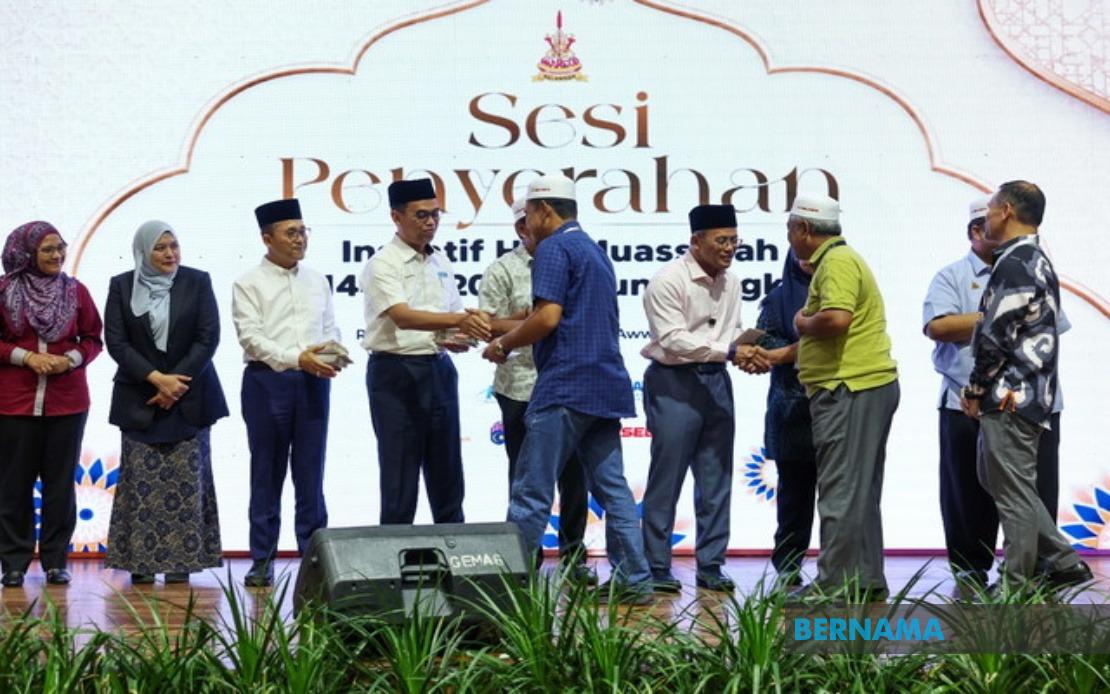
The Selangor state government is in the final stages of distributing RM9 million in financial support to aspiring Haj pilgrims throughout the state, with approximately 80 per cent of intended recipients having already received their allocations. According to Menteri Besar Datuk Seri Amirudin Shari, efforts are underway to locate and contact the remaining 1,200 pilgrims to ensure all 6,000 beneficiaries receive their payments before September concludes.
The 2026 Muassasah Haj Incentive Programme represents a significant commitment by the Selangor administration to ease the financial burden faced by Muslim citizens undertaking the Islamic pilgrimage. Each recipient is entitled to RM1,500 in direct assistance, funds designated specifically for essential preparations including religious clothing and equipment, prescribed medications, appropriate footwear, and other necessities required for the sacred journey. Amirudin announced this progress during a presentation ceremony held at the Putra Perdana Community Hall in Puchong, where 259 pilgrims from the Dengkil constituency received their allocations in person.
The initiative extends across all state constituencies, with the Selangor Menteri Besar Incorporated Foundation, commonly known as Yayasan MBI, serving as the implementing agency. This structured approach ensures equitable distribution across the state's diverse communities and demonstrates the state government's commitment to supporting religious observance among its Muslim population. The presence of Deputy Housing and Local Government Minister Datuk Aiman Athirah Sabu, who represents Sepang in Parliament, highlighted the programme's importance within the broader state and federal context.
For Malaysian readers, this development carries particular significance given the rising costs associated with Haj preparation. The financial burden of obtaining visas, purchasing specialised clothing, securing vaccinations, and covering airfare has increasingly become a barrier for middle and lower-income families. By providing targeted assistance, Selangor aims to democratise access to the pilgrimage, ensuring that economic circumstances do not prevent eligible citizens from fulfilling one of Islam's Five Pillars. This approach reflects broader concerns across Southeast Asia regarding equitable access to religious practices.
Looking forward, Amirudin outlined ambitions to substantially enhance the programme's generosity. The state government has set a target to increase per-recipient assistance to RM2,000, with implementation potentially beginning in 2027 or extending to 2028 depending on fiscal conditions. This proposed increase of approximately 33 per cent would provide additional support for healthcare preparations, emergency reserves, or enhanced comfort during the journey. However, the Menteri Besar cautioned that such expansion depends on sustained state revenue and the absence of unforeseen fiscal pressures.
The planned enhancement reflects evolving understanding among state administrations regarding the true costs of Haj preparation. Initial allocations, while valuable, often prove insufficient when pilgrims account for comprehensive health screening, specialised travel insurance, supplementary medications for chronic conditions common among older pilgrims, and contingency funds for emergencies. By targeting RM2,000, Selangor would align more closely with realistic requirements while maintaining fiscal responsibility.
This initiative positions Selangor as a leader among Malaysian states in supporting religious observance through direct financial assistance. While other states have implemented various Haj support mechanisms, the scale and structure of Selangor's programme—benefiting 6,000 individuals with clear expansion pathways—establishes a benchmark. For Southeast Asia more broadly, where Muslim-majority nations like Indonesia and Bangladesh manage far larger pilgrim populations with more constrained resources, Selangor's approach offers insights into structured, scalable models for religious support.
The administrative challenge of identifying and contacting remaining recipients, while appearing straightforward, reflects deeper logistical complexities. Some intended beneficiaries may have relocated, changed contact details, or experienced administrative delays in registration verification. The state's commitment to completing disbursement by September demonstrates organisational resolve to minimise such barriers and ensure eligible citizens benefit fully.
Implementation of this programme also carries political dimensions worthy of consideration. By demonstrating tangible support for Muslim religious practices, the Selangor government reinforces its commitment to constituents' spiritual wellbeing while addressing concrete economic barriers. This approach generates visible goodwill and addresses constituent concerns beyond typical governance functions. For Malaysian political observers, such targeted social support has increasingly become expected of state administrations seeking to demonstrate responsive governance.
The RM9 million total investment, while significant, represents modest allocation relative to state budgets yet generates outsized impact through concentrated, purposeful deployment. This efficiency model—delivering substantial assistance to specific populations through focused programmes—increasingly characterises progressive state governance. The approach also avoids universal subsidies, instead targeting those undertaking specific religious obligations, thereby concentrating resources where demonstrated need exists.
For pilgrims themselves, receiving RM1,500 or the aspired RM2,000 directly addresses planning anxieties and enables more comprehensive preparation. Beyond the financial value, state recognition of pilgrimage as worthy of public support carries symbolic importance, validating religious observance as integral to civic identity and deserving institutional backing.
The programme's trajectory toward completion within specified timeframes suggests effective state administration and organisational capacity. Maintaining momentum to achieve the September target while simultaneously planning for 2027 expansion demonstrates institutional capability to manage growing social support commitments. As other states contemplate similar programmes, Selangor's experience offers practical lessons regarding programme design, beneficiary identification, and expansion feasibility. The stated intention to periodically review and potentially modify the scheme indicates adaptive governance, responding to changing circumstances while maintaining core commitments to constituent support.

