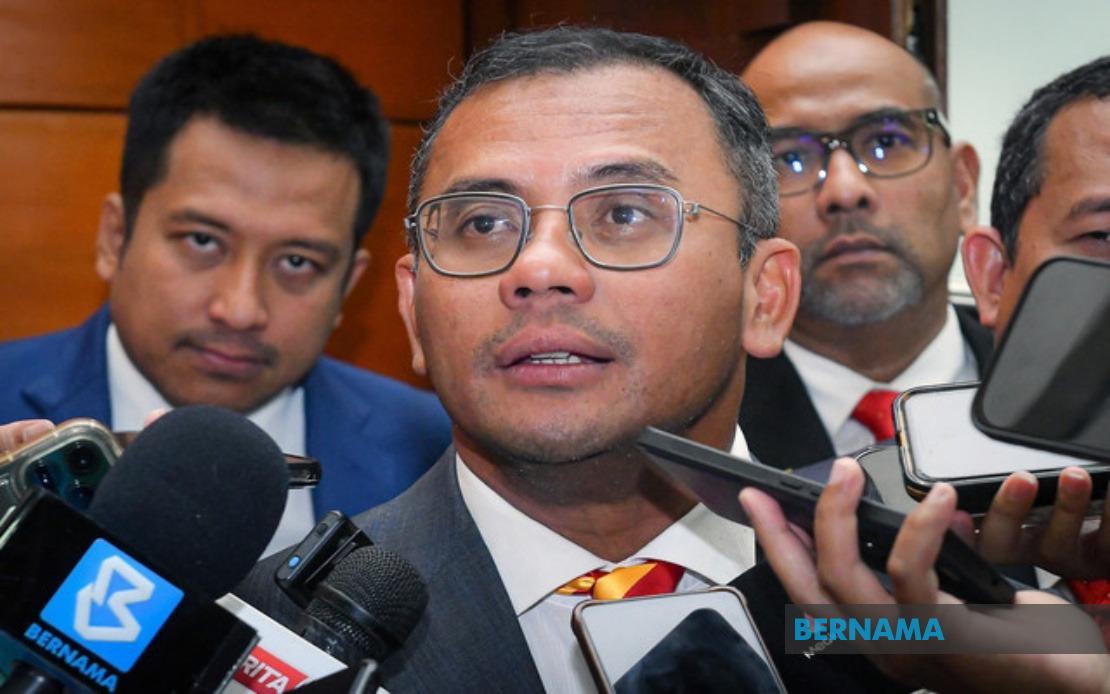
Selangor's state government has committed RM3.5 million towards a new research funding initiative aimed at spurring innovation and generating knowledge that directly supports the state's medium-term development strategy. Menteri Besar Datuk Seri Amirudin Shari announced the allocation at a grant handover ceremony, positioning the Selangor Development Grant (SELidik) 2026 as an evolution of the previous state research programme and a critical pillar of the Second Selangor Plan (RS-2), which was unveiled on Aug 7 and runs through 2030.
The programme represents a strategic pivot toward research that serves immediate policy needs rather than pursuing academic inquiry in isolation. Of the RM3.5 million total, RM2.5 million has been directed to two state-owned institutions—Universiti Islam Selangor (UIS) and Universiti Selangor (UNISEL)—which will form the backbone of the initiative's first phase. These universities have been tasked with producing tangible research outputs beyond traditional academic publications, including practical modules, software applications, and working prototypes that can be deployed by the state government or private sector partners.
The initiative's scope extends beyond the two lead institutions. A further RM1 million has been earmarked for other universities operating within Selangor's borders, creating opportunities for a broader research ecosystem to contribute to the state's development agenda. This tiered funding approach suggests Selangor intends to build a collaborative research network rather than concentrate resources in a single institution, potentially widening the pool of academic talent engaged in state priorities.
What distinguishes SELidik from conventional research grants is its explicit linkage to policy implementation. All funded research must align with one of six core missions outlined in the RS-2, which collectively aim to generate RM600 billion in economic value over the five-year planning period. These missions span economic leadership, inclusive regional development, livability and social care, human capital productivity, environmental sustainability, and administrative efficiency. By tethering research funding to these strategic pillars, Selangor aims to accelerate the translation of academic findings into government programmes and business initiatives.
The research outputs generated through the first phase will feed directly into relevant parliamentary standing committees within the state legislature, creating a formal mechanism for research to influence decision-making. This approach mitigates a common criticism of government-funded research in Southeast Asia—that valuable studies often gather dust on shelves rather than informing policy. By embedding research dissemination into governance structures, Selangor signals intent to close the gap between knowledge generation and application.
Eligibility for SELidik grants is open to local researchers across accredited institutions, though applications must demonstrate clear connection to state government departments and the RS-2 framework. Previous research in areas such as agriculture, technological innovation, and development studies will be reconsidered and potentially integrated into the programme if they offer actionable insights for state priorities. This suggests Selangor may draw from a backlog of completed or ongoing studies that align with its new strategic direction, effectively recycling existing intellectual capital.
The governance of SELidik has been delegated to Yayasan Selangor, the state's development foundation, which will manage application processing, fund disbursement, and research monitoring. This arrangement allows the state government to maintain distance from direct research administration while ensuring alignment with policy goals. The foundation model also potentially enables SELidik to operate with greater flexibility than traditional civil service structures, potentially accelerating grant cycles and reducing bureaucratic friction.
Looking beyond the initial investment period, Selangor's leadership has signalled openness to expanding the programme's reach and ambition. Amirudin indicated that if surplus funds materialise, the state may extend participation to international research institutions, broadening access to cutting-edge expertise and potentially positioning Selangor as a knowledge hub within Malaysia's research ecosystem. Such expansion would align with broader aspirations to elevate the state's economic and innovation profile as it competes regionally.
The strategic intent underlying SELidik reflects a maturing approach to innovation policy in Malaysia's wealthiest state. Rather than assuming that academic research will naturally flow into economic or social benefit, Selangor is attempting to engineer that connection through explicit funding conditions and governance mechanisms. This represents a departure from older models of science funding based primarily on peer-reviewed merit, instead weighting research value partly on policy relevance and implementability.
For Malaysian university researchers and innovation sectors, the RM3.5 million allocation is modest by international standards but significant within Selangor's context. The grant opens new funding channels for academics whose work addresses state priorities, though researchers working outside the RS-2 framework or in exploratory, foundational areas may find conventional funding sources more appropriate. The concentration of initial resources in UIS and UNISEL may also influence research directions and talent distribution across Selangor's higher education sector.
The timing of SELidik's launch coincides with Selangor's broader positioning as Malaysia's innovation and economic engine. As the state government articulates ambitious development targets—including economic value targets that exceed many Southeast Asian countries' regional GDPs—research infrastructure and knowledge generation become essential enablers. By channelling research funding explicitly toward these targets, Selangor aims to close potential gaps between aspirational planning and implementation capacity.
The programme also reflects growing recognition among Malaysian state governments that knowledge production and application cannot be separated from economic strategy. Selangor's approach may establish a template for other states seeking to align academic institutions with development goals, potentially influencing how federal and state governments conceptualise research investment across Malaysia.
The success of SELidik will ultimately depend on whether research outputs translate into government programmes, private-sector adoption, or measurable social outcomes. Early programme performance will likely shape whether Selangor expands the model and how other states respond to this evidence-driven approach to linking research and governance.

