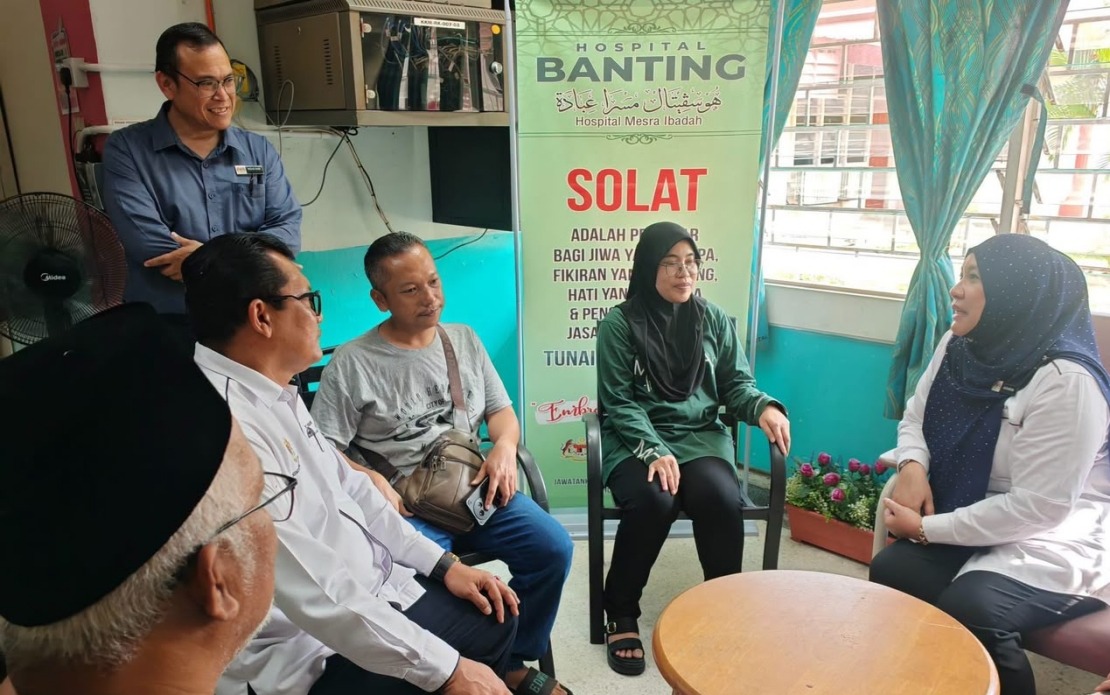
The Selangor State Education Department (JPN) made a visit to Banting Hospital on July 7 to see a female secondary school student who sustained serious injuries in a stabbing attack at her school in the Kuala Langat district. The visit underscores the education sector's commitment to supporting affected students and families during traumatic incidents within the school community.
Department director Wan Nor Ashikin Abu Kassim led the delegation to the hospital, where she met directly with the injured student and her parents. Beyond offering immediate emotional support, the visit carried symbolic weight—demonstrating that state educational authorities are actively engaged in the recovery process and stand alongside families during their most difficult moments. Such gestures help reassure both the student and parents that institutional support extends beyond the classroom during crises.
According to the victim's father, the 15-year-old Form Three student endured a traumatic assault, sustaining a punctured lung and 16 stab wounds during the incident. The severity of these injuries—particularly the lung damage—raises serious medical and safety concerns within secondary school environments. Such incidents, while rare, trigger widespread anxiety among parents and school administrators about security protocols in Malaysian educational institutions.
The JPN's public statement emphasized prayers for the student's full recovery and pledged ongoing cooperation with the victim's family, hospital staff, and relevant law enforcement agencies. This multi-stakeholder approach reflects a recognition that school violence requires coordinated responses spanning education, healthcare, and criminal justice systems. The department's explicit commitment to partnership signals that institutional silos must be broken down when student safety is at stake.
Police investigation into the stabbing resulted in the detention of a suspect, who was subsequently remanded for four days as of July 7. The four-day remand period allows investigators time to gather evidence, conduct interviews, and determine whether charges should be filed. The legal process typically moves methodically through preliminary detention phases before formal charges are considered, ensuring proper procedural safeguards even in serious assault cases.
School stabbing incidents provoke broader societal concerns about youth violence, mental health support systems, and the adequacy of school security measures across Malaysia. While such attacks remain statistically uncommon compared to international contexts, any incident within an educational setting resonates deeply with parents and educators who view schools as sanctuaries for learning and development. The Banting incident will likely prompt renewed discussions about threat assessment protocols and early intervention programs for troubled students.
The response from the Selangor JPN illustrates how state-level education authorities balance immediate compassion with systemic accountability. By visiting the hospital and engaging with parents directly, leadership demonstrates that the department takes student welfare seriously rather than treating the incident as an administrative matter to be handled remotely. This personalized engagement can help rebuild confidence in institutional structures that may have been shaken by the violence.
For Malaysian parents, particularly those with children in secondary schools, incidents like this underscore the unpredictability of school safety despite best efforts. The incident invites questions about whether existing security measures—such as visitor screening, counseling services, and emergency response protocols—are adequate. School administrators nationwide may face pressure to review and potentially enhance their safety frameworks, though responses must be calibrated carefully to avoid creating fortress-like environments that compromise the open, welcoming character essential to educational institutions.
The support extended by the JPN to this student's family also reflects Malaysia's broader cultural values emphasizing communal responsibility and collective care during times of crisis. Rather than leaving the family to navigate trauma in isolation, institutional actors position themselves as partners in recovery. This approach, when executed genuinely, can accelerate emotional healing and help the student envision a future beyond the traumatic event.
As the investigation proceeds and the remanded suspect faces potential charges, attention will likely focus on the motivations behind the stabbing and whether warning signs were missed by school or community networks. Understanding the circumstances will be crucial not only for the immediate case but for informing preventative strategies across the education system. The coming weeks will reveal whether this represents an isolated incident or highlights systemic vulnerabilities requiring broader intervention.
The recovery process for this 15-year-old extends far beyond physical healing. Psychological trauma from such violence can have lasting impacts on academic performance, social relationships, and emotional wellbeing. The visible support from education authorities signals to the student and her peers that recovery is possible and that the institution stands ready to facilitate it. Ongoing counseling, curriculum adjustments, and peer support programs will likely become essential elements of the school community's response in coming months.

