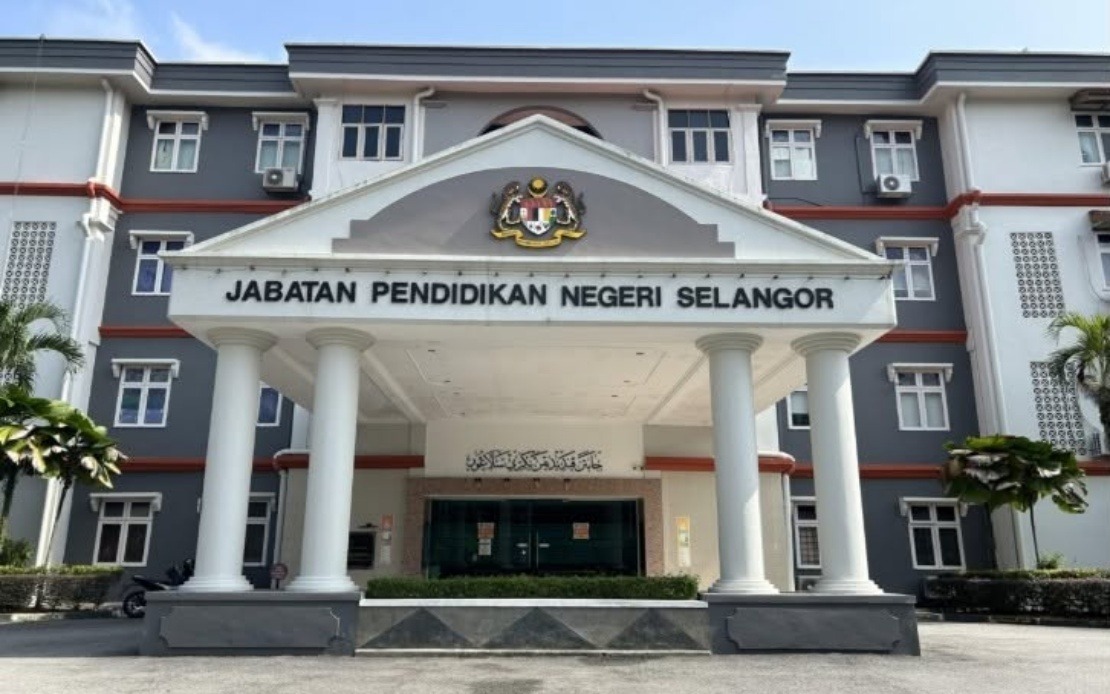
The Selangor State Education Department (JPN) has committed itself fully to the ongoing police investigation into a bullying incident involving secondary school students in Rawang that drew significant public scrutiny after footage circulated widely across social media platforms. In a formal statement released on July 12, the department emphasized that the case would be handled with utmost seriousness and that no individual would receive preferential treatment during the investigation process.
The incident has become emblematic of broader concerns about student safety within Malaysian schools, as viral videos depicting misconduct increasingly shape public discourse around educational institutions. The Rawang case exemplifies how digital connectivity amplifies these issues beyond school compounds, transforming what might once have remained a local matter into a subject of national conversation. This expansion of visibility has placed significant pressure on education authorities to demonstrate decisive action and institutional accountability.
Selangor JPN's statement underscores a commitment to enforce existing regulations uniformly against all parties found culpable, signalling that the department views such incidents as threats to the fundamental well-being of its student population. The emphasis on "strict action" reflects a recognition that bullying—whether physical, verbal, or psychological in nature—undermines the educational environment and can cause lasting harm to victims. By publicly pledging consequences, the department seeks to deter similar behaviour whilst reassuring parents and the community that their concerns are being taken seriously.
The involvement of police in the investigation adds a criminal dimension to what might ordinarily be handled through school discipline procedures alone. This escalation suggests that the alleged misconduct may have crossed thresholds that warrant law enforcement scrutiny, though details regarding specific charges or the nature of the bullying remain undisclosed at this stage. For Malaysian schools, the intersection of educational and judicial oversight in bullying cases presents both procedural complexity and an opportunity to establish stronger preventative frameworks.
The department's explicit request for public patience during the investigative process reflects standard protocol but also acknowledges the intense social media scrutiny surrounding such cases. In the age of instant commentary and shared outrage, authorities face mounting pressure to deliver rapid conclusions whilst simultaneously ensuring investigative integrity. This tension between expedience and thoroughness represents a genuine challenge for education departments across Southeast Asia grappling with how to respond proportionately to amplified public concern.
Bullying incidents within Malaysian schools have become increasingly visible as smartphone penetration enables students to document and share incidents instantaneously. This technological reality has transformed school safety from a primarily parental and institutional concern into a matter of public interest with unpredictable viral potential. The Rawang case, by gaining traction online, has inadvertently become a case study in how modern communication channels reshape educational governance and accountability.
The Selangor JPN's categorical statement that no individual would be protected suggests an awareness that perception of institutional favouritism or cover-ups could prove more damaging than the original incident itself. Public trust in the education system depends substantially on confidence that misconduct will be addressed impartially, regardless of family connections, social status, or other variables. By publicly foreswearing any protection of wrongdoers, the department attempts to preempt accusations of bias.
This commitment also reflects broader policy directions within Malaysian education, where student welfare and safety initiatives have gained prominence in recent years. The education sector has increasingly recognized that effective learning environments depend on physical and psychological security, prompting systemic efforts to address bullying, harassment, and other forms of misconduct. The Rawang investigation thus sits within a larger landscape of institutional reform aimed at strengthening student protection mechanisms.
For parents and students in Selangor, the department's transparent positioning on the matter offers some reassurance that formal channels exist for addressing serious misconduct. However, the case also highlights gaps in prevention—the fact that an incident occurred and spread virally suggests that early intervention systems may have been insufficient. Future policy discussions will likely examine whether schools have adequate resources, training, and protocols to identify and address bullying before it escalates to levels that generate viral documentation.
The broader implications of this case extend beyond Selangor to other state education departments across Malaysia that face similar challenges. The investigation's outcome, the specific actions taken, and how effectively the department communicates those measures will set precedents for institutional responsiveness to student safety crises. Other states may reference this case when developing their own protocols for handling bullying incidents that gain public attention through digital channels.
As the police investigation proceeds, the Selangor JPN's role remains one of institutional coordination and eventual implementation of consequences within the education system itself. Depending on investigative findings, the department may pursue disciplinary measures ranging from counselling and suspension to expulsion, whilst also potentially implementing support measures for affected students. The department's effectiveness will be judged not only by the severity of punishment administered but by evidence of systemic changes preventing recurrence.

