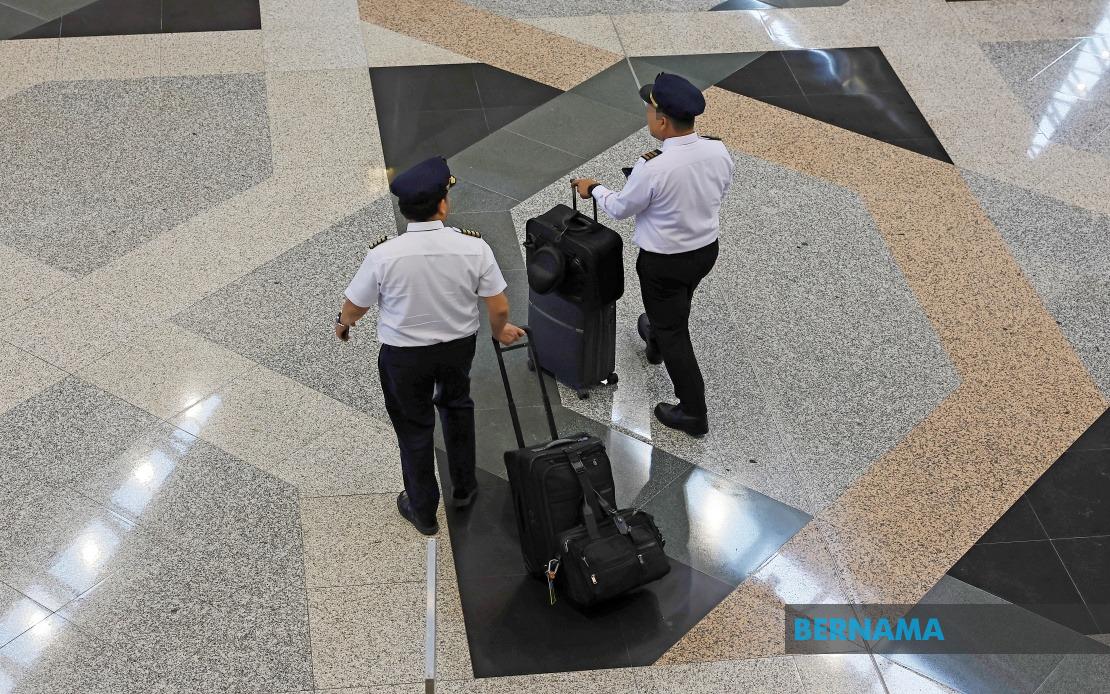
The detention of a 39-year-old Malaysian pilot at Jakarta's Soekarno-Hatta International Airport on suspicion of attempting to smuggle 25 kilogrammes of drugs has prompted urgent calls for a comprehensive overhaul of security screening procedures at Kuala Lumpur International Airport. Tan Sri Lee Lam Thye, chairman of the Alliance For A Safe Community, has formally requested that relevant authorities examine the screening protocols that allowed the suspected contraband to reportedly pass through KLIA undetected, raising fundamental questions about the robustness of Malaysia's airport security infrastructure.
The incident represents a significant breach of aviation security, one of the most tightly regulated sectors given the catastrophic potential consequences of lax border controls. While the pilot remains presumed innocent pending legal proceedings in Indonesia, the circumstances surrounding the case expose potential vulnerabilities in the detection systems and procedural frameworks that are meant to serve as the first line of defence against drug trafficking and other illicit activities. The suspect allegedly managed to transit through KLIA's security screening—a facility widely regarded as regionally advanced—without detection, only to be apprehended thousands of kilometres away when entering Indonesian airspace.
Lee's intervention reflects broader public concern about maintaining confidence in Malaysia's aviation security ecosystem. The nation's airports, particularly KLIA as the primary international gateway, are critical assets whose reputation depends entirely on the perceived effectiveness of their protective measures. Any perception that security controls can be circumvented, particularly by individuals holding positions of authority within the aviation system itself, threatens to undermine international confidence in Malaysian airport operations. This is especially consequential for a country that depends heavily on aviation connectivity for tourism, trade, and regional commerce.
A critical dimension of this case involves the status of the detained individual. As a pilot employed within the aviation sector, this person would typically occupy a position of trust, enjoying access to restricted areas and potentially subjected to elevated security vetting compared to ordinary passengers. The fact that someone from within the aviation workforce allegedly succeeded in smuggling narcotics raises uncomfortable questions about whether personnel screening procedures have kept pace with the sophistication of modern trafficking operations. Many airport security frameworks operate on assumptions that staff members have undergone thorough background checks and represent lower-risk categories, yet this case suggests such assumptions may require fundamental reconsideration.
Lee has specifically urged enforcement agencies, including airport security operators, the Royal Malaysian Police, and the Civil Aviation Authority of Malaysia, to collaborate on a detailed examination of existing protocols. His emphasis on the need to ensure that no individual is exempt from strict security procedures directly addresses a perennial weakness in aviation security regimes: the tendency to create or tolerate security shortcuts for certain categories of personnel. International best practice increasingly demands that security measures be applied uniformly across all individuals and categories, with exceptions creating systemic vulnerabilities that sophisticated criminal organisations are well-positioned to exploit.
The timing and nature of this incident carry particular significance for Southeast Asia, a region that has experienced growing drug trafficking pressures in recent years. Malaysia's location as a crucial transportation hub between major source regions and distribution markets means the country faces constant exposure to narcotics smuggling attempts through various channels. The use of aviation personnel and commercial flight networks to transport contraband represents an escalating trend across the region, with law enforcement agencies in multiple countries reporting increased incidents involving corrupt or coerced airline staff and pilots.
Screening procedures at KLIA currently employ multiple detection layers, including physical baggage scanning, advanced X-ray technology, and drug-detection systems. Yet the case demonstrates that despite these technological safeguards, procedural gaps or inconsistent application remain possible. Security experts distinguish between the robustness of equipment and the consistency of human implementation—a distinction particularly relevant here. Regardless of detection capability, if protocols are not uniformly enforced or if certain individuals are subject to less rigorous screening, the effectiveness of the entire system is compromised.
The detention also highlights the interconnected nature of aviation security across the region. While the pilot was apprehended by Indonesian authorities at Soekarno-Hatta International Airport, the initial security lapse originated at KLIA. This underscores the importance of maintaining high security standards at all points within the network, as weaknesses at one airport create cascading risks for the entire region. International cooperation and information-sharing between Malaysian and Indonesian aviation authorities will be essential for understanding how the suspected smuggling operation was conducted and what specific screening procedures failed to detect the contraband.
Public confidence in airport security fundamentally depends on the perception that authorities maintain unwavering commitment to consistent enforcement. Lee's emphasis on this principle reflects recognition that security measures only function effectively when they are visibly universal and non-negotiable. Any perception that certain passengers or personnel benefit from reduced scrutiny creates reputational damage that extends beyond KLIA, affecting broader perceptions of Malaysia's governance standards and institutional reliability.
Moving forward, this incident should catalyse a comprehensive reassessment not only of technical screening capabilities but also of personnel management, internal oversight mechanisms, and the specific procedures governing aviation staff access to secure areas. Malaysia's aviation sector, which has built a respectable international reputation for operational standards, now faces an opportunity to strengthen that reputation by demonstrating decisive institutional response to identified vulnerabilities.

