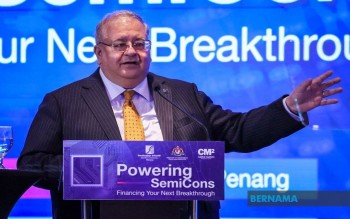
The Securities Commission Malaysia (SC) has signalled its preparedness to assume regulatory authority over the fund management and investment operations of Lembaga Tabung Haji (TH), though the final decision rests entirely with the federal government. SC chairman Datuk Mohammad Faiz Azmi made the statement in George Town on August 19, emphasizing that the regulator stands ready to implement such changes once officials deem them appropriate and necessary.
The potential expansion of SC's mandate stems from recommendations contained in a Royal Commission of Inquiry (RCI) report examining TH's operations and governance structures. These proposals are presently being evaluated by a dedicated task force comprising representatives from the SC, Bank Negara Malaysia (BNM), and Tabung Haji itself. The tripartite arrangement reflects the complexity of overhauling supervision for an institution of TH's size and importance to Malaysia's Muslim community.
Faiz Azmi articulated a measured approach to regulatory reform, noting that while the SC remains an instrument of government policy, the agency will implement only those recommendations that stakeholders determine to be reasonable and workable. The chairman emphasized that the SC functions within a defined role and does not independently initiate regulatory changes, a posture reflecting Malaysia's institutional governance framework where securities oversight remains subordinate to broader government direction.
The proposal to expand SC authority over TH's considerable investment portfolio addresses longstanding concerns about the hajj fund operator's financial stewardship. Tabung Haji manages billions of ringgit in assets accumulated from pilgrims saving toward umrah and hajj journeys, making it one of the country's significant financial institutions. The scale of this responsibility, Faiz Azmi suggested, warranted serious consideration of enhanced regulatory oversight, particularly given the fiduciary obligations owed to depositing Muslims across Malaysia.
Minister in the Prime Minister's Department (Religious Affairs) Dr Zulkifli Hasan had previously indicated that SC oversight represented a key element in strengthening TH's governance architecture. His public endorsement of the proposal signals ministerial support for regulatory consolidation, though such changes require formal government approval and likely parliamentary consideration given TH's statutory status. The Minister's positioning suggests the government views enhanced securities regulation as compatible with religious affairs stewardship rather than duplicative or contradictory.
The inter-agency task force structure reflects Malaysia's emerging preference for collaborative governance models that pool expertise across regulatory bodies. BNM's participation underscores the financial stability dimensions of TH operations, as the institution's investment decisions ripple through domestic capital markets and affect monetary policy considerations. The SC's involvement recognizes that securities regulation capabilities differ from traditional banking supervision, particularly regarding complex asset management and portfolio diversification strategies.
Tabung Haji has faced mounting scrutiny over recent years concerning investment performance and transparency in fund deployment. The RCI's investigation presumably identified governance gaps and operational vulnerabilities that regulatory realignment could address. Bringing SC oversight into the equation would subject TH's investment decisions to securities market standards, potentially introducing greater formality around disclosure, risk management, and conflict-of-interest protocols.
The timing of these governance discussions coincides with broader regional trends toward consolidated financial supervision. Across Southeast Asia, authorities have increasingly recognized that complex financial institutions require multi-regulator engagement and coordinated oversight frameworks. The TH case demonstrates how Malaysian policymakers are adapting governance structures to contemporary financial complexity while respecting the institution's unique role serving Malaysia's Muslim population.
For Malaysian investors and pilgrims, regulatory clarification could enhance confidence in TH's financial management and investment stewardship. Many Malaysians view Tabung Haji not merely as a savings vehicle but as a trusted institution safeguarding funds earmarked for religious obligation. Enhanced regulatory visibility might address concerns about investment transparency and asset protection, particularly among older depositors with limited financial sophistication.
The proposal also carries implications for Malaysia's financial regulatory architecture more broadly. If implemented, SC assumption of TH investment oversight could establish precedent for securities regulators supervising large public-interest institutions beyond traditional stock market participants. This might encourage policymakers to reconsider regulatory boundaries elsewhere in the financial system, potentially triggering wider governance reforms.
Under the current framework, TH operates with multiple layers of oversight but without formal SC involvement in investment decision-making. The proposed change would institutionalize securities regulator input into asset allocation, fund management, and investment strategy—areas where TH has exercised substantial autonomy. Transitioning to shared regulatory responsibility requires careful institutional calibration to avoid operational paralysis while genuinely enhancing accountability.
As the task force continues deliberations on RCI recommendations, government officials will weigh implementation costs against governance benefits. The SC's expressed readiness to assume expanded responsibilities suggests the agency possesses technical capacity and institutional appetite for the role. The critical variables remain political judgment about whether regulatory realignment serves TH's interests and the broader Islamic finance ecosystem that Tabung Haji anchors in Malaysia.

