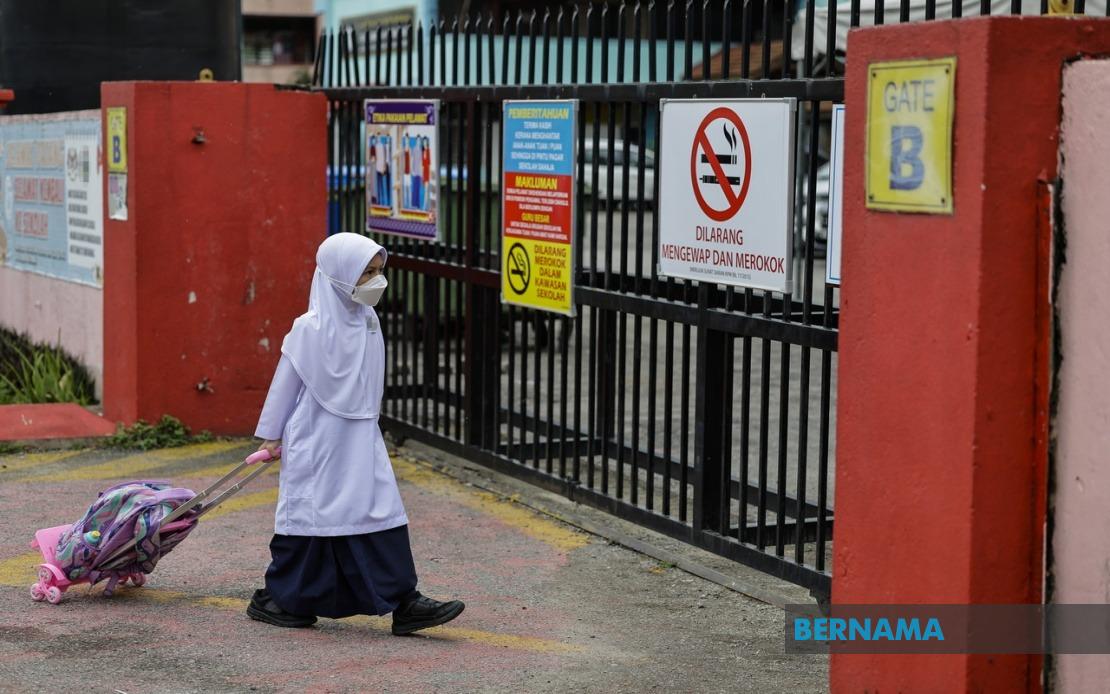
School administrators across Malaysia now have the authority to decide whether to shut their institutions when Air Pollutant Index readings climb above 200, according to guidance outlined by Deputy Education Minister Wong Kah Woh during an event in Taiping. These closure decisions, made at the discretion of principals and headmasters, should be informed by recommendations from State Education Departments and District Education Offices, which monitor environmental conditions in their respective jurisdictions and provide local expertise to guide such consequential decisions affecting hundreds of thousands of students.
The Ministry of Education operates under a framework of standing circulars addressing haze management protocols, with versions issued in 2016, 2019, and most recently in 2023. These documents represent the institutional memory and accumulated experience of managing school operations during periods of elevated air pollution, which have become an increasingly familiar challenge for Malaysian educators and administrators. The circulars establish clear thresholds and response mechanisms designed to balance educational continuity with student welfare during environmental emergencies.
Wong's remarks came amid renewed concern about air quality across various regions, with several areas recording unhealthy API readings in the days preceding his statement. The Ministry of Education has committed to continuous monitoring of haze conditions through its network of state and district education offices, treating air quality surveillance as an essential public health function. This systematic approach recognises that atmospheric pollution poses particular risks to children, whose developing lungs and higher activity levels during school hours make them more vulnerable to respiratory hazards than the general population.
The ministry has established a tiered response system linked to API thresholds. When readings reach 100, schools must immediately suspend all outdoor activities and mass gatherings, effectively moving the school day indoors and minimising student exposure to contaminated air. Outdoor sporting events and recreational programmes face postponement or cancellation, which can disrupt school schedules but prioritises health protection. These measures apply uniformly across the country, though implementation details may vary according to local circumstances and the severity of pollution episodes.
The discretionary closure threshold at API 200 reflects recognition that at this level, air quality becomes hazardous even for brief outdoor exposure, and indoor air quality in many school buildings may also deteriorate. The decision-making authority granted to principals and headmasters acknowledges that education administrators possess intimate knowledge of their school buildings, air filtration systems, student populations with particular health vulnerabilities, and community circumstances that should inform such judgments. However, this discretion is not unlimited—it operates within frameworks provided by education authorities and should reflect their guidance.
For Malaysian parents and educators, these protocols offer clarity about the conditions that would trigger school disruptions, though they also illustrate how transnational air pollution—often originating from agricultural burning in neighbouring countries—has become a regular management issue for educational administrators. The haze phenomenon, which typically worsens during specific seasons, now requires as much institutional planning as contingencies for floods or other climate-related emergencies. Schools must maintain communication channels to inform parents rapidly when closures become necessary, and families increasingly factor haze season into their planning.
The involvement of State Education Departments and District Education Offices in advising on closures creates a consultative structure rather than imposing top-down mandates from the ministry. This approach recognises that API readings and air quality can vary significantly between regions, even within the same state, and that a school in an industrial area might face different pollution profiles than one in a more rural setting. Education officers in each district can therefore provide context-sensitive advice that principals then weigh in making their final decisions.
Wong's clarification addressed questions that had apparently arisen about the precise conditions triggering closures and who held authority to make such decisions. By specifying the API 200 threshold and confirming that principals bear decision-making responsibility, the Ministry of Education removed ambiguity that might otherwise have led to inconsistent responses across different states and schools. Parents, teachers, and school administrators now operate from a common understanding of procedures, reducing confusion during actual pollution episodes.
The establishment of these protocols reflects Malaysia's experience with increasingly severe haze episodes over recent decades. Transboundary air pollution from land clearing and agricultural burning in Sumatra and Kalimantan regularly degrades air quality throughout Malaysia, particularly affecting Peninsular Malaysia's west coast and areas in Sarawak. The education sector's proactive stance demonstrates how Malaysian institutions have adapted to what many analysts now view as a chronic regional challenge rather than an occasional crisis, requiring permanent management systems rather than ad-hoc responses.

