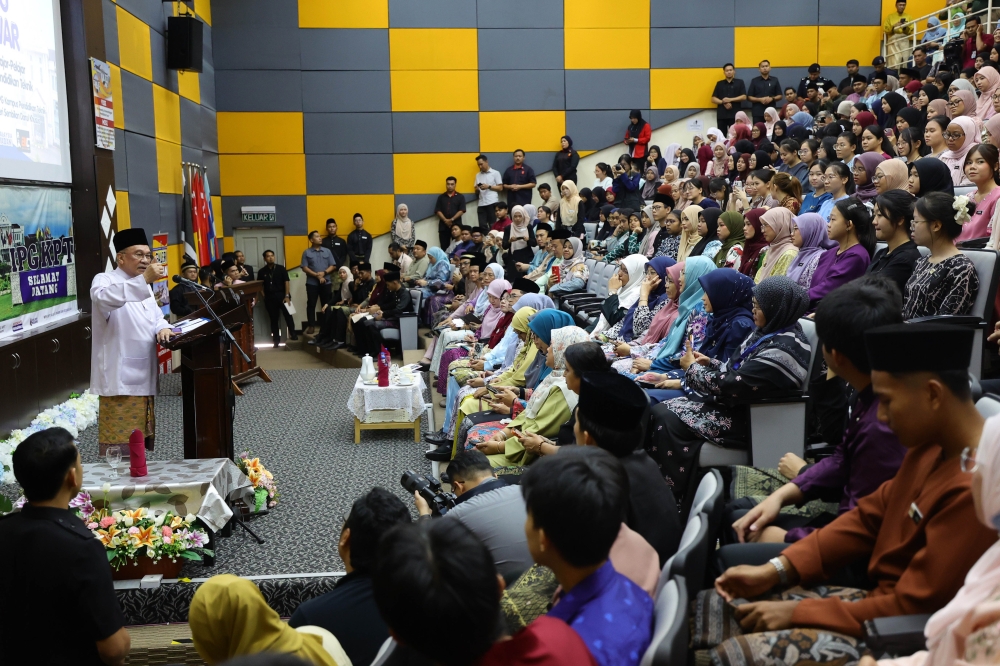
Prime Minister Datuk Seri Anwar Ibrahim delivered a pointed message to Malaysian educational institutions on Wednesday, declaring that safeguarding a school's public standing should never override the protection of bullied students. Speaking in Nilai, the premier emphasised that any attempt to suppress or minimise bullying cases for the sake of preserving institutional image represents a fundamental breach of duty toward the nation's young people.
Anwar's intervention reflects mounting concern within the government over how schools handle abuse within their grounds. The issue has gained traction in recent months as parents and child welfare advocates pushed for stricter accountability measures and more transparent reporting systems. By articulating this principle so explicitly, the Prime Minister signalled that the federal government intends to take a firmer stance on institutional accountability, moving beyond voluntary compliance toward enforceable standards.
The warning carries particular significance given Malaysia's hierarchical education system, where school administrators traditionally wielded considerable discretion in handling disciplinary and behavioural matters. Many institutions have historically adopted a gate-keeping approach, managing sensitive incidents internally to maintain public confidence and avoid damaging scrutiny. This closed-door practice, while ostensibly protecting the school's standing, frequently left vulnerable students without proper recourse or support.
Anwar's statement suggests a philosophical shift toward prioritising transparency and child protection over institutional image management. By framing the issue as a moral imperative rather than an administrative preference, the Prime Minister elevated the discussion from bureaucratic procedure to fundamental governance principle. This rhetorical move carries weight with a public increasingly alert to institutional failures that enable abuse and misconduct.
The timing of Anwar's remarks appears strategically important. Malaysian society has grown more vocal about educational accountability following several high-profile cases involving school violence, sexual harassment, and psychological abuse that emerged after institutional suppression. Parents increasingly demand evidence that schools are taking their concerns seriously, and social media has amplified accounts from bullying victims and their families, creating pressure that institutions can no longer easily contain.
For school administrators across Malaysia, the Prime Minister's intervention creates a clear expectation: disclosure and child protection must supersede reputational considerations. This principle, if consistently applied and enforced, could reshape how institutions respond to complaints. Rather than treating bullying reports as potential threats to institutional standing, schools would need to adopt a victim-centred approach that prioritises documentation, investigation, and intervention.
The statement also implies potential consequences for non-compliance. While Anwar did not explicitly outline enforcement mechanisms, the Prime Minister's involvement signals that the Education Ministry will likely face pressure to develop concrete policies and monitoring systems. Schools failing to report or properly investigate bullying incidents may face ministerial sanctions, accreditation reviews, or other punitive measures designed to encourage compliance.
Implementing such a shift requires more than rhetorical commitment. Schools need adequate training for staff on recognising bullying, protocols for reporting incidents, and support systems for affected students. Many Malaysian institutions, particularly in less-resourced areas, lack these foundational capacities. The government must therefore complement Anwar's moral imperative with practical investment in school infrastructure, professional development, and counselling services.
The issue resonates particularly strongly in Malaysia's multicultural context, where bullying often intersects with religious, ethnic, or socioeconomic discrimination. Students from minority communities, those with disabilities, and economically disadvantaged pupils frequently experience heightened vulnerability. When schools prioritise reputation management, these vulnerable groups suffer disproportionately because their cases are least likely to be escalated or properly investigated.
Regionally, Malaysia's approach to school bullying now positions the country alongside neighbours attempting to strengthen educational safeguarding frameworks. Singapore and Thailand have implemented relatively robust protocols for reporting and investigating institutional abuse. By aligning Malaysia's stated principles with international child protection standards, Anwar's intervention potentially opens the door for comparative policy learning and implementation of best practices across the region.
Moving forward, the critical test will be whether schools respond substantively to the Prime Minister's message or treat it as performative rhetoric. This depends partly on Education Ministry enforcement capacity and partly on whether parents, students, and civil society organisations maintain pressure for genuine institutional reform. Without sustained accountability mechanisms, even the Prime Minister's clear directive risks becoming another policy pronouncement without meaningful implementation.
The Prime Minister's stance ultimately reflects a broader governmental recalibration regarding institutional transparency and child welfare. By unambiguously prioritising children's safety over institutional reputation, Anwar set a governance expectation that extends beyond schools to other institutions entrusted with young people's care and development.

