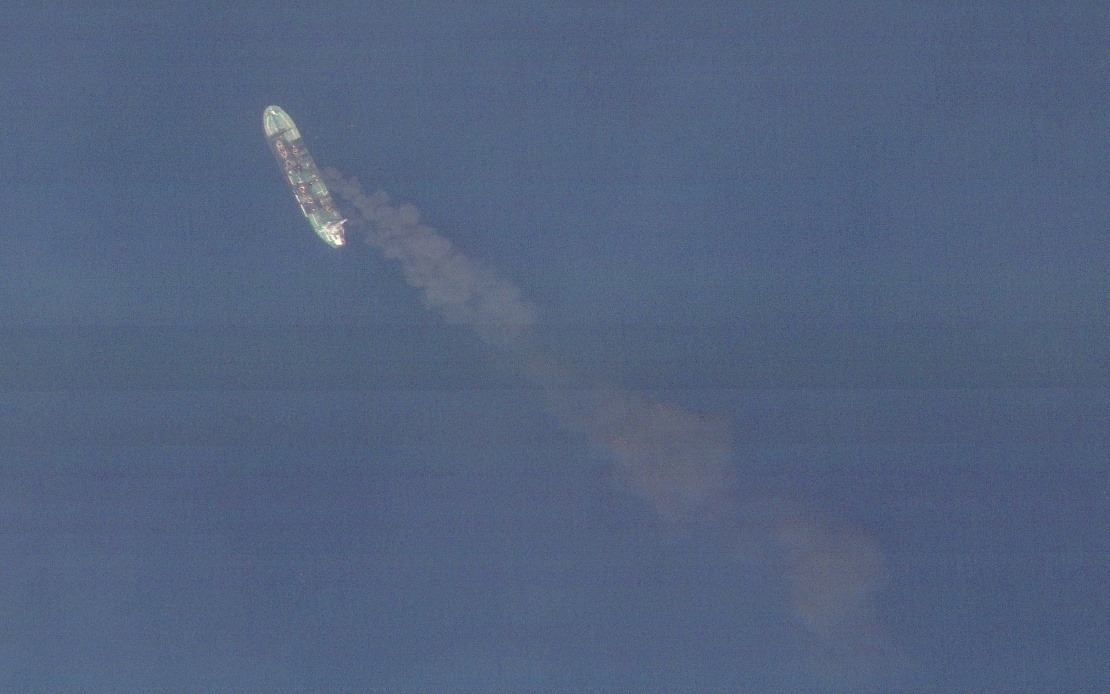
The Saudi-led coalition operating in Yemen has vowed to implement measures protecting its merchant fleet transiting the strategically vital Bab al-Mandab Strait, responding to the Houthi group's sudden declaration of a shipping embargo targeting Saudi Arabia. Coalition spokesperson Turki Al-Malki communicated the commitment through social media, emphasizing that military operations would proceed in accordance with international legal frameworks to ensure safe passage for coalition-aligned vessels navigating this critical waterway connecting the Red Sea to the Indian Ocean.
The announcement arrived hours after the Iran-aligned Houthis unveiled their maritime restrictions, framing the action as retaliation against what they characterise as a nearly twelve-year Saudi blockade of Yemen. This rhetorical framing—describing their response as "blockade for blockade"—reveals the group's strategic messaging around perceived economic strangulation, a narrative that resonates within parts of Yemen and among sympathetic audiences across the Middle East and beyond.
Al-Malki's statement attempted to delegitimise the Houthi maritime ban by labelling it as inflammatory escalation rather than a credible policy position. He highlighted that over three hundred commercial vessels had accessed Houthi-controlled ports during the first six months of the year, transporting humanitarian supplies including foodstuffs and fuel. This counterargument suggests that despite political tensions, basic trade and supply flows have continued, complicating the Houthi narrative of total blockade and potentially indicating that ports remain partially functional under their administration.
Riyadh's Foreign Ministry separately issued a formal rebuke of Houthi accusations regarding an economic blockade, asserting instead that Saudi Arabia has invested considerably in development initiatives and financial support aimed at alleviating Yemeni civilian suffering. This diplomatic posture frames Saudi involvement as benevolent rather than punitive, though such claims remain fiercely contested by Houthi representatives and humanitarian organisations documenting the humanitarian crisis afflicting Yemen's population.
The maritime ban declaration follows a recent military escalation triggered by the Saudi-backed Yemeni government's strike on Sanaa International Airport. The attack targeted an Iranian aircraft reportedly carrying senior members of the Houthi leadership, representing a direct challenge to the group's political standing. In response, the Houthis launched coordinated attacks involving missiles and drone strikes directed toward Saudi Arabian territory, demonstrating their capacity to project force across international borders.
Yemen's conflict trajectory extends back to late 2014, when the Houthis militarily captured the capital city of Sanaa and consolidated control over densely populated northern regions. This prompted Saudi Arabia, leading a multinational coalition primarily comprising Gulf states, to intervene militarily from 2015 onwards with the stated objective of restoring the internationally recognised government. The resulting eight-year conflict has produced one of the world's most severe humanitarian emergencies, with millions facing acute food insecurity and limited access to functional healthcare infrastructure.
A major concern animating regional and international observers centres on the sustainability of the 2022 UN-brokered ceasefire arrangement, which established a tentative de-escalation framework after years of intensive bombardment and ground operations. The latest cycle of military provocations and the Houthis' shipping ban announcement suggest this fragile truce may fracture under renewed tensions. Such deterioration would likely trigger broader regional instability and renewed humanitarian catastrophe affecting Yemen's civilian population already traumatised by prolonged conflict.
For Malaysia and Southeast Asian nations, developments in the Red Sea and Arabian Peninsula merit close attention given their maritime exposure. The Bab al-Mandab Strait represents one of the world's most critical chokepoints for international commerce, with substantial volumes of regional trade transiting these waters en route between Asian and European markets. Any sustained disruption to shipping flows through this corridor directly threatens regional economic interests and supply chain stability affecting everything from fuel prices to consumer goods availability.
The Houthi maritime restrictions, whether implemented comprehensively or selectively, introduce new uncertainties into global shipping insurance calculations and route planning. Malaysian companies engaged in international trade must now factor heightened geopolitical risk premiums when calculating logistics costs and delivery timelines for goods moving through the Red Sea. This adds another layer of cost burden beyond existing challenges posed by global inflation and post-pandemic supply chain fragmentation that continues affecting businesses across Southeast Asia.
The escalation also underscores how Middle Eastern conflicts increasingly intersect with broader Indo-Pacific strategic considerations. Chinese interests in ensuring unimpeded access to European markets through the Red Sea, Indian Ocean positioning concerns, and American naval presence in the region all converge in spaces like the Bab al-Mandab Strait. Southeast Asian nations, many maintaining neutral positions in great power competitions, find themselves indirectly affected by geopolitical fault lines they do not control but cannot entirely escape.
The credibility and sustainability of the Houthi maritime ban remain uncertain. Previous declarations and threats by non-state actors in Yemen have sometimes proven more rhetorical than operationally consequential, constrained by limited enforcement capacity and resource availability. However, the group has demonstrated genuine ability to conduct maritime operations and intercept commercial traffic, lending material substance to their announced restrictions. Insurance companies and shipping firms will likely interpret this announcement seriously regardless of ultimate implementation, adjusting risk assessments and routing decisions accordingly.
Moving forward, the trajectory of the Yemen conflict will significantly influence regional stability and global trade patterns affecting Southeast Asia. De-escalation would restore predictability to maritime commerce and ease insurance costs for regional traders. Conversely, renewed military confrontation threatens to transform the Red Sea into an unpredictable operational environment where commercial shipping faces constant threat, ultimately elevating costs for consumers and businesses across the region. Malaysian policymakers and business leaders should closely monitor further developments while diversifying supply chain routes and risk mitigation strategies.

