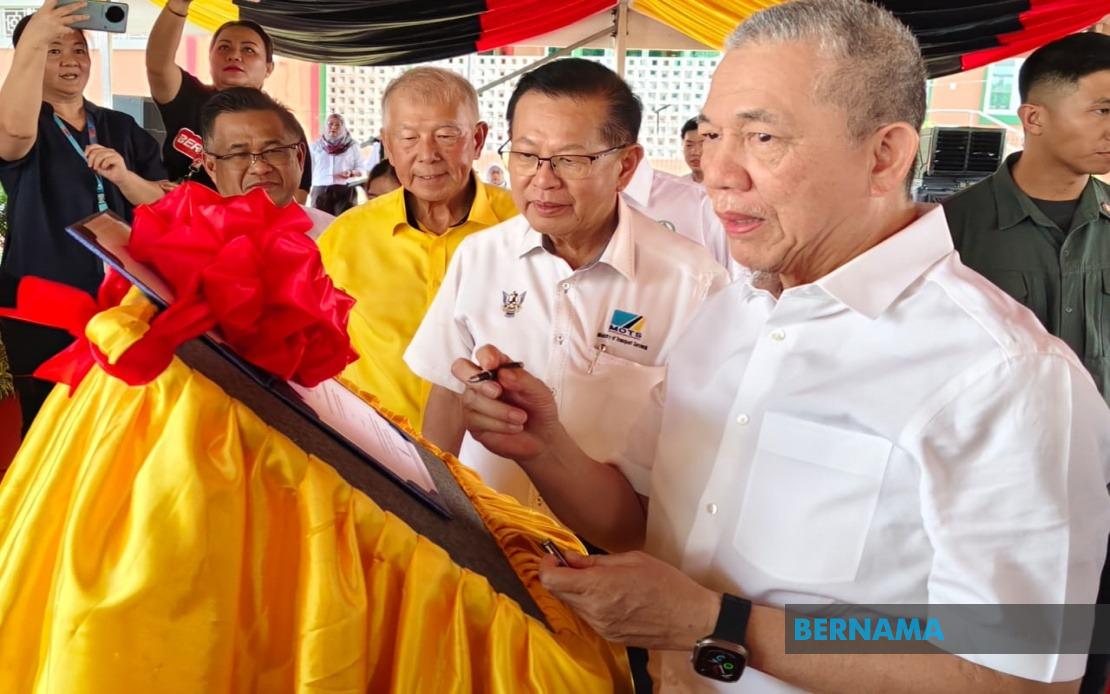
Sarawak is set to benefit from a comprehensive infrastructure push aimed at mitigating environmental hazards that have long threatened both urban and rural communities across the state. Deputy Prime Minister Datuk Seri Fadillah Yusof unveiled details of 52 projects authorised under the Cakna MADANI Programme during a site visit to Miri on July 4, signalling the federal government's commitment to addressing the dual challenges of erosion and flooding that have plagued riverside and coastal areas.
The financial commitment underpinning these initiatives totals RM9.46 million, distributed across projects at varying stages of completion. Of the 52 approved schemes, 12 have already reached completion, demonstrating tangible progress, while 13 remain under active construction. The remaining 27 projects are still in preparatory phases, indicating a phased rollout that is intended to sustain momentum over coming months and years. This tiered approach allows the government to learn from early implementations while maintaining consistent investment in problem areas.
During his inspection of the Riverbank Stabilisation Project at Tab Cinaq Cemetery in Miri District, Fadillah elaborated on one of the visible interventions taking shape across the state. The cemetery project, budgeted at RM134,682 and initiated in May, is scheduled for completion by November. The centrepiece involves constructing a 50-metre retaining wall designed to arrest riverbank degradation, a critical measure for preserving both the cemetery itself and adjacent infrastructure increasingly vulnerable to erosion. Such targeted works exemplify the ground-level solutions being deployed to protect public assets and community spaces from environmental deterioration.
The broader institutional response extends considerably beyond these immediate interventions. Fadillah, who holds the dual portfolio of Energy Transition and Water Transformation Minister, outlined a far more ambitious framework encompassing 29 comprehensive flood mitigation projects spanning the state. This longer-term strategy has been allocated RM3.834 billion and encompasses not only Flood Mitigation Plan initiatives but also High Priority Flood Mitigation schemes, coastal erosion prevention measures, and river conservation undertakings. The magnitude of this investment underscores recognition that sustainable flood management demands sustained, large-scale intervention rather than ad-hoc responses.
The composition of this RM3.834 billion commitment reveals a strategic balance between consolidating existing initiatives and launching new interventions. Of the 29 projects, 18 represent continuations of previously approved schemes carrying a combined value of RM3.567 billion, reflecting the substantial commitments already embedded in the system. Conversely, 11 newly approved projects will inject RM267 million of fresh capital into areas previously underserved or newly identified as requiring intervention. This composition suggests that whilst the state grapples with significant inherited flood challenges, planners have identified additional priority zones warranting immediate action.
Among the continuation projects, the RTB Sungai Miri stands as a particularly significant undertaking, carrying a total estimated cost of RM31 million. Construction commenced in October 2023, and the project has achieved a physical progress rate of 58.11 per cent as of Fadillah's announcement. With an expected completion date in November 2026, the initiative represents a multi-year commitment to transforming flood management capacity in Miri specifically, one of Sarawak's most economically active centres and a region frequently affected by seasonal inundation.
For Malaysian and Southeast Asian observers, the scale and sophistication of Sarawak's flood and erosion management agenda holds broader significance. Rising water levels, intensifying precipitation patterns, and accelerating coastal retreat pose persistent threats across the region. Sarawak's experience implementing integrated mitigation strategies—combining structural interventions like retaining walls with comprehensive basin-wide flood management plans—offers instructive lessons. The state's willingness to commit billions to long-cycle infrastructure projects signals institutional recognition that adaptation to environmental change requires patient capital and sustained governance focus beyond typical electoral cycles.
The Cakna MADANI Programme itself represents a policy framework designed to systematise the identification and prioritisation of such projects at community level. By framing initiatives around a named programme, the federal government creates accountability mechanisms and visibility that may encourage consistent resourcing and monitoring. For rural and semi-urban communities in Sarawak, where erosion and flooding directly threaten livelihoods and safety, such programmatic approaches offer hope that local concerns will be translated into concrete action rather than remaining perpetual grievances.
The geographic spread of these 52 projects across Sarawak indicates that the erosion and flood challenge is not confined to a single district or watershed but represents a state-wide phenomenon requiring distributed solutions. Whilst Miri receives particular attention in Fadillah's remarks, the implication is that inland river systems, coastal lowlands, and semi-urban peripheries all feature in the intervention map. This geographic comprehensiveness reduces the risk that investment becomes concentrated in politically favoured locations whilst neglecting vulnerable peripheral communities.
The practical delivery of these projects will test both the capacity and commitment of executing agencies. Infrastructure works in Sarawak's terrain, often constrained by geography, remoteness, and climatic challenges during monsoon seasons, frequently encounter cost overruns and scheduling delays. The fact that 12 of 52 Cakna MADANI projects have already achieved completion by mid-2024 suggests reasonable implementation momentum, yet the remaining 40 projects will require sustained execution capability. For Malaysian taxpayers more broadly, successful delivery represents a legitimate expectation; for Sarawakians, it represents the difference between managed environmental risk and unmitigated hazard.
Looking forward, the completion of these projects will generate valuable data on erosion control and flood mitigation efficacy within Sarawak's specific environmental context. Such empirical feedback will inform not only subsequent phases of investment in Sarawak but potentially contribute to best-practice frameworks that other flood-vulnerable Malaysian states might adapt. In a region increasingly conscious of climate variability and environmental change, Sarawak's deliberate, quantified approach to infrastructure resilience offers a constructive model.

