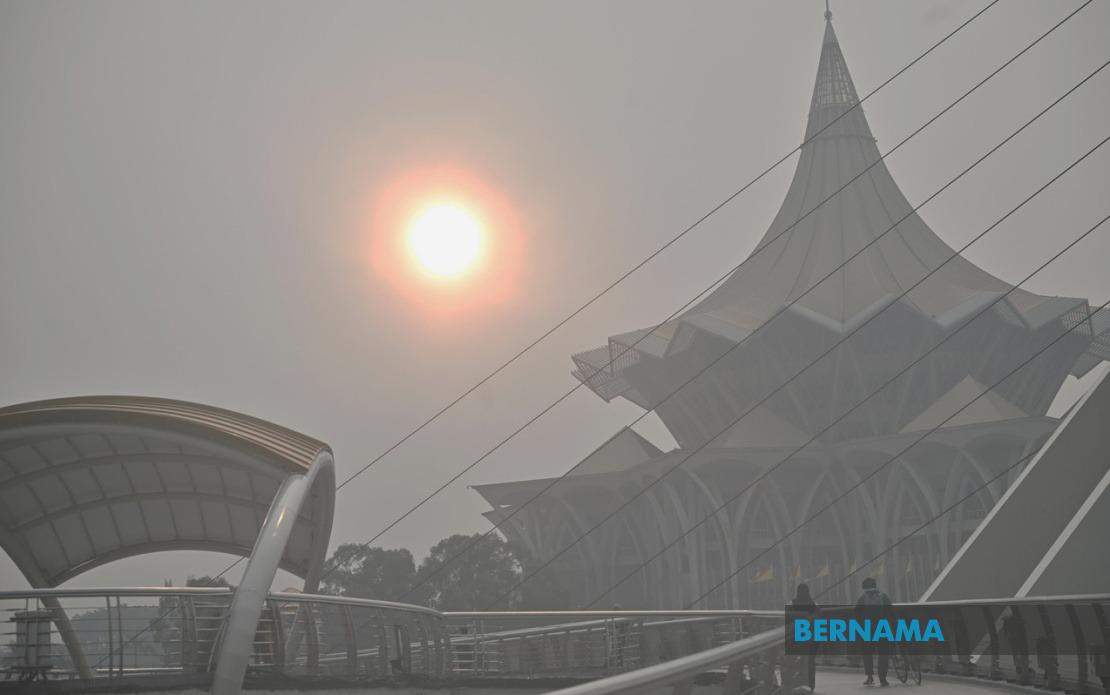
Sarawak's education system ground to a halt on Wednesday as the state education department ordered the temporary closure of 591 schools in response to a sustained period of scorching temperatures and arid conditions gripping large swathes of the state. The shutdown, which extended through Thursday, effectively removed roughly 197,000 students from classrooms across 10 District Education Offices, underscoring the severity of the environmental crisis unfolding in Malaysian Borneo.
The Sarawak Education Department (JPBNS) confirmed that the affected schools comprised 509 primary institutions housing 107,590 children, alongside 82 secondary schools educating 89,733 young people. The geographic spread of the disruption—encompassing the districts of Kuching, Padawan, Bau, Lundu, Samarahan, Simunjan, Serian, Sri Aman, Lubok Antu, and Betong—illustrated how widespread the weather phenomenon had become, touching communities across the state's urban heartland and rural peripheries alike.
The decision to suspend classes reflected mounting anxiety over multifaceted threats posed by the climatic extremes. Beyond the immediate discomfort of scorching heat, state disaster management authorities flagged the accelerating risk of uncontrolled fire spread through vulnerable forest and peatland ecosystems. Such fires carry devastating consequences not only for biodiversity and carbon storage but for human health through smoke inhalation and the potential displacement of communities. The timing proved critical, as the transition between wet and dry seasons often sees fire risks peak across Southeast Asia's equatorial regions.
Air pollution emerged as an equally pressing concern, with the Sarawak State Disaster Management Committee (JPBNS) documenting sharply deteriorated atmospheric conditions across numerous monitoring stations. By early afternoon on the closure day, authorities had flagged nine separate locations experiencing unhealthy Air Pollutant Index readings, with Serian recording the worst figure at 195, followed closely by Kuching and Lubok Antu each registering 191. Samarahan, Sri Aman, and Lundu all exceeded 175, while Sarikei, Sibu, and Tebedu hovered between 108 and 169. Such readings place these areas well into the unhealthy bracket for sensitive groups and children, making outdoor classroom activities or crowded indoor spaces without adequate ventilation genuinely hazardous.
The drought conditions extended beyond air quality to threaten the state's water infrastructure. Prolonged periods of heat and negligible rainfall diminish river flows, reservoir levels, and groundwater recharge rates—a particularly acute concern in a state where water supply reliability underpins both domestic needs and industrial operations. The simultaneous pressure on multiple resource systems—fire risk, air quality, water availability—created a convergence of challenges that tested state emergency response capabilities. The JPBNS indicated its commitment to sustained vigilance, emphasizing that monitoring would intensify across acknowledged high-risk zones.
Sarawak's response reflects a broader Southeast Asian pattern where climate variability and occasional extreme weather episodes compel swift administrative action to safeguard public health. For Malaysia specifically, such incidents highlight the vulnerability of equatorial systems to pronounced dry spells, which have become increasingly frequent in recent decades. The school closure mechanism, while disruptive to educational continuity, represents a pragmatic trade-off: accepting short-term learning losses to prevent immediate health crises among children exposed to hazardous air or extreme heat stress.
The closure also underscores the complex interdependencies within modern states where environmental conditions can cascade through multiple sectors simultaneously. Parents suddenly required to arrange childcare, students falling behind curriculum targets, and businesses losing productivity illustrate the ripple effects of weather extremes beyond immediate ecological damage. For policymakers in Malaysia and elsewhere in Southeast Asia, such episodes provide crucial evidence regarding the necessity for climate adaptation strategies spanning urban planning, forest management, water resource development, and emergency response protocols.
The involvement of the Sarawak State Disaster Management Committee demonstrated institutional coordination in confronting the crisis, though the decision ultimately rested with the Education Department's assessment that conditions warranted closure. This separation of authorities—education, emergency management, environmental monitoring—requires robust inter-agency communication to function effectively. The fact that data were being actively collected and analyzed, with specific API readings reported for multiple locations, indicated that authorities possessed reasonably sophisticated environmental monitoring infrastructure.
Looking ahead, Sarawak faces the prospect of fluctuating conditions as the dry season pattern plays out over subsequent weeks. Should the heat and aridity persist, further disruptions to educational schedules and other sectors seem probable. This scenario reinforces the case for longer-term climate adaptation measures—improved water storage and distribution networks, enhanced fire prevention and suppression capabilities, and land-use policies that reduce forest fire vulnerability. For Malaysian policymakers and regional stakeholders, Sarawak's experience offers a timely reminder that even in a tropical nation with abundant annual rainfall, intense dry spells pose genuine risks requiring sustained, multifaceted institutional responses.

