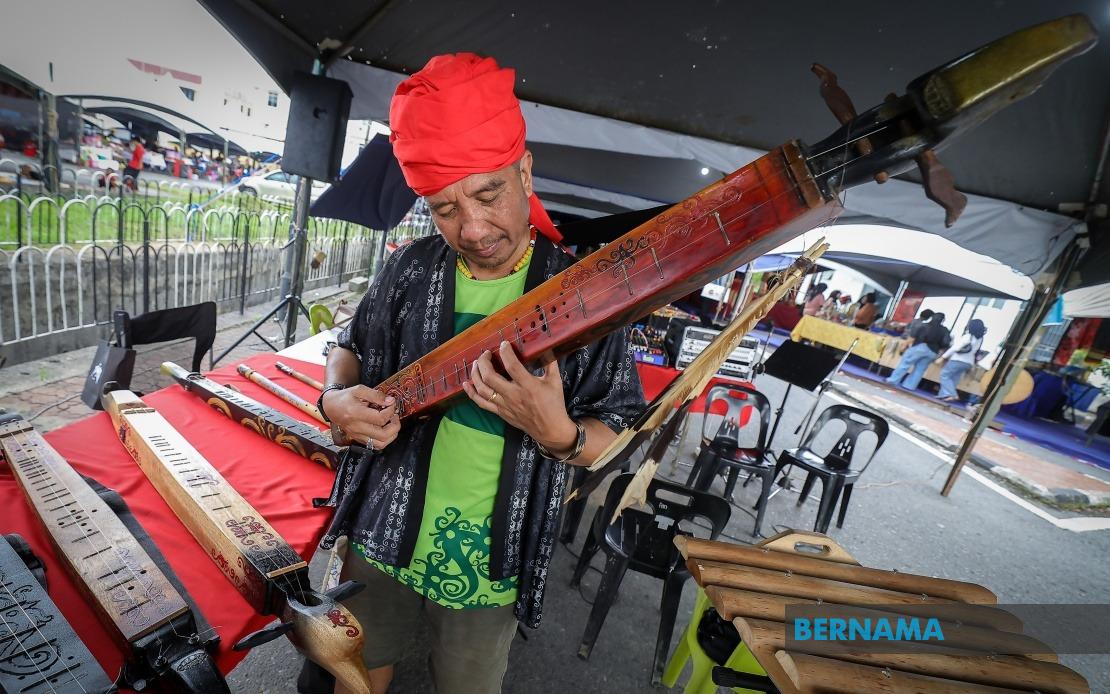
Sarawakian musician and cultural custodian Rining Peter Paris has launched 'Sigar Suba', a contemporary world music fusion single that places the spotlight on the often-overlooked masculine identity of the Lun Bawang community. Released on July 1 and performed alongside his ensemble Bata' Uduh, the track showcases the Tapi', a traditional two-string plucked instrument that remains central to Lun Bawang heritage, complemented by a rich instrumental palette that includes the Pek Bu, Ruding and xylophone. The strategic use of these authentic instruments demonstrates how contemporary musical production can authentically honour cultural traditions without sanitising them for mainstream consumption.
The 53-year-old artist's decision to centre male representation in this composition reflects a deliberate artistic choice rooted in observing gaps within existing cultural narratives. Having previously explored themes of feminine beauty and natural landscapes through songs such as 'Busak Baku' and 'Busak Elai', Rining identified a conspicuous absence of musical tributes to Lun Bawang masculine identity and cultural presentation. This recognition prompted him to craft a composition entirely in the Lun Bawang language, creating a documentation of traditional male attire and ceremonial significance that might otherwise remain undocumented in contemporary musical discourse. The song's title carries deep cultural resonance: 'Sigar' denotes the distinctive red head covering that Lun Bawang men traditionally wear during celebrations including the Irau Aco festival, while 'suba' translates to red, together forming a poetic descriptor of this iconic ceremonial garment.
The lyrical content functions as both artistic expression and cultural archive, providing detailed accounts of traditional masculine sartorial elements including the kuyu talun, a bark shirt representing both practical functionality and cultural identity, the pelepet, a traditional machete serving ceremonial purposes, and distinctive tusk ornaments that signify status and heritage within community hierarchies. By embedding these specific cultural references within a contemporary musical framework, Rining creates accessibility for younger generations whilst maintaining authenticity. The underlying message proves unambiguous: he seeks to inspire young Lun Bawang men to reclaim, remember and actively practise their ancestral identity at a time when globalisation and rapid cultural change pose genuine threats to indigenous knowledge systems.
Rining's commitment to preserving the Tapi' extends well beyond musical performance into the realm of instrument craftsmanship. Over nearly a decade, he has devoted considerable energy to revitalising this traditional implement through both scholarly understanding and hands-on production. As an accomplished instrument maker, he has personally handcrafted and distributed 66 Tapi' instruments across local and international markets, reaching buyers in Australia, the United States and Canada. This commercial success demonstrates legitimate international appetite for authentically-produced indigenous instruments, suggesting viable economic models for cultural preservation that benefit individual artisans whilst promoting their heritage globally. Notably, Malaysian experimental musician Belle Sisoski has joined the growing cohort of musicians exploring the Tapi', indicating its potential integration within contemporary musical experimentation.
Bata' Uduh's musical approach represents a sophisticated strategy for maintaining relevance across generational divides. Rather than presenting traditional music as museum artefact frozen in temporal amber, the ensemble actively incorporates modern genres including reggae and contemporary fusion, creating dynamic soundscapes that resonate with younger audiences whilst preserving tonal and structural elements that anchor the music firmly within Lun Bawang tradition. This fusion methodology acknowledges a fundamental reality: cultural preservation requires active adaptation and creative evolution, not rigid adherence to historical forms. The streaming availability of 'Sigar Suba' across major digital platforms extends the song's reach far beyond geographic limitations, positioning it within the same distribution infrastructure as mainstream global music while maintaining its specificity and cultural particularity.
Rining's ambitious trajectory reflects broader aspirations within indigenous cultural movements across Southeast Asia. His stated goal to transition toward full-time Tapi' production and composition by 2028 indicates genuine faith in sustainable cultural economics. This timeline suggests realistic assessment of market development, artistic growth and audience cultivation necessary to support livelihoods through indigenous cultural practice. The feasibility of such transitions remains precarious across the region, particularly for artists working outside established commercial frameworks, making Rining's combination of practical craftsmanship and musical innovation noteworthy. His success in establishing an international market for handmade instruments whilst simultaneously pursuing artistic expression through modern composition demonstrates that indigenous culture need not occupy marginal economic positions.
The significance of 'Sigar Suba' extends beyond individual artistic achievement into broader conversations about cultural representation within Malaysia's musical landscape. Sarawak, with its remarkable diversity of indigenous communities including the Lun Bawang, Iban, Bidayuh and Orang Ulu peoples, possesses extraordinary musical heritage that remains substantially underrepresented in national cultural institutions and media platforms. By actively creating contemporary music celebrating specific masculine traditions, Rining challenges implicit hierarchies that privilege certain cultural narratives over others. This deliberate centering of previously marginalised perspectives contributes meaningfully to more comprehensive and equitable representation of Malaysian cultural plurality.
The use of Lun Bawang language exclusively throughout 'Sigar Suba' carries particular weight within contemporary contexts of indigenous language erosion. As younger community members increasingly adopt dominant regional languages, maintaining linguistic specificity within artistic contexts serves crucial functions beyond mere communication. Language preserves embedded cultural knowledge, conceptual frameworks and historical memory that prove difficult or impossible to fully translate across linguistic systems. By creating substantial contemporary music exclusively in Lun Bawang, Rining models possibilities for language vitality beyond nostalgic retrospection, demonstrating that indigenous languages remain viable mediums for contemporary artistic expression and cultural innovation rather than relics of superseded eras.
The instrumental composition supporting 'Sigar Suba' deserves particular attention regarding how contemporary production can amplify traditional sound. The integration of Tapi' alongside Pek Bu, Ruding and xylophone creates polyphonic richness that would be difficult to achieve with individual instruments alone. This orchestration allows each instrument to maintain distinctive tonal character whilst contributing to cohesive overall sound. The xylophone's inclusion proves particularly interesting, representing potential intercultural exchange within the region whilst remaining subordinate to instruments more specifically associated with Lun Bawang tradition. This careful balance demonstrates sophisticated understanding of how cultural hybridity can enhance rather than dilute authentic expression.
For Malaysian listeners and policymakers, 'Sigar Suba' exemplifies possibilities within cultural industries beyond conventional commercial categories. Indigenous music production generates economic value for individual artists whilst contributing substantially to national cultural soft power and international tourism appeal. Yet realising this potential requires supportive infrastructure including streaming platform promotion, festival programming, educational integration and financial support mechanisms that currently remain inconsistently available across Malaysia. Regional governments and cultural institutions might usefully examine how artists like Rining achieve international recognition through personal initiative, identifying systemic barriers that prevent more widespread cultural entrepreneurship.
The broader project undertaken by Rining Peter Paris and Bata' Uduh represents necessary work within contemporary Malaysia and Southeast Asia more broadly. As economic integration and digital connectivity accelerate cultural homogenisation pressures, deliberate efforts to document, perform and evolve indigenous traditions remain essential for maintaining the region's remarkable cultural diversity. 'Sigar Suba' succeeds neither as museum preservation nor as commercial compromise, but rather as genuinely creative work that treats Lun Bawang tradition as living culture worthy of contemporary artistic engagement. The song's availability across major streaming platforms suggests audiences throughout Malaysia and beyond may yet discover these celebrations of indigenous masculinity and heritage that might otherwise remain confined to community contexts. For Rining, the recognition represented by this release presumably strengthens his hand in pursuing the ambitious goal of full-time cultural work by 2028, a timeline that seems increasingly plausible given demonstrated audience interest and international market viability.

