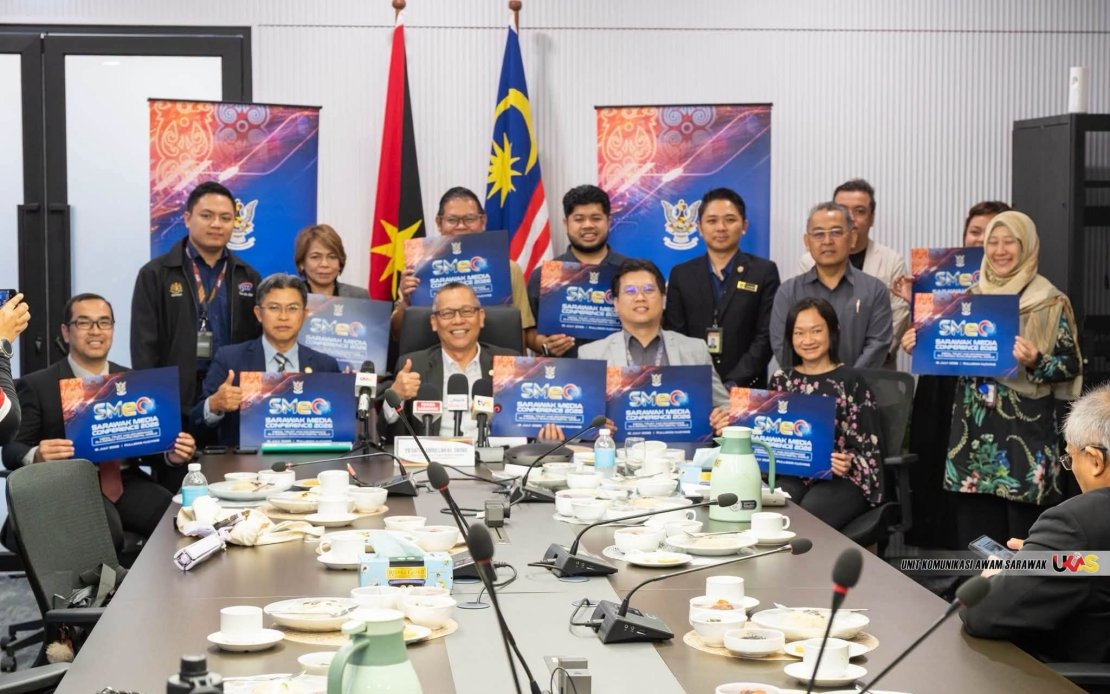
Sarawak is preparing to host a significant gathering of media and communications stakeholders in 2026, with the Sarawak Media Conference (SMeC) expected to attract approximately 800 participants from across the profession and broader ecosystem. The event will bring together journalists, academics, government policymakers, industry leaders and students for substantive discussions on how media institutions can rebuild public confidence while navigating rapid technological change. Sarawak Premier Tan Sri Abang Johari Tun Openg will officially open the conference, underscoring the state government's commitment to addressing critical challenges facing the information landscape.
Organised by the Sarawak Government through its Public Communications Unit (UKAS), the conference will operate under the unifying theme of "Media, Trust and Governance in a Rapidly Evolving Digital World." This framing reflects growing concern across Southeast Asia about declining institutional trust in journalism, misinformation proliferation and the need for clearer ethical standards as technology reshapes how information flows through society. The timing of such a conference speaks to broader anxieties about the media's role in democracy and public discourse at a moment when traditional gatekeeping functions are dissolving.
According to Datuk Abdullah Saidol, Deputy Minister in the Sarawak Premier's Department with responsibility for corporate affairs and communications, the conference will prioritise two interconnected objectives: strengthening public confidence in media institutions and advancing governance standards across the sector. These priorities are increasingly urgent as audiences fragment across digital platforms and traditional news organisations struggle with business models undermined by advertising migration to technology companies. By convening policymakers alongside practitioners, the conference aims to develop coherent responses to challenges that transcend individual newsrooms.
The digital transformation dimension of the conference will command particular attention, with sessions dedicated to examining both opportunities and risks presented by artificial intelligence and algorithmic content distribution. AI's growing role in newsrooms—from automated story generation to predictive analytics—raises profound questions about editorial judgment, human oversight and the preservation of journalism's democratic function. Malaysian and Southeast Asian media organisations are navigating these transitions with limited regulatory guidance, making peer learning opportunities like SMeC invaluable for identifying best practices and potential pitfalls.
Ethical journalism standards will form another critical strand of discussion, reflecting the profession's need to demonstrate that quality reporting remains possible and necessary in an environment saturated with competing claims. This emphasis on ethics extends beyond individual journalists to encompass institutional practices, editorial independence and the relationship between commercial pressures and journalistic integrity. For Malaysian readers observing regional developments, such conversations carry direct relevance given Malaysia's own media challenges and the broader Southeast Asian context where press freedom indices show declining confidence in news institutions.
The conference will feature prominent voices from across the media and academic landscape, including SOL Digital founder Lunnie Gan and Malaysian Media Council deputy chairman Premesh Chandran. These speakers bring diverse perspectives—from digital innovation to cross-border media governance—that can illuminate how different stakeholders are responding to contemporary pressures. Their participation signals that SMeC 2026 will not operate as an insular Sarawak conversation but will engage with frameworks and experience from across Malaysia and beyond.
A formal dinner coinciding with celebrations of National Journalists' Day at the state level will extend the conference's impact, with Deputy Prime Minister Datuk Seri Fadillah Yusof attending to signal federal interest in media sector challenges. The presence of such senior government figures creates both opportunity and scrutiny—opportunity to advocate for policies supporting quality journalism, but also awareness that government participation shapes what can be discussed freely. For Malaysian media professionals accustomed to navigating complex relationships with officialdom, such dynamics merit careful attention.
The conference will recognise excellence across multiple journalism formats through the Sarawak Premier's Special Appreciation Awards, honouring contributions in five categories spanning traditional and emerging roles: editors and reporters, photographers, videographers, radio broadcasters and social media influencers. This taxonomy reflects the evolving nature of journalism itself, acknowledging that news production now encompasses far more than the print and broadcast outlets that historically dominated. Including social media influencers alongside traditional journalists signals recognition that information authority has become more distributed and that credibility now depends partly on individuals cultivating trust through digital channels.
The structure of SMeC 2026 reveals important trends in how the Asian media sector is approaching its contemporary predicament. Rather than treating challenges in isolation—viewing AI as a technical matter, trust as a communication problem, or governance as a regulatory question—the conference frames these as interconnected dimensions of a single transformation. This systemic perspective acknowledges that rebuilding public confidence requires not only better journalism but also transparent governance of news organisations and thoughtful integration of new technologies that enhances rather than undermines editorial quality.
For Malaysian stakeholders, the Sarawak conference offers a valuable opportunity to learn from peer experiences and contribute to developing shared frameworks for addressing media sector challenges that cross state boundaries. While Sarawak's specific context—its governance structure, media landscape and development priorities—differs from other Malaysian states, the fundamental questions about trust, digital transformation and journalistic ethics resonate across the country. The attendance of national figures like Deputy Prime Minister Fadillah suggests that outcomes from SMeC 2026 may influence broader conversations about media policy and support at the federal level.
The emphasis on policymakers attending alongside media professionals hints at recognition that media sector challenges cannot be addressed through industry action alone but require coherent public policy. This might encompass questions about media literacy funding, support for investigative journalism, AI regulation, competition policy affecting tech platforms and the media's role in democratic institutions. Malaysia itself has been grappling with how to construct such policies while respecting editorial independence and avoiding censorship, making international and regional examples particularly instructive.
As the conference moves closer to realisation, its success will depend partly on whether discussions translate into concrete recommendations or coalitions for change. Given the scale of attendance anticipated and the range of stakeholder groups participating, SMeC 2026 has potential to become a significant moment for media sector reflection and renewal in Malaysia and the broader region. Whether that potential converts into lasting impact will depend on what conversations emerge, what commitments participants make and whether the conference generates momentum for implementing improvements to journalism practice and institutional governance in the months and years that follow.

