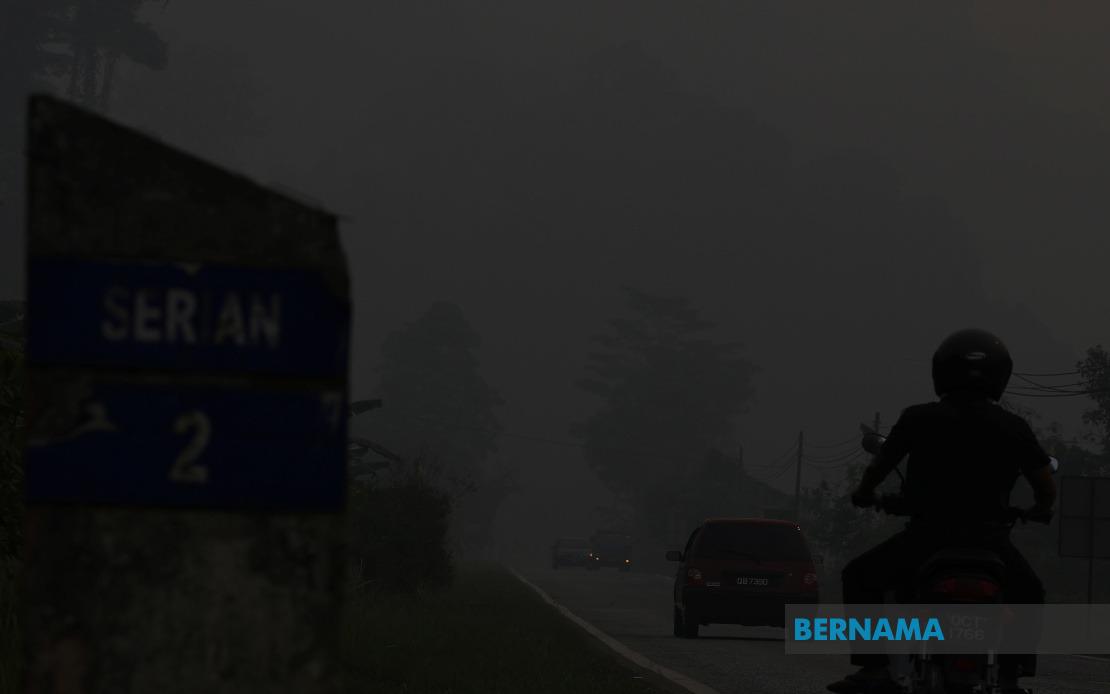
The Sarawak Disaster Management Committee has issued guidance to organisers of events across the state, calling for careful assessment of air quality conditions before committing to proceed with any scheduled activities, whether official, private or community-based in nature. This advisory comes as several regions in Sarawak experienced sharply deteriorating air quality, with multiple monitoring stations recording readings at levels considered hazardous to public health. The move reflects growing concerns about the environmental and health impacts of transboundary haze pollution, which continues to affect Southeast Asia seasonally and poses particular risks to vulnerable populations.
Datuk Amar Douglas Uggah Embas, who chairs the SDMC and serves as Sarawak Deputy Premier, explained that responsibility for event cancellation or postponement currently rests with individual organisers rather than with government directives, except in circumstances where specific authorities issue formal orders. However, he stressed that this discretion must be exercised responsibly, with organisers weighing the public health implications of their decisions against the benefits of proceeding. This approach balances the need to maintain normal social and economic activity with the imperative to protect citizens from health hazards, particularly during periods of air quality degradation.
The committee has established API level 200 as a critical threshold for decision-making. When air quality indices reach or exceed this point, SDMC strongly recommends that organisers abandon or significantly modify outdoor programmes, with particular attention to events involving children, elderly persons, and other groups with heightened vulnerability to air pollution. This guidance recognises that certain demographics face disproportionate health risks from exposure to elevated particulate matter and pollutants suspended in the atmosphere during haze episodes. The threshold reflects established public health standards for when outdoor physical exertion becomes inadvisable.
Beyond simple cancellation, Uggah encouraged organisers to consider creative alternatives that would allow activities to proceed while protecting participants. Moving events indoors, restructuring programmes to reduce strenuous outdoor components, or shifting dates until air quality improves were all presented as viable options. This pragmatic approach acknowledges that many organisers have invested resources and planning into their events, and that wholesale cancellation may not always be necessary if suitable modifications can be implemented. Such flexibility can help minimise disruption to the community while maintaining health safeguards.
The situation escalates significantly if API readings breach the 500 mark, according to protocols outlined by the SDMC. At this extreme level of air pollution, government and private sector offices and workplaces must close with the exception of essential services personnel, pending a formal Disaster Emergency declaration from the National Disaster Management Committee (NADMA). This threshold represents an acknowledgment that air quality at such levels poses severe health risks that necessitate extraordinary measures, including suspension of normal economic and administrative operations. The requirement for NADMA approval ensures that such drastic steps remain coordinated at the national level and are implemented uniformly across affected regions.
Real-time monitoring data from August 30 illustrated the severity of conditions facing Sarawak on that day. The Department of Environment's Air Pollutant Index Management System recorded the most alarming readings in districts near the coast and in areas with significant industrial activity. Serian District Police Headquarters registered the highest API of 412, placing it firmly in the hazardous category and representing a level at which even brief outdoor exposure can trigger health problems. Samarahan followed at 332, while Kuching, the state capital, recorded 304—all readings well above the threshold that would trigger SDMC warnings about outdoor activities.
Beyond these three worst-affected areas, numerous other locations across Sarawak registered unhealthy API levels that warranted concern. Sarikei's reading of 197 hovered just below the critical 200 threshold, while Sibu, Bintulu, Mukah, Samalaju, Kapit, and Miri all reported readings ranging from 156 to 190. Even at these lower levels, classified as unhealthy rather than hazardous, the air quality remained degraded and presented health risks particularly to sensitive individuals. The geographic spread of elevated readings across the state underscored that haze pollution represented a widespread problem rather than an isolated phenomenon affecting only specific locations.
The SDMC's coordination with state and federal agencies demonstrates the multi-layered governance approach now standard in managing transboundary air pollution across Malaysia and Southeast Asia. Regular monitoring and progressive implementation of measures aligned with established disaster management protocols ensure that responses remain calibrated to actual conditions rather than operating on fixed schedules or predetermined assumptions. This adaptive management philosophy permits authorities to escalate interventions as conditions worsen while avoiding unnecessarily disruptive measures during periods when air quality remains manageable, though imperfect.
For Malaysian event organisers, particularly those planning outdoor gatherings during the typical haze season from July through September, the SDMC guidance provides practical benchmarks for decision-making. The emphasis on API levels 200 and 500 as key decision points offers clear metrics that organisers can track through publicly available monitoring systems. The advice also implicitly recognises that haze episodes have become sufficiently frequent and severe that planning for air quality contingencies should now be routine rather than exceptional. This normalisation of air quality planning reflects the reality that transboundary pollution from agricultural burning in neighbouring countries now constitutes a regular seasonal challenge rather than an occasional crisis.
The underlying public health concern driving this advisory cannot be understated. Prolonged exposure to air pollutants in haze events increases respiratory illnesses, exacerbates cardiovascular conditions, and can trigger acute health crises particularly among children, the elderly, and those with pre-existing conditions. Mass outdoor gatherings during peak haze periods thus carry genuine public health risks that justify careful vetting and potential modification. The SDMC's approach of leaving decisions with organisers while providing clear guidance effectively distributes responsibility while ensuring that decision-makers have access to the information needed to act responsibly.
Looking forward, the persistence of haze as a seasonal phenomenon suggests that event planning across Sarawak and the broader region will increasingly need to incorporate air quality considerations as a standard element. Organisers who fail to monitor API forecasts and current readings risk either making public health errors or facing last-minute cancellations that disrupt planning and finances. Meanwhile, the SDMC's framework, which escalates from advisory warnings to mandatory workplace closures as conditions deteriorate, establishes a graduated response system that attempts to balance competing imperatives. As transboundary haze continues to affect Southeast Asia, such coordinated approaches to managing the human activities that occur under compromised air quality conditions will likely become increasingly sophisticated and comprehensive across the region.

