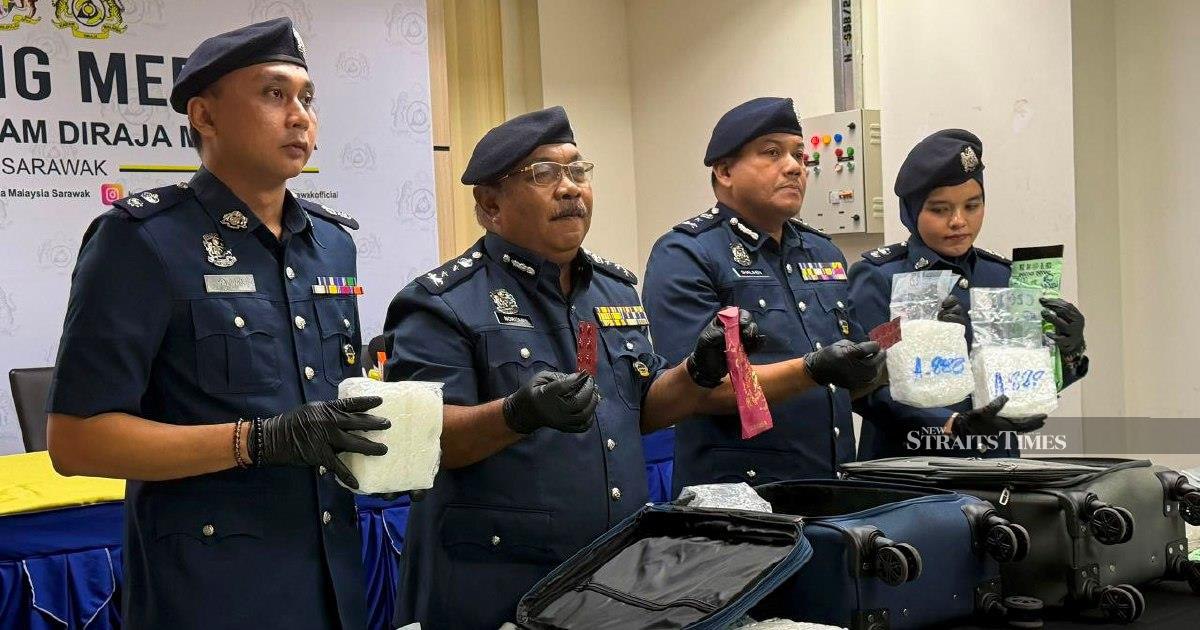
Authorities at Sarawak's primary airport have disrupted a substantial drug trafficking operation, marking another significant victory in the region's ongoing battle against organised narcotics smuggling. The Sarawak Customs Department made the seizure on July 9, apprehending two individuals implicated in the attempted importation of controlled substances valued at RM1.32 million through Kuching International Airport.
This interception represents a notable enforcement achievement for Sarawak's customs operations, which have intensified scrutiny of passenger arrivals and cargo movements at the state's busiest airport terminal. The detection underscores the sophistication of organised trafficking networks that continue to target Malaysia's porous entry points, particularly those serving major population centres and international connections.
Kuching International Airport, serving as the gateway to Sarawak and a crucial transport hub for the wider East Malaysia region, has become an increasingly important focus for customs enforcement agencies. The airport handles both domestic and international traffic, making it an attractive target for smugglers attempting to move contraband through what they perceive as less stringently monitored checkpoints compared to Kuala Lumpur or other major Malaysian terminals.
The arrested individuals face serious charges under Malaysia's Dangerous Drugs Act, which carries severe penalties including lengthy imprisonment and, in certain circumstances, capital punishment for trafficking in large quantities. The successful operation reflects investment in training and intelligence-sharing mechanisms that have improved detection capabilities at regional airports across Malaysia.
Drug trafficking through Malaysian airports remains a persistent challenge for law enforcement. Smuggling routes frequently exploit gaps in security screening, sometimes involving complicity from airport workers or exploitation of passengers who are coerced or deceived into carrying contraband. The two-person operation detected here may represent a small cell within a larger transnational supply chain channelling narcotics from Southeast Asia's production zones toward consumer markets in Malaysia, Singapore, and beyond.
The RM1.32 million valuation reflects street-level pricing and suggests the confiscated material comprises significant quantities of high-value drugs, likely including crystal methamphetamine, heroin, or synthetic compounds that dominate regional trafficking patterns. Such seizures, when successful, disrupt profit flows for criminal organisations and provide valuable intelligence to enforcement agencies regarding trafficking methodologies and supply chain vulnerabilities.
Sarawak Customs has progressively enhanced operational capabilities at Kuching airport through the deployment of advanced scanning technologies, improved intelligence protocols, and coordinated efforts with other agencies including the Malaysian Anti-Corruption Commission and Federal Bureau of Narcotics. These investments have yielded measurable results, though enforcement officials acknowledge that interception represents only partial success against networks constantly adapting their methods.
The enforcement success carries particular significance for Sarawak, where cross-border issues with Indonesia present unique challenges given shared territorial waters and numerous informal crossing points. Airport-based operations therefore represent a more controllable enforcement environment where systematic screening can be applied to all international arrivals and departures.
For Malaysian citizens and regional observers, such operations demonstrate continued official commitment to narcotics suppression despite resource constraints. However, experts note that airport seizures alone cannot address underlying demand drivers or the economic incentives that sustain trafficking organisations. Sustained reductions in drug availability require broader supply-side interventions, demand reduction programmes, and international cooperation across Southeast Asia's highly interconnected drug markets.
The detention of the two suspects initiates investigative processes that may yield broader intelligence regarding trafficking networks, distribution channels, and potential complicity by organised crime syndicates. Malaysian authorities routinely utilise such investigations to identify upstream suppliers and downstream distribution cells, building cases that eventually lead to dismantling entire operational structures rather than simply addressing individual courier-level arrests.
Moving forward, the Sarawak Customs Department is likely to maintain elevated alert levels at Kuching airport while potentially implementing additional screening protocols for high-risk passenger categories or routes identified through intelligence analysis. Regional cooperation remains essential, as trafficking networks frequently operate across multiple jurisdictions and exploit differences in enforcement capacity and legal standards among ASEAN members.
This seizure reinforces that Malaysia's airports, despite ongoing challenges, maintain functional enforcement capacity against organised trafficking. Nonetheless, the persistence of smuggling attempts at major terminals reflects the substantial profit margins and consumer demand that continue driving narcotics smuggling throughout Southeast Asia, a dynamic unlikely to be significantly altered through enforcement actions alone.

