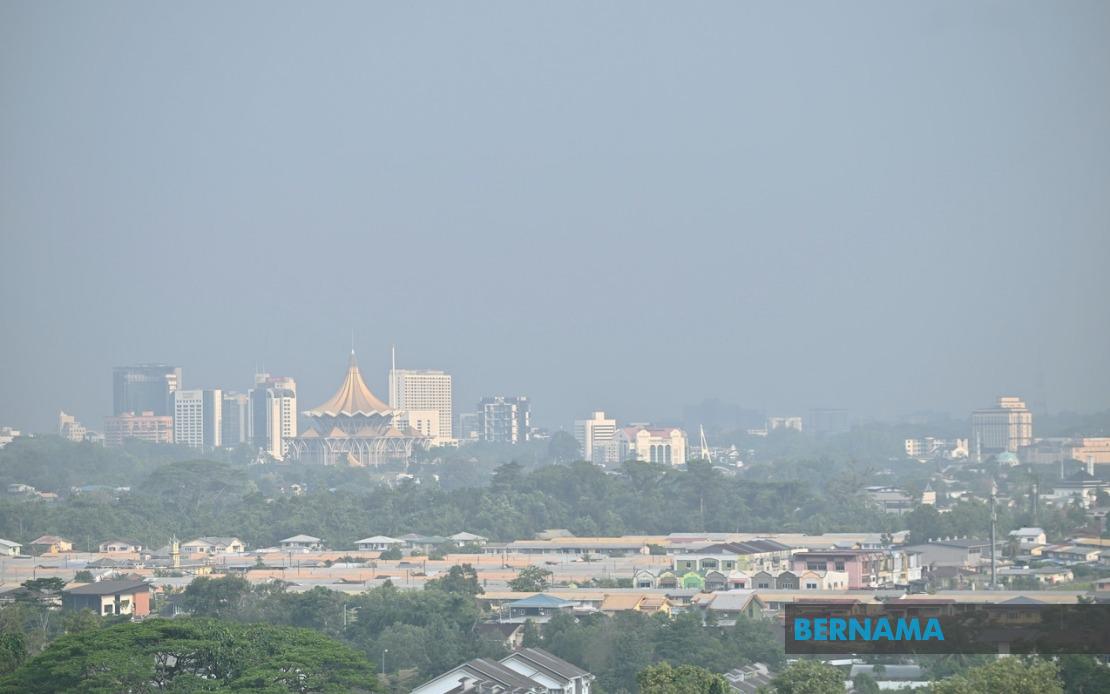
The Sarawak Disaster Management Committee has issued a precautionary advisory recommending that residents and event organisers postpone outdoor activities and large public gatherings until atmospheric conditions improve, citing both hazardous haze levels and elevated temperatures affecting the state.
According to Datuk Amar Douglas Uggah Embas, chairman of the committee, the guidance reflects official concern about prolonged exposure to poor air quality among the general population. The advisory represents a coordinated public health response, with the committee working alongside relevant government agencies to continuously assess evolving environmental conditions across Sarawak's diverse geography. Officials emphasise that such measures prioritise community safety and wellbeing by limiting unnecessary outdoor exposure during this critical period.
The air quality snapshot from the Hot Weather Update Report compiled at 8 am on August 22 revealed a concerning distribution of pollution hotspots throughout the state. Eleven distinct locations registered unhealthy air quality indices ranging between 101 and 200, indicating significantly compromised atmospheric conditions. Additionally, six areas fell within the moderate category with readings between 51 and 100, while only one location maintained good air quality below 50 on the Air Pollutant Index scale.
Serian emerged as the most severely affected area, recording the highest reading of 190, a level approaching the hazardous threshold. Kuching and Lubok Antu followed closely with identical readings of 181 each, underscoring the challenge facing the capital and surrounding communities. The mid-range cities also showed substantial degradation: Lundu registered 179, Samarahan 177, Sri Aman 174, and Sarikei 172, indicating that the haze phenomenon spans multiple districts rather than concentrating in isolated pockets.
In practical terms, this environmental crisis has forced postponement of significant public events. The Sarawak Ku Sayang programme, originally scheduled for August 28 to 30 in Mukah, has been rescheduled to protect attendees from hazardous air exposure. Similarly, the state-level 2026 National Day celebrations planned for August 30 to 31 in Kapit have been deferred, reflecting authorities' commitment to preventing mass gatherings during this unhealthy period.
The situation carries particular relevance for Malaysian policymakers beyond Sarawak's borders. Transboundary haze remains a persistent regional problem affecting multiple Southeast Asian nations, and Sarawak's experience demonstrates how air quality crises demand swift, coordinated administrative responses. The state's approach of cancelling major events—rather than merely issuing health advisories—signals a recognition that voluntary compliance may prove insufficient when air quality deteriorates to genuinely dangerous levels.
For businesses, tourism operators, and cultural organisations dependent on outdoor programming, such postponements represent substantial economic adjustments. Hotels anticipating visitors for National Day celebrations, entertainment vendors preparing for Sarawak Ku Sayang, and transportation providers gearing up for increased traffic must rapidly recalibrate operations. The cascading economic impact extends beyond direct event cancellations to encompass supply chains, employment patterns, and municipal revenue streams across affected districts.
From a health perspective, the advisory reflects medical evidence that prolonged exposure to hazardous air quality exacerbates respiratory conditions, cardiovascular complications, and other chronic diseases. Vulnerable populations including children, elderly residents, and those with pre-existing health conditions face particular risk during high pollution episodes. By encouraging postponement rather than merely advising individuals to wear masks, authorities acknowledge that technological solutions cannot fully mitigate the dangers posed by severely degraded air quality.
The committee's ongoing monitoring framework indicates that this situation remains fluid rather than static. Officials have committed to coordinating responsive measures based on real-time air quality data, allowing for potential event rescheduling once conditions stabilise. This adaptive approach contrasts with rigid cancellation policies, providing stakeholders with hope for eventual programme resumption while maintaining flexibility to extend postponements should haze persist.
Sarawak's predicament underscores broader Southeast Asian challenges regarding air quality management and environmental governance. The state's proactive stance—mobilising disaster management infrastructure, engaging multiple agencies, and making difficult decisions affecting public events—demonstrates institutional capacity. However, it also highlights the limits of national-level action when transboundary pollution sources remain inadequately controlled regionally.
For Malaysian businesses and organisations considering outdoor events, Sarawak's experience offers instructive lessons about contingency planning and climate resilience. As climate patterns increasingly produce extreme weather episodes and haze events, building flexibility into event scheduling and developing rapid-response protocols become essential operational imperatives. The economic and social costs of last-minute cancellations or health emergencies during events dwarf investment in robust contingency frameworks.
Looking forward, Sarawak's situation demands attention to root causes beyond immediate response measures. Addressing regional transboundary haze requires diplomatic coordination, enforcement of environmental standards in neighbouring jurisdictions, and long-term investment in sustainable land management practices throughout Southeast Asia. Until such structural changes take hold, Malaysian states must continue developing emergency protocols, communication systems, and public health strategies sufficient to protect residents during recurring haze episodes.

