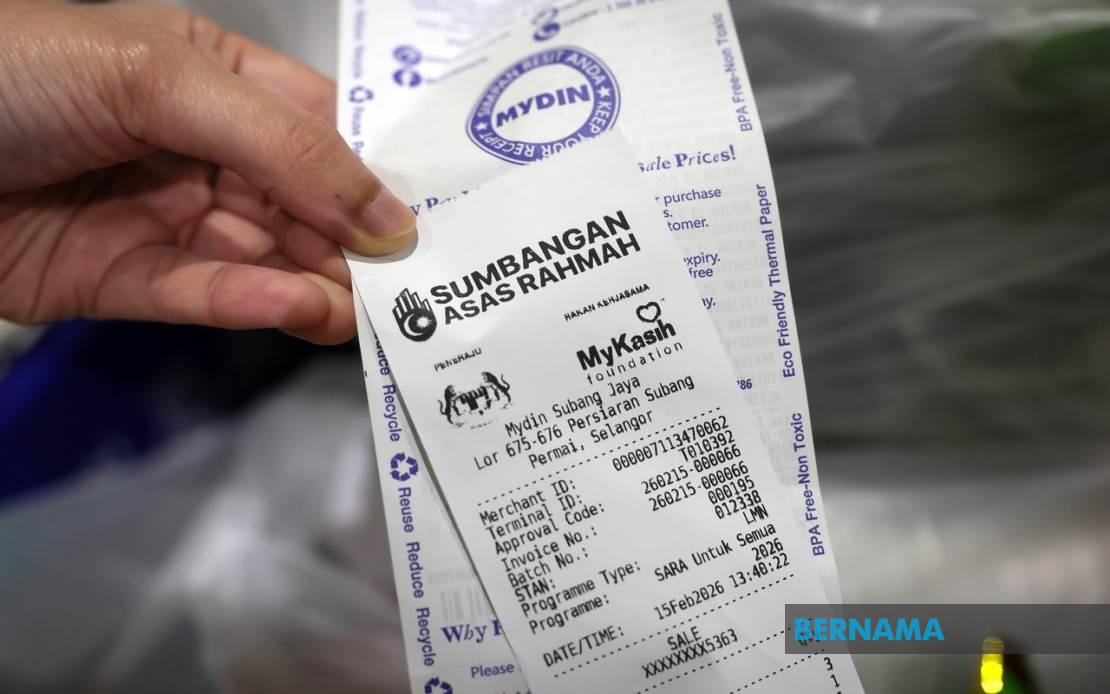
Malaysia's Sumbangan Asas Rahmah (SARA) initiative continues to demonstrate robust performance, with the Ministry of Finance reporting that the cashless aid scheme has reached a 99 per cent uptake rate among its nearly nine million monthly beneficiaries, while generating RM3.45 billion in transactions throughout the current year. The exceptional utilisation figures suggest that the government's approach to channelling assistance directly to low- and middle-income households is resonating effectively with its intended recipients, addressing mounting financial pressures in the cost of living sphere.
The SARA programme operates as a credit-based system delivered through MyKad, allowing recipients to purchase essential items at registered SARA Rakan Niaga retailers across 15 product categories including basic groceries, personal hygiene products, household supplies, and medicinal goods. This cashless architecture enables the government to exercise greater oversight of how assistance is deployed, ensuring resources reach their intended beneficiaries rather than being diverted or misused. The MyKad mechanism also provides valuable data allowing authorities to monitor programme effectiveness in real time and make adjustments as economic conditions evolve.
Beyond the core SARA scheme, the broader SARA Untuk Semua initiative has achieved even more expansive reach, with approximately 22 million individuals—equivalent to 87 per cent of all eligible recipients—participating in the programme and collectively generating over RM1.77 billion in local market transactions. This extended framework demonstrates how targeted assistance can function as both a poverty-alleviation tool and an economic stimulus mechanism, with beneficiary spending flowing directly into the domestic economy and supporting small and medium enterprises that depend on this consumer segment.
The Ministry of Finance emphasised that recipient spending patterns serve as a crucial performance metric for evaluating whether the STR and SARA initiatives are genuinely alleviating financial strain for vulnerable populations. The transaction volumes and uptake rates indicate that households are translating government support into immediate purchasing power, counteracting inflationary pressures that have eroded wages and savings across the lower and middle income brackets. This spending activity simultaneously generates what economists term multiplier effects, as money circulates through local supply chains, supporting retailers, wholesalers, and producers.
The government has significantly scaled up its commitment to these assistance programmes in response to persistent cost-of-living challenges. Total allocations for STR and SARA are scheduled to rise to RM15 billion in 2026, representing a substantial increase from RM10 billion in 2024. This escalation reflects political recognition that affordability pressures remain acute despite overall economic growth, and that targeted social transfers represent a policy priority for the administration. The trajectory of funding expansion suggests the programmes are likely to become permanent fixtures of Malaysia's social safety net rather than temporary relief measures.
The strength of these figures becomes particularly significant when contextualised against regional developments. Southeast Asian economies broadly face inflationary headwinds and income stagnation for lower-income groups, prompting governments across the region to consider expanded cash transfer and targeted subsidy schemes. Malaysia's experience demonstrates that well-designed cashless assistance programmes can achieve near-universal take-up when properly promoted and when the redemption network is sufficiently extensive. The 99 per cent utilisation rate among STR recipients is notably high by international standards and suggests minimal administrative friction or public reluctance to participate.
The query that prompted the ministry's response, raised by Datuk Aminolhuda Hassan from the Petaling Jaya (PH-Sri Gading) constituency, underscores ongoing parliamentary oversight of these initiatives. Legislators from both government and opposition benches maintain focus on programme performance metrics, reflecting public interest in ensuring that substantial budget allocations deliver tangible benefits. The government's detailed responses regarding uptake rates, transaction volumes, and planned funding increases indicate a commitment to transparency and evidence-based policy communication regarding social assistance delivery.
The cashless architecture embedded within SARA represents a deliberate policy choice with multiple advantages beyond simple payment processing. By restricting redemption to specific product categories and approved merchants, the government can prevent welfare funds from being used for non-essential purchases or diverted into informal economic activity. The system simultaneously generates granular data on consumption patterns and purchasing power across different regions and demographic groups, information that can inform future policymaking. This data-driven approach to social welfare stands in contrast to traditional cash transfer systems, which offer greater personal autonomy but less institutional visibility.
Looking forward, the Ministry of Finance has pledged sustained monitoring of both STR and SARA to ensure assistance flows efficiently to those experiencing greatest financial distress. As living costs remain volatile—particularly in food, energy, and housing sectors—the government recognises that social safety nets require continuous calibration to remain effective. The planned expansion to RM15 billion by 2026 indicates this is not merely a cyclical response to temporary inflation but rather a fundamental reorientation of the welfare system toward more generous, universal income support for vulnerable populations.
The programme's success carries implications for how Malaysian policymakers approach the broader challenge of inclusive growth. Rather than relying exclusively on macroeconomic expansion or supply-side reforms to improve living standards, the government is simultaneously deploying direct income transfers to ensure that growth benefits reach households struggling with immediate consumption needs. This dual approach—combining structural economic policy with targeted assistance—reflects pragmatic recognition that market mechanisms alone may require extended periods to translate productivity gains into widespread wage improvements, while vulnerable populations face urgent affordability pressures today. The SARA programme's strong performance metrics suggest this strategy is delivering measurable relief while simultaneously stimulating local economic activity.

