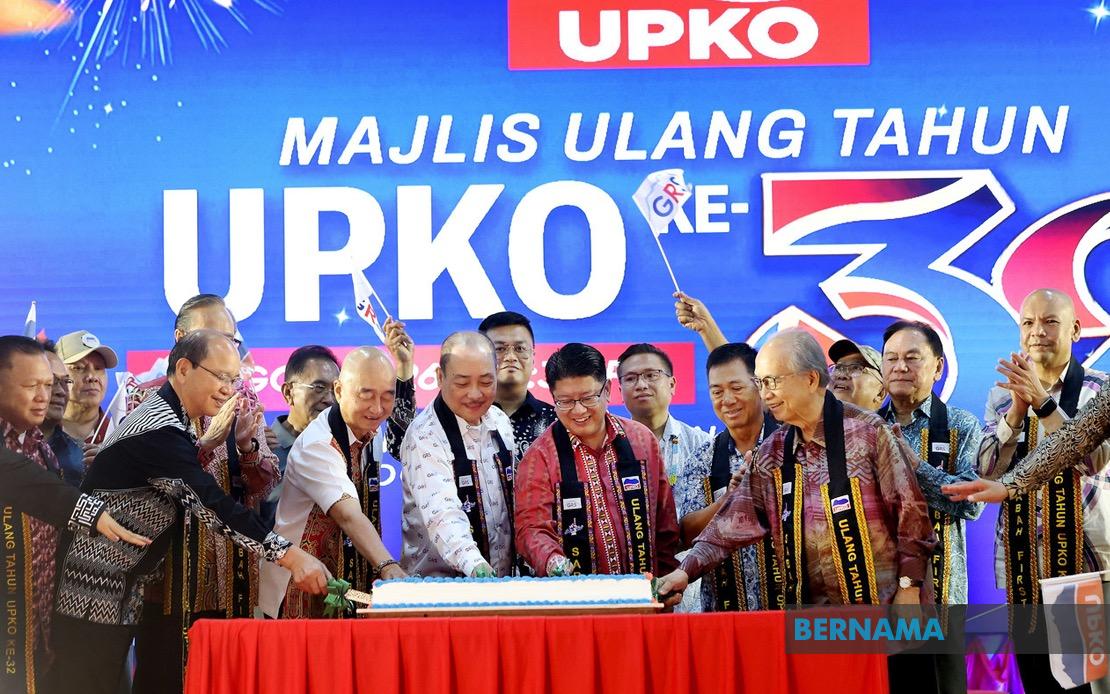
Sabah's Chief Minister Datuk Seri Hajiji Noor has committed to channelling all funds received from the Federal Government directly back into the hands of Sabahans through a combination of targeted welfare support, economic incentives and infrastructure development. Speaking during the 32nd anniversary celebration of the United Progressive Kinabalu Organisation (UPKO) and the opening of its 17th Triennial Delegates Conference in Kota Kinabalu, Hajiji outlined how the state administration intends to deploy increased federal allocations to improve living standards across Sabah's diverse communities.
A significant portion of this commitment stems from Prime Minister Datuk Seri Anwar Ibrahim's decision to boost the interim special grant payment to Sabah to RM1.5 billion annually, a substantial increase from previous years. The state had already received RM600 million of this allocation in June, demonstrating the tangible flow of federal resources into the state coffers. Rather than allowing such funds to accumulate in government reserves, Hajiji has signalled an explicit policy direction to ensure rapid deployment into programmes that directly benefit the electorate.
Infrastructure development forms a cornerstone of how Sabah plans to utilise these enhanced federal transfers. The Chief Minister specifically identified the construction of additional paved roads and concrete bridges as priority projects, recognising that transportation connectivity remains fundamental to economic development and quality of life in a state characterised by challenging terrain and dispersed settlements. These investments address longstanding concerns about rural accessibility that have constrained economic opportunities in outlying districts.
Beyond road networks, the state government intends to leverage federal funds to expand utility provision across Sabah. Improvements to water and electricity supply represent essential infrastructure deficits that continue to affect households and small businesses throughout the state. By channelling federal grants toward such basic services, the administration signals intent to narrow the development gap between urban centres like Kota Kinabalu and more remote communities, a persistent challenge in a state spanning some 73,000 square kilometres.
The Rumah Mesra Sabah Maju Jaya (SMJ) housing initiative exemplifies how federal revenue translates into direct citizen benefits. Hajiji indicated plans to construct additional units under this programme, addressing housing affordability challenges faced by low to middle-income households. Such schemes have proven politically popular across Malaysia's states precisely because they provide tangible assets to beneficiaries while visibly demonstrating government responsiveness to fundamental needs.
Complementing housing support is the Sentuhan Kasih Rakyat (SYUKUR) programme, a welfare initiative designed to provide direct cash assistance and targeted support to vulnerable populations. The emphasis on expanding such programmes underscores recognition that infrastructure investment alone cannot address poverty and income insecurity affecting segments of Sabah's population, particularly in rural areas dependent on agriculture or traditional livelihoods.
Parallel to federal allocations, Sabah's state government has maintained disciplined revenue collection, sustaining annual collections at approximately RM7 billion since 2022 and projecting growth to RM8 billion this year. This trajectory suggests the administration is not solely reliant on federal transfers but has strengthened its own fiscal position. The combination of state revenue growth and increased federal support creates capacity for expanded public investment without triggering fiscal strain, provided expenditure discipline is maintained.
The state's economic resilience narrative, despite acknowledgment of domestic and global headwinds, positions Sabah as an attractive destination for private investment. Hajiji's comments framing the state as a strategic investment hub suggest deliberate branding efforts to complement public spending with private sector participation. This dual approach, combining direct government investment with efforts to catalyse private capital, represents a relatively sophisticated economic strategy that extends beyond simple resource redistribution.
Hajiji's pronouncements carry particular significance given Sabah's historical political dynamics and federal-state relations. As an East Malaysian state with distinctive constitutional arrangements, Sabah has long negotiated carefully with federal authorities over resource allocation and autonomy. The embrace of federal funds for state priorities, coupled with emphasis on rapid deployment to citizens, reflects a pragmatic approach to federalism that maximises benefit from cooperation while maintaining government legitimacy through visible delivery.
For Malaysian observers, Sabah's approach offers insights into how state administrations translate federal allocations into political dividends. The explicit commitment to redirect revenue toward citizen benefit, rather than accumulation or administrative expenditure, suggests awareness that electoral support increasingly depends on demonstrable improvements in service delivery and asset provision. This orientation aligns with broader patterns across Malaysian states where competitive governance has intensified pressure on administrations to produce measurable outcomes.
The emphasis on specific programmes—roads, bridges, housing, welfare support—reflects prioritisation reflecting Sabah's particular development needs. These are not aspirational targets but concrete projects with measurable implementation and citizen visibility. Such specificity enhances credibility compared to vague commitments to growth, while acknowledging that Sabahans increasingly expect tangible evidence of government effectiveness.
Moving forward, the critical test will be implementation fidelity and pace. Federal allocations and state revenue growth matter only insofar as they translate into actual construction, utility expansion and welfare disbursement. Hajiji's explicit commitment creates accountability, as citizens and opposition alike will monitor whether pledged programmes materialise on schedule and within budget, making follow-through essential for maintaining administrative credibility in a competitive political environment.

