A critical discussion on Sabah's long-awaited federal funding is set to dominate a Malaysia Agreement 1963 (MA63) meeting scheduled for Monday, with state authorities determined to secure the outstanding RM900 million balance of a special grant that has been partially disbursed but remains incomplete. The bilateral negotiations between Sabah and the federal government have intensified as the state pushes to finalise what represents a substantial portion of the RM1.5 billion interim allocation that Prime Minister Datuk Seri Anwar Ibrahim originally announced to address longstanding resource disparities in the state.
The backdrop to this negotiation reveals a complex financial arrangement spanning several years. Sabah initially received an interim payment of RM600 million in June 2023, leaving a significant shortfall that has become an increasingly contentious issue in state-federal relations. During the State Legislative Assembly sitting on July 20, lawmakers formally tabled a request for the remaining RM900 million to be fully paid within the current calendar year, signalling growing impatience among the state administration and political establishment over delays in completing the commitment.
Sabah Deputy Chief Minister II Datuk Seri Masidi Manjun, who also holds the position of state Finance Minister, expressed confidence during a recent public event that both governments remain committed to finalising the allocation before December. His remarks suggest that technical discussions have progressed beyond initial formulations, though specific disbursement timelines remain contingent on ongoing negotiations between the respective treasury departments and economic planning agencies. The repeated emphasis on completing payments this year underscores the political significance of the matter within Sabah's governance circles.
Beyond the immediate financial transfer, the Monday meeting will also address the methodology for computing the 40 per cent special grant formula stipulated under MA63, a provision that determines how development resources are apportioned to Sabah. This discussion carries longer-term implications, as clarifying the computational framework could establish precedents for future funding arrangements and potentially unlock additional resources once the formula's application is standardised across both administrations. The technical complexity of these calculations often obscures broader questions about resource distribution in Malaysia's federal structure.
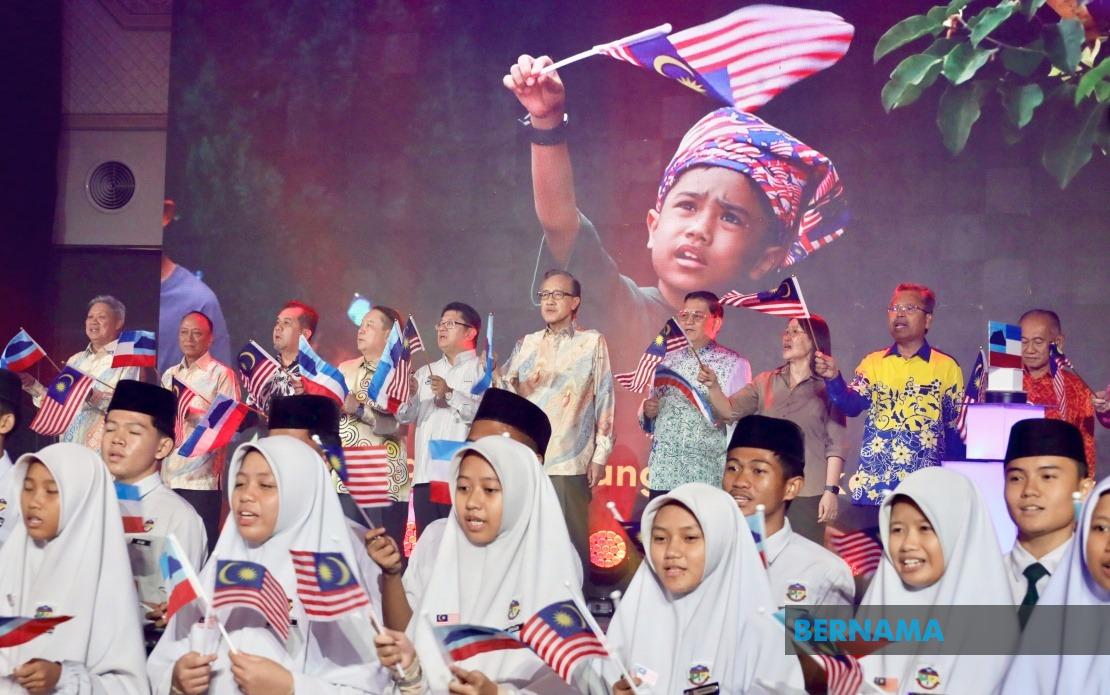
Masidi's comments during the Sabah Day celebrations also revealed an underlying tension in how the state frames its relationship with the federal government and its development trajectory. Rather than simply advocating for increased allocation, the Deputy Chief Minister directed attention inward, challenging Sabahans to examine their own contributions to national development initiatives. This framing subtly shifts responsibility from federal disbursal mechanisms to individual and collective action within the state, a rhetorical move that reflects both pragmatism and a desire to avoid purely transactional grievance-based politics.
The special grant under MA63 represents one of the most tangible recognitions of Sabah's constitutional status as a signatory to the 1963 agreement that established the Malaysian federation. The state has historically argued that the federal government has not fully honoured its commitments under the agreement, particularly regarding resource allocation and autonomous decision-making in specified domains. The ongoing negotiations over this RM1.5 billion allocation thus carry symbolic weight beyond the monetary value, touching on broader questions of federalism and the constitutional protections afforded to Sabah within the Malaysian political system.
From a Southeast Asian perspective, Sabah's efforts to secure full federal funding carry broader implications for how sub-national states within federal systems can leverage constitutional arrangements to advance their economic interests. Malaysia's federation has grappled consistently with balancing central authority with state autonomy, and arrangements like MA63 represent attempts to enshrine such protections. The successful or delayed completion of this financial commitment will likely influence how other Malaysian states perceive their negotiating capacity with the federal government and may set precedents for future resource allocation disputes.
The discussion around development sidelining also merits closer examination. Sabah, despite its natural resource wealth and strategic location along major shipping lanes, has consistently ranked lower than peninsular states across multiple human development indicators. Infrastructure deficits, education gaps, and healthcare disparities remain persistent challenges. Federal funding mechanisms like the special grant are intended to address these structural inequalities, making the punctual and complete disbursement a matter of practical importance for Sabah's development planning and infrastructure projects.
Masidi's invocation of patriotism and national integration through flag-flying and symbolic participation in national celebrations represents an attempt to reframe the special grant discussion within a broader narrative of shared national purpose rather than zero-sum resource competition. This messaging approach acknowledges sensitivities around federalism in Malaysia's diverse political landscape while maintaining Sabah's assertiveness on financial commitments. Such framing becomes particularly important in a multiethnic federation where disagreements over resource distribution can acquire unfortunate communal dimensions if not carefully contextualised.
Looking forward, the resolution of the RM900 million balance will likely influence Sabah's political dynamics heading into the next electoral cycle. The state government's ability to deliver on this federal commitment represents a tangible achievement that opposition parties will scrutinise, making timely disbursement politically consequential beyond its intrinsic economic value. Federal authorities, meanwhile, face budgetary pressures that may complicate their capacity to meet year-end deadlines, even where political will exists.
The Monday meeting thus assumes significance as a potential inflection point in Sabah-federal relations. Should negotiations yield a concrete disbursement schedule with firm dates, it would validate the state government's negotiating approach and strengthen public confidence in federal-state cooperation mechanisms. Conversely, further delays could reignite debates about whether constitutional protections like MA63 remain genuinely enforceable or have been progressively eroded through administrative inaction and budgetary manoeuvring over successive administrations.

