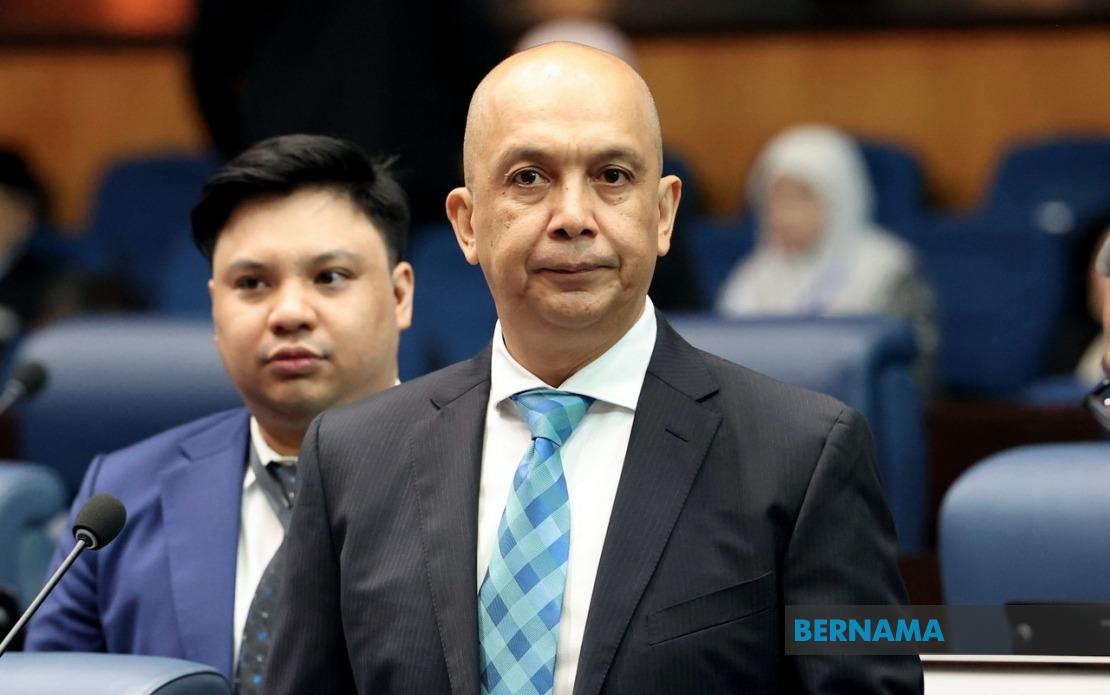
The Sabah government has received RM600 million from the Federal Government's RM1.5 billion interim special grant, paid on June 12, and is now pressing for the outstanding RM900 million to be disbursed within the current financial year. The development comes as Sabah continues to assert its constitutional entitlements under the Malaysian Federal Constitution, signalling that the state views the interim payment as merely a partial settlement rather than full resolution of a longstanding fiscal dispute.
Datuk Mohd Ishak Ayub, Sabah's Assistant Finance Minister II, made clear that accepting the interim payment should not be interpreted as the state yielding its broader constitutional claims. In statements to the state assembly in Kota Kinabalu, he emphasised that Sabah reserves all its rights under Articles 112C and 112D of the Federal Constitution, which define revenue-sharing arrangements between Putrajaya and the states. This careful positioning reflects the delicate political balance in Malaysia's federal structure, where states like Sabah—which joined Malaysia under the 1963 Malaysia Agreement—maintain distinct constitutional protections not available to peninsular states.
At the heart of Sabah's grievance is the 40 per cent formula embedded in the Federal Constitution, which the state contends should govern how petroleum revenue and other designated sources are distributed. Mohd Ishak reiterated that the Sabah government remains uncompromising on this issue, stating that full implementation of the constitutionally prescribed formula is non-negotiable. This language signals that negotiations between Putrajaya and Kota Kinabalu are likely to continue, with the interim payment representing a gesture of goodwill rather than a final settlement of what Sabah believes it is owed.
The genesis of the current interim payment traces to Prime Minister Datuk Seri Anwar Ibrahim's announcement on May 30 during the Kaamatan Festival celebration, when he unveiled an increase in the interim payment amount. This public commitment subsequently generated a series of exchanges between the Federal Government and Sabah's administration dated June 9, 19, and 26, culminating in the June 12 transfer of RM600 million. The timing and framing of the announcement—made during a festival celebration—underscores the political dimensions of federal-state financial relations, particularly in a state where electoral competition remains fierce.
For Malaysian observers, the Sabah situation highlights the complexity of federalism in Southeast Asia's most populous federation. Unlike purely unitary systems, Malaysia's constitutional architecture grants states material autonomy in revenue matters, yet the interpretation and implementation of these provisions frequently sparks tension. Sabah's insistence on the 40 per cent formula reflects not only fiscal interests but also questions of constitutional equity—whether provisions designed to protect the economic interests of states that joined later should be honoured in practice as well as in text. The state's refusal to treat the interim payment as settlement reflects broader regional concerns about developmental equity and the need to maintain meaningful fiscal capacity at sub-national levels.
Beyond the immediate grant dispute, the Sabah government is also managing welfare assistance policy under tighter financial constraints. Datuk Rina Jainal, Sabah's Assistant Minister of Women, Health and People's Wellbeing, informed the state assembly that welfare benefits would be maintained within a RM200 to RM350 monthly range. However, she flagged that any expansion of state-funded welfare support hinges on improvements in Sabah's overall financial position—a candid acknowledgement of the direct link between revenue availability and social programme delivery. This creates a potential bottleneck: while the state seeks additional federal funds, the capacity to enhance local welfare provision remains constrained.
On the federal front, Rina noted that changes to welfare assistance rates typically follow announcements made by the Prime Minister during the annual Budget presentation in Parliament, underscoring how federal fiscal policy cascades into state-level provision. This layered system means that state governments like Sabah operate within federal parameters while simultaneously managing their own fiscal pressures. The arrangement can create friction when federal adjustments do not align with state priorities or when resource constraints limit local flexibility.
The state has also expanded eligibility criteria for welfare assistance, raising the household income ceiling that determines access to benefits. The poverty line income threshold increased from RM1,198 in 2025 to RM1,236 in 2026, a modest adjustment that technically extends coverage to slightly more households but reflects cost-of-living pressures affecting the state's poorest residents. Such incremental changes, while important for affected families, often struggle to keep pace with actual inflation and economic pressures in resource-dependent economies like Sabah.
For Southeast Asian analysts, the Sabah case offers a window into how federal systems function—or strain—in developing democracies. The state's willingness to accept an interim payment while simultaneously asserting larger claims demonstrates political pragmatism: taking available funds while reserving the right to pursue additional entitlements. Yet it also suggests an underlying anxiety about Sabah's long-term fiscal sustainability, particularly if oil revenues continue to face global headwinds and the 40 per cent formula remains unimplemented in full.
The implications extend beyond Sabah itself. If the state's assertions gain traction, other Malaysian states—particularly those with natural resources or distinct constitutional standing—may feel emboldened to press their own claims against the Federal Government. Conversely, if Putrajaya resists or delays, it risks deepening political discontent in a state where federal relations are already sensitive. The RM900 million remaining from the interim package thus represents not merely a budgetary line item but a test of how seriously the Federal Government treats the constitutional framework that binds Malaysia's diverse polities together.

