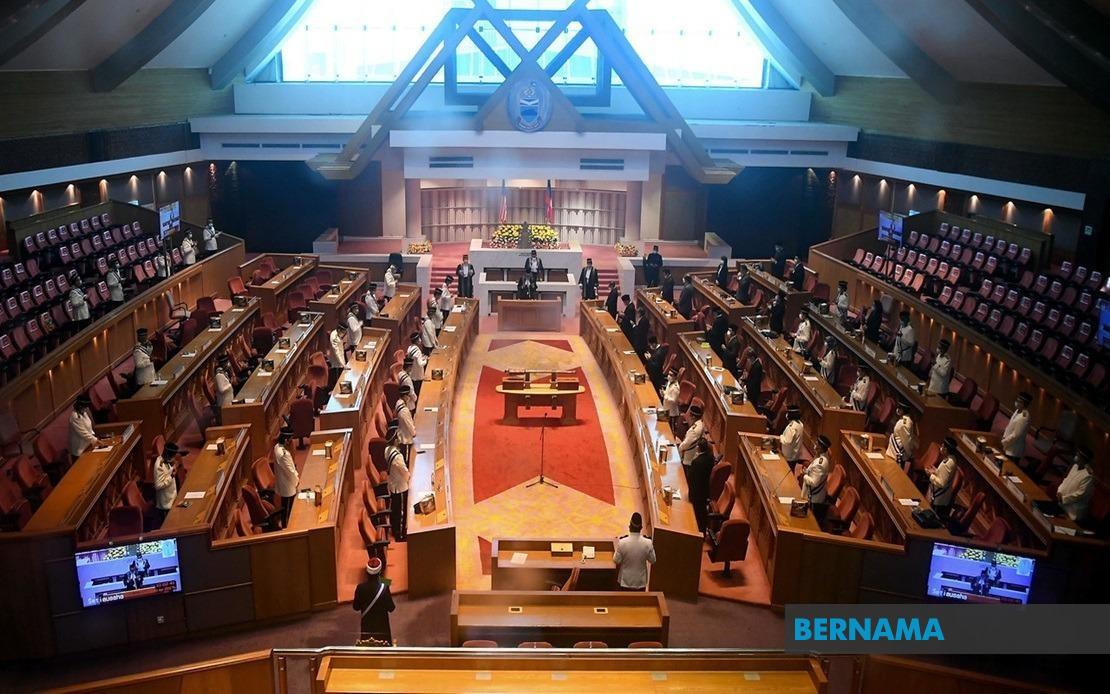
The Sabah State Legislative Assembly has given its approval to the Sabah Ports Authority (Amendment) Bill 2026, marking a formal legislative response to significant changes in how the state manages its port infrastructure and maritime commerce. The bill passed on July 22 after discussion among six elected representatives, with Deputy Speaker Datuk Al Hambra Tun Juhar overseeing proceedings. The legislative move crystallises administrative adjustments that took effect in December 2025 when the state reorganised its cabinet structure, requiring corresponding updates to existing legislation governing port operations and authority.
Deputy Chief Minister III Datuk Ewon Benedick, who also serves as Minister of Industrial Development, Entrepreneurship and Transport, introduced the amendment on behalf of the government. His dual ministerial responsibilities underscore the strategic importance placed on integrating port development within the state's broader industrial policy framework. The bill's passage without apparent opposition reflects consensus among assemblymen regarding the necessity of aligning legislative provisions with the new administrative reality, even though such technical amendments often receive limited public scrutiny.
The core issue addressed by this amendment stems from outdated terminology embedded within the Sabah Ports Authority Enactment 1981, legislation now nearly half a century old. Previously, the enactment defined the supervising minister as the official responsible for communications and public works—a designation that no longer accurately reflected the actual ministry overseeing port affairs following December's restructuring. This disconnect between statutory language and functional reality created potential legal ambiguity about which government department held legitimate authority over port decisions and operations, necessitating legislative correction.
The cabinet restructuring that prompted this amendment transferred all functions and responsibilities concerning port affairs away from the Sabah Ministry of Public Works and Utilities to the newly empowered Ministry of Industrial Development, Entrepreneurship and Transport. This shift reflects a strategic policy decision to reposition ports not primarily as infrastructure assets requiring physical maintenance, but as commercial engines capable of driving industrial development and attracting business investment to Sabah. The reorganisation recognises that ports' role in facilitating trade, attracting logistics companies, and supporting downstream industries increasingly outweighs their traditional classification as mere public works.
For Malaysian observers tracking regional economic strategy, this legislative realignment signals Sabah's intent to leverage its geographical position and port facilities as competitive advantages in attracting industrial investment. By consolidating port oversight with industrial development responsibilities, the state government creates opportunities for more integrated policy-making and strategic planning. The ministry can now coordinate port development with broader initiatives to establish special economic zones, manufacturing clusters, and free trade arrangements, potentially creating synergies that isolated port management would not achieve.
Crucially, Datuk Ewon clarified that this amendment carries no financial implications for the state government, reassuring stakeholders that the administrative reorganisation does not necessitate additional budget allocations or cost-cutting measures. Neither does the amendment alter the substantive policies, operational functions, or delegated powers vested in the Sabah Ports Authority itself. The amendment remains narrowly technical, updating statutory references rather than fundamentally reconstituting port governance. This limited scope suggests the state conducted careful legal review to ensure the restructuring required only legislative terminology adjustments rather than wholesale institutional redesign.
A transitional provision embedded within the amendment provides critical legal continuity by validating all decisions, approvals, and administrative actions previously undertaken by the minister who formerly held port responsibilities. This safeguard prevents legal challenges to port-related decisions made during the interim period between the cabinet restructure in December 2025 and this legislative amendment in July 2026. Without such protection, affected parties might have contested the legitimacy of port authority actions undertaken under an administratively realigned but legislatively unconfirmed supervisory structure.
The extended gap between the cabinet restructuring and legislative amendment—approximately seven months—raises questions about administrative efficiency, though the deliberate pace also suggests the government prioritised careful drafting and consultation. Sabah's legislative process, like those in other Malaysian states, requires balancing prompt responsiveness to structural changes against the need for thorough vetting of statutory amendments. The fact that six assemblymen participated in debate indicates substantive engagement rather than perfunctory rubber-stamping, suggesting the legislature took its oversight role seriously despite the amendment's technical character.
This legislative development reflects broader patterns across Malaysian states and the federal government regarding how cabinet restructurings require cascading legislative adjustments. Sabah's experience demonstrates that administrative reorganisation, whilst often presented as realignment of existing functions, necessitates corresponding updates to decades-old statutory frameworks. The amendment exemplifies the intersection between government efficiency and legal precision—the need to modernise administrative structures whilst maintaining legal certainty and institutional continuity.
For businesses and industries dependent on Sabah's port infrastructure, this amendment clarifies the administrative chain of authority and potentially signals the state's commitment to integrating port development with industrial policy. The consolidation of port oversight within the Industrial Development ministry may eventually translate into more coordinated promotional efforts, streamlined approval processes, and strategic investments designed to enhance port competitiveness. Whether such structural advantages materialise depends on subsequent implementation and resource allocation decisions now vested in Datuk Ewon's ministry.
The amendment also carries subtle implications for inter-agency coordination within Sabah's government. Previously divided between public works and industrial development ministries, port responsibilities now centralise within a single administrative portfolio, potentially reducing coordination challenges and bureaucratic delays. However, port development invariably requires input from multiple government agencies including customs, immigration, environmental protection, and labour authorities. The structural consolidation at ministerial level does not eliminate the need for effective inter-agency cooperation, remaining a potential friction point in practical implementation.
Looking forward, this amendment positions Sabah to pursue more aggressive port development strategies without legislative impediments. The state government can now implement industrial policies treating ports as strategic development nodes rather than mere infrastructure assets. Whether this structural reorganisation translates into competitive advantages for Sabah's maritime sector and industrial base remains subject to subsequent policy decisions, investment levels, and management effectiveness—questions that legislative amendments alone cannot resolve.

