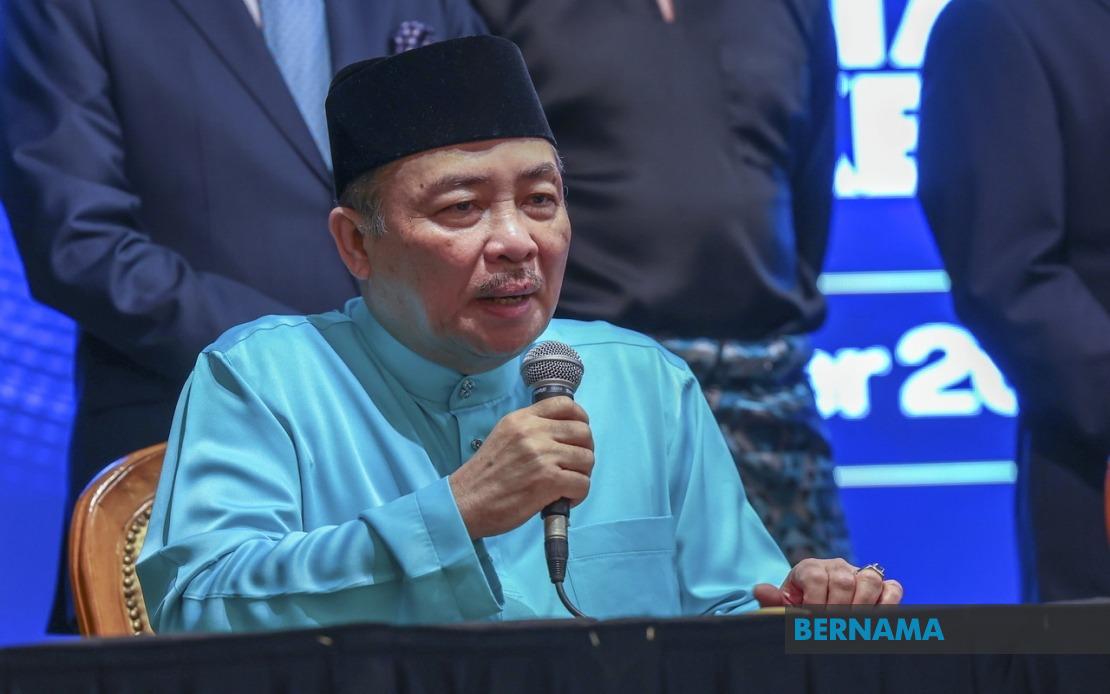
Sabah has pledged more than RM100 million towards its state scholarship programme in 2024, demonstrating a significant financial commitment to expanding educational access across the state. The funding will sustain existing scholarship holders while simultaneously welcoming 2,182 newly eligible students into the Sabah State Government Scholarship (BKNS) scheme. This represents a substantial injection of resources aimed at removing financial barriers that might otherwise prevent talented young Sabahans from pursuing tertiary studies.
Chief Minister Datuk Seri Hajiji Noor framed the investment as a cornerstone of Sabah's broader development strategy, arguing that education serves as the fundamental pillar upon which the state's future prosperity depends. The allocation reflects recognition that human capital development cannot be separated from economic competitiveness and regional advancement. By directing over RM100 million annually, the state government signals that educational investment is not merely expenditure but rather a strategic priority capable of generating long-term returns through a more skilled and productive workforce.
The scholarship programme has grown substantially under the current administration, with cumulative beneficiaries now exceeding 13,389 students across various educational levels. This expanding pool of recipients indicates that the BKNS scheme has become an increasingly important mechanism for channelling state resources towards individual opportunity and social mobility. The scale of participation suggests the programme enjoys legitimacy among Sabah's student population and their families, who recognise its tangible value in making education financially accessible.
Sabah's emphasis on Science, Technology, Engineering and Mathematics disciplines reflects a strategic orientation towards sectors driving contemporary economic growth. By concentrating scholarship support on STEM fields, the state government aims to build expertise pipelines in knowledge-intensive industries. This focus acknowledges that Sabah's competitive advantage in an increasingly digital and technologically sophisticated global economy depends partly on cultivating specialised human capital rather than competing on low-cost labour alone.
Beyond the main scholarship scheme, Sabah has expanded its educational support ecosystem through fourteen distinct initiatives introduced since 2021. These programmes address different dimensions of student financial hardship, including the one-off Higher Education Institution Registration Cash Assistance (BUDI), which helps students navigate enrolment expenses, and the Special Examination Cash Assistance (BAKTI), providing targeted support during critical assessment periods. The Ihsan Computer Assistance (BAIK) programme acknowledges that digital access has become essential to educational participation, particularly as learning methodologies increasingly depend on technological platforms.
The state's introduction of the Sabah Student Flight Ticket Assistance (GRS-SUBFLY) demonstrates particular sensitivity to Sabah's geographical realities. As a large state with significant distances between urban centres and dispersed populations, students often incur substantial travel expenses when accessing tertiary institutions located in major cities. By subsidising flight costs, the programme removes a significant practical obstacle that might deter capable students from lower-income backgrounds in remote areas from pursuing higher education. Similarly, the State Higher Education Student Contribution (SENTOSA) programme directly addresses the rising burden of education fees.
Chief Minister Hajiji acknowledged that escalating living costs have compressed household budgets across Sabah, making education expenses increasingly challenging for middle and lower-income families. The constellation of assistance programmes represents a comprehensive attempt to cushion students and their families against cumulative financial pressures. Rather than offering a single-track response, the state government has crafted a diversified support architecture that addresses registration fees, examination costs, technology access, transport, and general contribution requirements separately.
The Chief Minister's expressed hope that beneficiaries will pursue studies in strategic sectors including oil, gas, energy, Technical and Vocational Education and Training (TVET), and Artificial Intelligence demonstrates clear sectoral targeting. These fields align with Sabah's existing economic strengths while simultaneously positioning the state for emerging opportunities in energy transitions and digital transformation. The emphasis on AI particularly signals awareness that automation and artificial intelligence will reshape labour markets across virtually all industries, requiring workers equipped with foundational understanding of these technologies.
Vocational education receives explicit mention in the state's strategic priorities, reflecting growing recognition that not all valuable career pathways require traditional university degrees. TVET programmes offer alternatives for students with different learning orientations and can deliver faster pathways into skilled employment. By encouraging scholarship recipients towards vocational qualifications, Sabah acknowledges that comprehensive human capital development requires diversity in educational pathways, not merely expansion of university participation.
The announcement occurs within a broader Southeast Asian context where states increasingly compete for talent through educational investment. Malaysia's internal competition between states adds additional pressure on administrations like Sabah to demonstrate commitment to educational access. Neighbouring jurisdictions and federal incentives create competitive dynamics that influence how state governments prioritise education funding. Sabah's substantial commitment suggests recognition that educational competitiveness matters for attracting and retaining talent within the state.
Implementation challenges remain significant, particularly ensuring that students from genuinely disadvantaged backgrounds access available scholarships rather than benefits concentrating among families already possessing educational capital and social networks to navigate bureaucratic applications. The multiple overlapping programmes may create complexity that inadvertently advantages families with higher information literacy. Monitoring whether the intended beneficiaries actually participate represents an ongoing implementation priority.
The long-term success of Sabah's scholarship investment depends partly on graduate outcomes and whether state-supported education translates into employment opportunities. Creating scholarship places means little if graduates subsequently emigrate due to limited job prospects or if workplace opportunities fail to utilise acquired qualifications. The state government's strategic emphasis on STEM, energy, and AI suggests confidence that Sabah's economy will generate sufficient demand for these specialists, though actual labour market developments will ultimately determine whether the educational investment generates anticipated returns.

