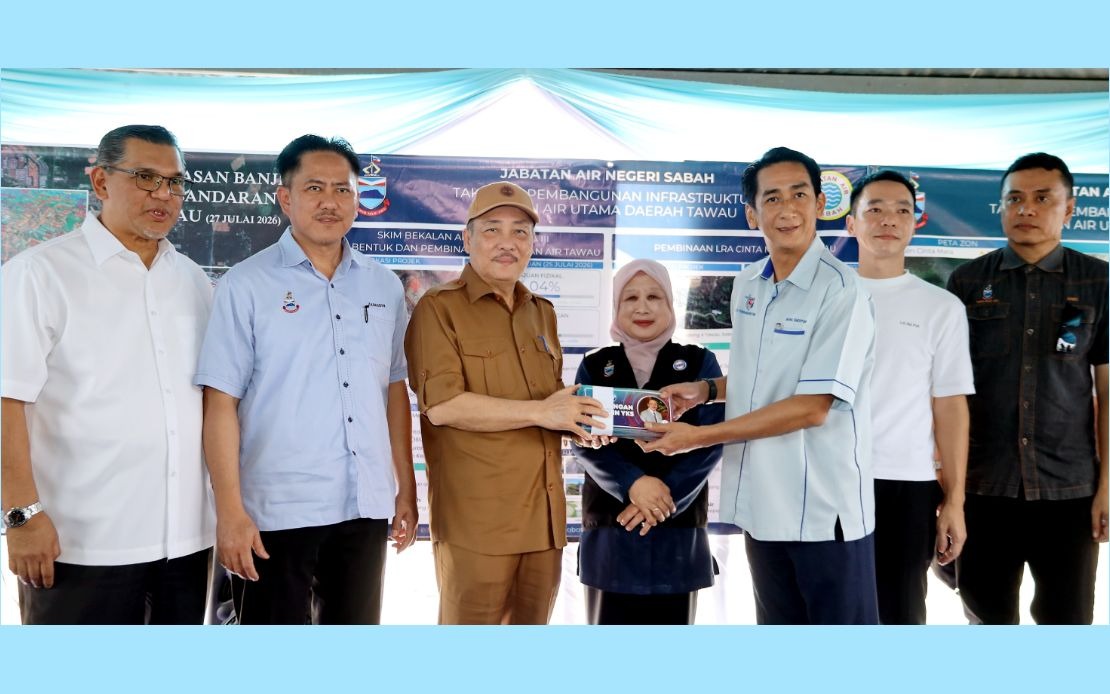
Sabah Chief Minister Datuk Seri Hajiji handed over emergency financial relief totalling RM30,600 to the Tawau Municipal Council on behalf of Yayasan Kebajikan Sabah, marking the state government's immediate response to families devastated by extensive flooding that struck the eastern Sabah district last month. The assistance reached Tawau Municipal Council president Mohd Shoffian Mohd Said, who oversaw distribution of the funds to affected residents. The relief programme targeted 102 heads of household, each receiving RM300 to help alleviate the acute financial strain caused by the disaster's sudden and destructive impact on their homes and livelihoods.
The July 25 flooding event proved exceptionally disruptive to Tawau's communities, forcing the evacuation of 362 people to emergency shelter at Dewan Serbaguna Kompleks Sukan Tawau. The scale of displacement underscored the severity of the situation, with families forced to abandon their residences with minimal notice and few possessions. The immediate cash assistance, while modest, represented crucial bridging support during the critical period when evacuees assessed damage, arranged alternative accommodation, and began the lengthy process of rebuilding their lives. For households already struggling financially, the RM300 allocation provided emergency purchasing power for essentials such as temporary shelter, replacement clothing, and basic food supplies during those first weeks of displacement.
Chief Minister Hajiji's statement emphasised the coordinated nature of Sabah's disaster response, explicitly recognising the contributions of multiple government agencies and emergency services. The Civil Defence Force, Royal Malaysia Police, and Fire and Rescue Department mobilised rapidly to conduct evacuations and provide immediate on-ground support during the flooding crisis. The Health Ministry participated in disease prevention and sanitation efforts essential in post-flood conditions, while the Tawau disaster management committee coordinated overall relief operations among various stakeholders. This multi-agency framework reflected best practices in disaster response, ensuring that evacuees received comprehensive support spanning emergency rescue, medical care, shelter provision, and eventual reconstruction assistance.
Yayasan Kebajikan Sabah's intervention highlights the role that state-level charitable foundations play in complementing official government relief machinery. Such organisations can mobilise resources more flexibly than bureaucratic structures, making targeted assistance available at critical junctures when bureaucratic channels may require additional processing time. The foundation's direct involvement in this distribution demonstrated the state's willingness to leverage philanthropic mechanisms alongside formal disaster relief protocols. This dual-track approach proved particularly valuable in Tawau, where immediate cash transfers helped families overcome initial shock and financial paralysis during the first critical weeks following the disaster.
For Malaysian policymakers and disaster management professionals across Southeast Asia, the Tawau response offers important lessons regarding flood preparedness in tropical regions. Sabah's eastern coast faces recurring monsoon-driven flooding, meaning that lessons learned from July's event will shape future protocols for the state and neighbouring jurisdictions. The speed of the governmental response—moving from disaster occurrence to financial distribution within approximately nine days—reflected pre-existing contingency frameworks that enabled rapid decision-making and fund disbursement. Such systems require advance preparation, including pre-designated relief fund sources, established distribution channels through municipal authorities, and communication protocols ensuring that eligible households receive timely notification.
The RM300 per household allocation, while symbolically important, also reflects the practical limitations faced by state-level disaster budgets. Most Malaysian state governments maintain emergency relief funds drawing from annual budgets constrained by competing priorities and limited revenue streams. The decision to distribute relatively modest but universal assistance to all affected households rather than concentrating larger amounts among the most severely impacted families reflected an equity-focused approach prioritising broad coverage. This strategy ensured that every displaced family received tangible government support, though individual households requiring assistance for major reconstruction faced the necessity of accessing insurance compensation or subsequent phases of recovery funding.
The flooding incident underscored Tawau's vulnerability to weather-related disasters, a characteristic shared with numerous Malaysian and Southeast Asian urban centres located in flood-prone areas. Rapid urbanisation across the region has frequently occurred without corresponding investment in integrated stormwater management, floodplain zoning, and drainage infrastructure modernisation. Tawau's experience mirrors patterns observed in other Malaysian cities including Kuala Lumpur, George Town, and Kota Kinabalu, where concentrated rainfall regularly overwhelms aging drainage systems designed for lower population densities and reduced impervious surface coverage. This structural challenge transcends immediate disaster response, requiring long-term investments in green infrastructure, permeable urban planning, and climate adaptation strategies that Malaysian and regional governments are only gradually prioritising.
The acknowledgment of security and health sector contributions to flood response reflected the holistic nature of modern disaster management. Beyond immediate rescue and evacuation operations, emergency shelters require security presence to maintain order and protect vulnerable residents' belongings. Health ministry staff monitored evacuee populations for waterborne disease outbreaks, provided medical treatment for injuries sustained during flooding, and conducted sanitation education essential for preventing cholera, dengue, and other post-flood health crises. This comprehensive approach contrasts sharply with earlier disaster responses that sometimes emphasised rescue operations while neglecting equally critical health protection and security elements. Sabah's explicitly integrated response strategy represents a maturation of disaster management practices across Malaysian government agencies.
Looking forward, the Tawau flooding raises questions about Sabah's long-term climate resilience planning. Scientists have documented increasing rainfall intensity across tropical regions in recent decades, suggesting that historical flood frequency patterns may underestimate future disaster risk. State governments throughout Malaysia and Southeast Asia face the challenge of balancing immediate relief assistance—inherently reactive—with proactive resilience investment that reduces future disaster impact. Yayasan Kebajikan Sabah's rapid response capability, while commendable, ultimately represents a management of existing disaster consequences rather than prevention of future occurrences. Sustainable approaches would combine such immediate relief with substantial infrastructure investment, environmental protection, and land-use planning modifications that address underlying vulnerabilities predisposing communities to flooding.
The Tawau relief distribution also illustrates the importance of established municipal governance structures in disaster response coordination. The existence of the Tawau Municipal Council as the disbursement intermediary ensured that relief funds reached verified residents through recognised institutional channels rather than ad hoc mechanisms potentially subject to corruption or inefficiency. Across Southeast Asia, regions lacking equivalent municipal infrastructure have frequently experienced delayed or ineffective relief distribution. Malaysia's relatively robust local government framework, despite its recognised limitations, provides institutional scaffolding that enables relatively efficient emergency response. This advantage becomes particularly apparent when Malaysian experiences are compared with disaster responses in neighbouring jurisdictions lacking equivalent administrative capacity.
The July 25 flooding event ultimately demonstrated both the resilience and vulnerability embedded within Sabah's existing disaster management systems. The rapid philanthropic response, comprehensive multi-agency coordination, and swift relief distribution reflected positively on state government capacity and inter-agency cooperation. However, the necessity for emergency relief itself highlighted the underlying infrastructure gaps and climate vulnerabilities requiring urgent attention. As climate change intensifies extreme weather patterns across the region, Malaysian policymakers including those in Sabah face mounting pressure to transition from reactive relief provision to preventive resilience investment. The RM30,600 transferred to Tawau families represented compassionate governance in the disaster's immediate aftermath, yet sustainable protection of these communities requires complementary investment in flood-resistant infrastructure, climate-adapted urban planning, and ecosystem restoration measures that prevent future disasters from occurring with such devastating frequency.

