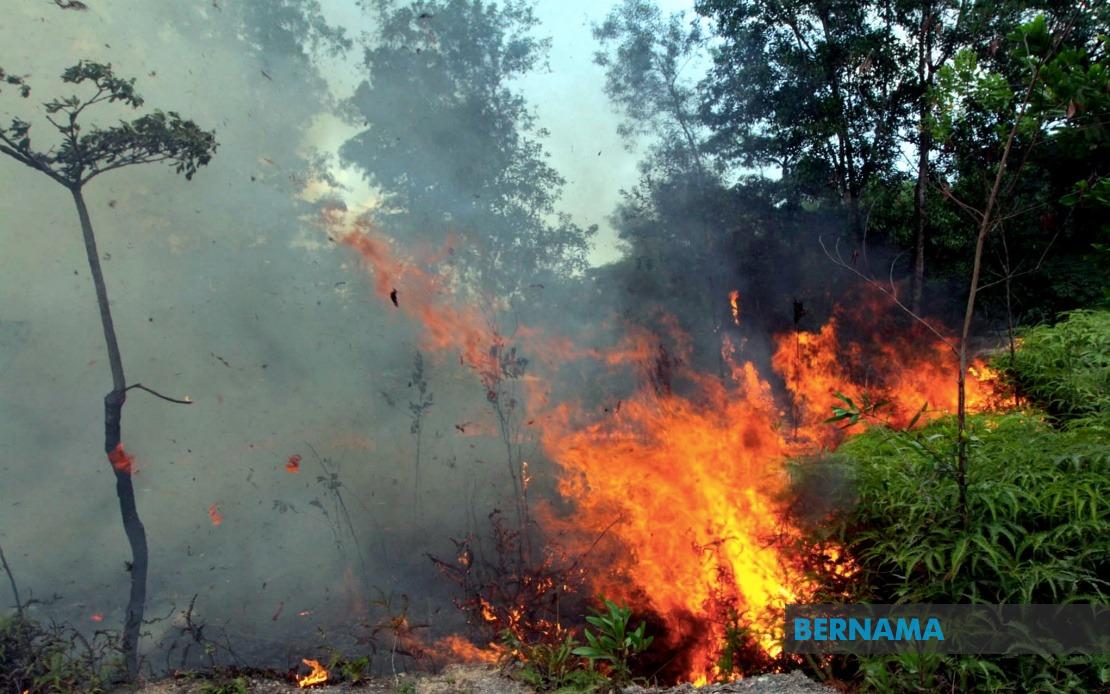
Authorities in Sabah are tightening restrictions on open burning activities as transboundary haze originating from forest fires in Indonesia's Kalimantan region begins to degrade air quality across the state. The Sabah Fire and Rescue Department (JBPM) issued the warning following observations that smoke plumes from neighbouring Indonesian territories are being transported northward by prevailing winds, creating visible haze conditions over populated areas including the state capital and surrounding municipalities.
Mohd Pisar Aziz, director of JBPM, attributed the deteriorating air quality to the combined effect of forest fire activity in southern and central Borneo alongside Sabah's current dry season conditions. The timing is particularly concerning given the elevated fire risk posed by high temperatures and prolonged periods without meaningful rainfall. He emphasised that the convergence of these factors creates an environment where even minor sources of combustion could spark larger fires, necessitating a coordinated public response to minimise ignition sources.
Real-time air quality monitoring data collected on the afternoon of August 11 indicated that Sabah's Air Pollutant Index readings remained within the moderate band, though specific locations showed elevated exposure levels. Kota Kinabalu registered the highest measurement at 83, with Politeknik Kota Kinabalu at 81 and Kimanis at 76 on the Air Pollutant Index Management System (APIMS). While these figures have not yet breached the unhealthy threshold, JBPM cautioned that these readings are expected to fluctuate depending on wind patterns and fire activity across the border.
The department has specifically flagged vulnerable population segments as requiring heightened protective measures regardless of current API classifications. Asthma sufferers, very young children, and elderly residents face compounded health risks from sustained air quality degradation, as their respiratory and cardiovascular systems are less resilient to particulate matter and gaseous pollutants. Medical professionals recommend that these groups implement preventive strategies such as wearing appropriately-rated masks and considering medication adjustments in consultation with healthcare providers.
Two districts within Sabah—Keningau and Pitas—have now officially met the meteorological criteria triggering mandatory open-burning prohibitions. The threshold, defined as seven consecutive rainless days, was reached on August 10 in both locations. This regulatory mechanism recognises that moisture in the atmosphere and soil serves as a natural fire suppressant; its absence significantly amplifies the potential for uncontrolled fire spread. The formal ban extends to the combustion of household refuse, fallen vegetation, horticultural trimmings, and construction debris—categories that collectively represent the most common ignition sources in rural and semi-urban settings.
Public health guidance from JBPM recommends scheduling outdoor pursuits, particularly strenuous activities, outside the window between 11 am and 4 pm when solar heating typically intensifies atmospheric circulation and haze concentration. Maintaining adequate hydration becomes especially important during periods of elevated air pollution exposure, as the body's natural defence mechanisms require sufficient fluid to function optimally. For those obliged to spend extended periods outdoors, the deployment of N95-standard face coverings or higher-rated respiratory protection is advised in visibly hazy conditions.
Prevention of human-caused fire initiation requires vigilance beyond official burning bans. JBPM emphasised the importance of properly maintaining electrical installations in homes and workplaces, as defective wiring represents a substantial fire hazard during dry periods. Discarded cigarette butts, particularly when carelessly disposed in vegetated areas, constitute another preventable ignition source that has historically triggered significant incidents across the region. The department urges smokers to extinguish cigarettes completely and dispose of them in designated receptacles rather than leaving them exposed.
Community participation in fire detection and reporting has proven critical to containing incidents before they escalate into major conflagrations. The public is instructed to contact JBPM immediately at 999 upon observing any suspicious fire-related activities or actual flames, regardless of size or apparent location. Early intervention during the ignition phase can mean the difference between a contained incident and a landscape-scale disaster affecting multiple communities and degrading air quality across an even broader geographic area.
The haze situation highlights the interconnected nature of environmental challenges across Southeast Asia, where prevailing monsoon patterns create conditions for transboundary air pollution that transcends national borders. Sabah's experience reflects a recurring seasonal phenomenon that affects not only the state but also other regions of Malaysia and Singapore when Indonesian forest fire activity peaks during the dry season. Addressing the root cause—unsustainable land-clearing practices and inadequate fire management in source regions—requires sustained diplomatic engagement and regional cooperation mechanisms that extend beyond individual state-level responses.

