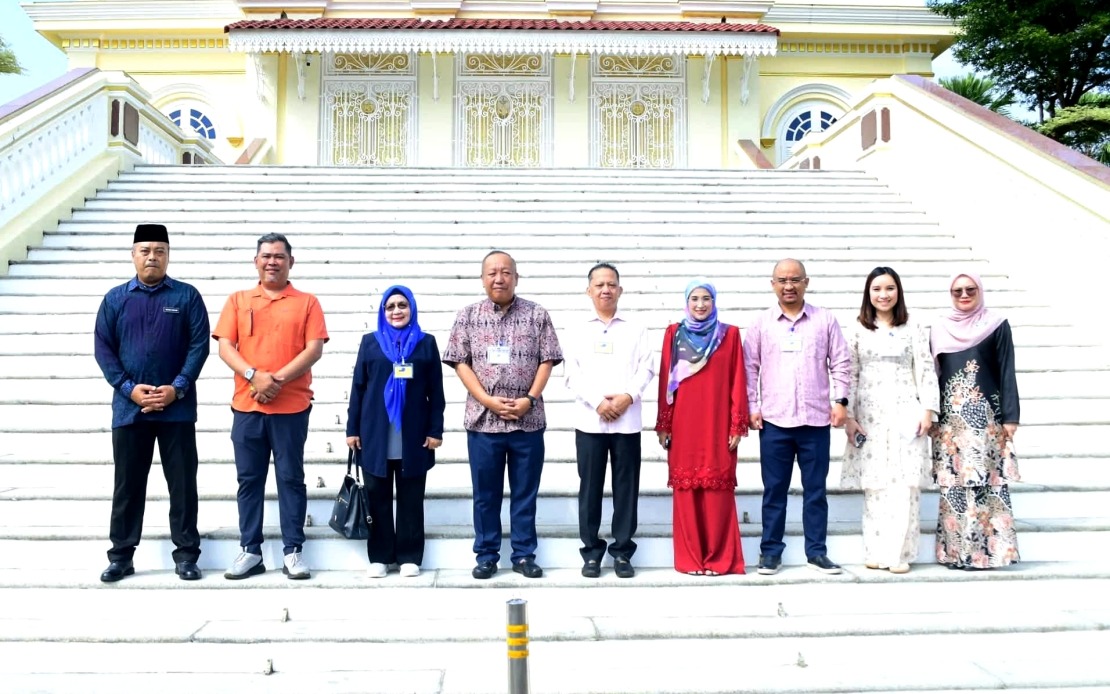
Malaysia's two major tourism hubs are pooling resources and expertise to elevate their international standing and domestic appeal. Sabah's Ministry of Tourism, Culture and Environment (KePKAS) has initiated a strategic deepening of cooperation with Tourism Johor, marking a significant shift towards coordinated regional tourism development that could reshape how Malaysia packages itself to global visitors.
Datuk Jafry Ariffin, Sabah's Minister of Tourism, Culture and Environment, outlined the rationale for this partnership as extending far beyond conventional interstate collaboration. The arrangement serves as a critical building block for Visit Sabah Year 2027, a marquee initiative designed to position the state as a premier destination within the broader Malaysian tourism ecosystem. By anchoring the partnership to this milestone event, both states are signalling their intention to harness combined marketing firepower and operational synergies during a period when international travel demand is expected to recover substantially.
The cooperation framework encompasses multiple dimensions of tourism promotion and product development. Joint marketing initiatives represent the most visible component, but the partnership ventures deeper into the strategic realms of cross-destination promotion and the creation of new tourism products that could appeal to visitor segments currently underserved by either state. This integrated approach recognises that modern tourists often seek multi-state itineraries, and competing for these travellers independently diminishes both regions' competitive advantage in Southeast Asia's crowded tourism marketplace.
A recent delegation visit from Sabah to Johor proved particularly illuminating in this regard. The working visit transcended typical courtesy protocols by incorporating substantive technical exchanges on heritage preservation and museum management. Officials toured the Muzium Diraja Abu Bakar at Istana Besar Johor, allowing Sabah's tourism administrators to observe operational best practices and conservation methodologies employed by one of Malaysia's premier heritage institutions. This knowledge transfer addresses a critical capability gap as Sabah positions cultural tourism as a central pillar of its economic diversification strategy.
The emphasis on heritage conservation carries significant implications for Sabah's tourism ambitions. Unlike beach and nature-based tourism, which Sabah already leverages effectively, cultural and heritage tourism requires institutional infrastructure, curatorial expertise, and conservation protocols that must be developed over time. By learning from Johor's established systems at Istana Besar, Sabah can accelerate the development of its own cultural tourism offerings without necessitating expensive trial-and-error approaches. This represents pragmatic inter-state cooperation focused on genuine capability enhancement rather than superficial gesture-making.
The partnership also addresses destination marketing strategy at a deeper level than simple promotional collaboration. Both states are examining how to position themselves within Malaysia's broader tourism narrative while maintaining distinct identities. Sabah's image—traditionally anchored to pristine natural environments and outdoor adventure—can be expanded to encompass cultural authenticity and heritage experiences. Johor, with its deep historical connections to the Malay sultanate system and established cultural institutions, brings complementary strengths that, when marketed in conjunction with Sabah's offerings, create a more comprehensive Malaysian tourism proposition.
For Malaysia's tourism sector broadly, this bilateral initiative signals a maturing approach to regional cooperation. Rather than competing destructively for the same traveller demographics, Sabah and Johor are constructing a framework where visitors might extend stays across both destinations, increasing total spending and visitor satisfaction metrics. This strategy becomes increasingly important as Southeast Asian competitors—Thailand, Vietnam, and Indonesia—develop more sophisticated multi-destination tourism packages that keep tourists within their borders for extended periods.
The timing of this cooperation is particularly strategic. As Malaysia emerges from the pandemic-induced tourism contraction and faces heightened competition from reopened Southeast Asian destinations, demonstration of inter-state coordination and professional tourism governance sends positive signals to international tour operators and travel agencies. It suggests that Malaysia is thinking systematically about its competitive positioning rather than allowing individual states to pursue isolated promotional campaigns.
Datuk Jafry's confidence in the partnership's economic impact extends beyond tourism arrivals to broader national growth objectives. Enhanced visitor numbers directly translate to foreign exchange earnings, employment generation in hospitality and service sectors, and ancillary benefits through local procurement and infrastructure development. For Sabah specifically, expanded tourism revenue provides economic ballast against commodity price fluctuations and serves as a vehicle for diversifying away from traditional extractive industries.
The cultural sector's elevation as an economic pillar warrants particular attention given Malaysia's historical over-reliance on natural resource tourism. Heritage and cultural experiences command premium pricing, attract higher-spending visitor demographics, and generate more sustainable employment through curatorial, conservation, and hospitality roles. By embedding heritage tourism into Sabah's Visit Year 2027 strategy through enhanced institutional capacity, the state positions itself for higher-value rather than higher-volume tourism development.
Looking ahead, the success of Sabah-Johor cooperation will likely depend on translating high-level ministerial agreement into operational protocols and joint marketing execution. The knowledge-sharing components are valuable but sustainable only if institutionalised through regular staff exchanges, formal technical partnerships between heritage institutions, and shared training programmes. The most successful outcome would see this initial bilateral arrangement expand to include other states, creating a nationwide network of tourism cooperation that reinforces Malaysia's positioning as a sophisticated, multi-faceted destination with regionally distinct yet cohesive offerings.

