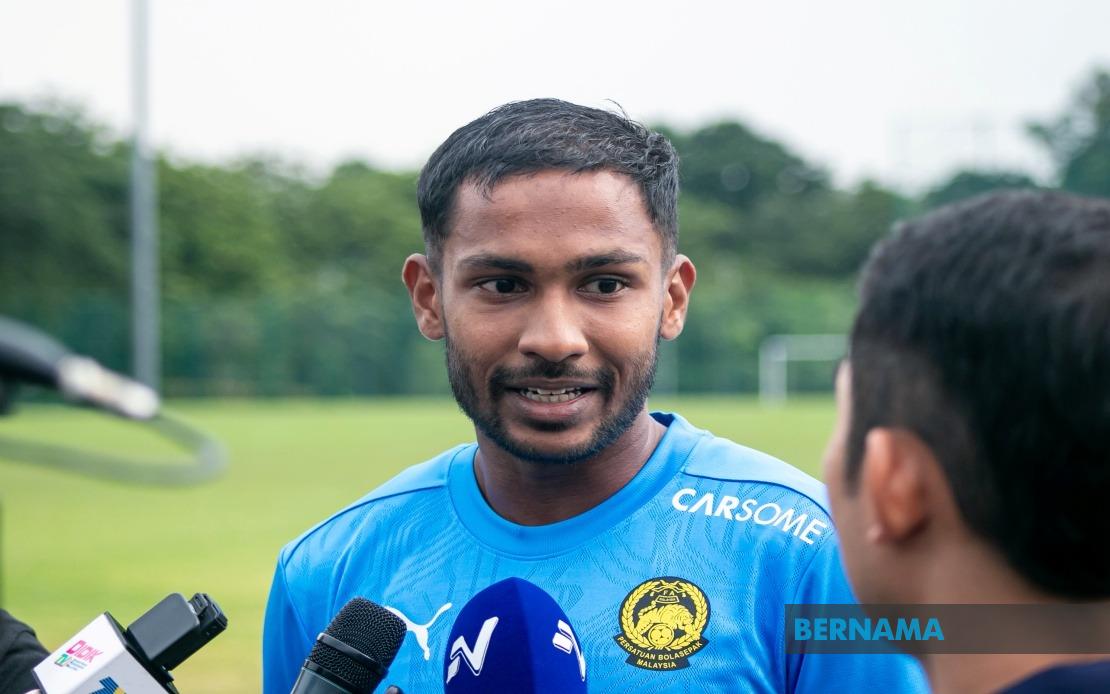
National team defender V. Ruventhiran has launched an impassioned appeal for Malaysian supporters to rally behind Harimau Malaya during the upcoming 2026 Hyundai ASEAN Cup, positioning the tournament as a moment for the entire nation to unite around a common sporting cause. Speaking during the squad's centralised training camp in Shah Alam, Ruventhiran transcended the typical athlete's call for crowd support by framing attendance at matches as fundamentally about national identity and collective pride rather than individual club loyalties or other divisive issues.
The veteran defender recognised the challenging nature of the team's opening fixture, an away encounter against Myanmar at Thuwunna Stadium on July 25, but expressed particular optimism about reclaiming the atmosphere at home venues. He emphasised the psychological and emotional value that Malaysian fans bring to domestic matches, describing supporters as the crucial "12th man" whose presence can meaningfully influence outcomes throughout the tournament campaign. This terminology carries particular resonance in Southeast Asian football culture, where home advantage and crowd intensity are recognised as tangible competitive factors.
Ruventhiran's remarks reflect broader concerns within Malaysian football about declining stadium attendance in recent years, a pattern that has affected numerous domestic and regional competitions. His intervention suggests the national team management views fan engagement not as a peripheral concern but as an integral component of their preparations and competitive strategy. By positioning the ASEAN Cup as an opportunity to restore the connection between supporters and national representatives, Ruventhiran attempted to address the apathy that has occasionally characterised Malaysian fan behaviour during international matches.
Beyond the crowd appeal, Ruventhiran articulated the mindset required from his teammates—one that accepts the weight of representing the nation while converting that pressure into positive motivation rather than debilitating anxiety. He stressed that maintaining focus on the honour associated with wearing the national badge would sustain the team through the pressures of tournament football, where individual performances compound into collective outcomes that define legacies and careers.
Meanwhile, forward Aliff Haiqal Lokman Hakim Lau's inclusion in the squad carries a different narrative arc, centred on personal redemption and recovery. The Penang FC player experienced a frustrating previous season dominated by injury complications that limited his playing time and prevented him from establishing consistent form. His call-up to the national squad therefore represents not merely a selection decision but a psychological reset point in what he perceives as his playing career trajectory.
Aliff Haiqal's commentary on his selection reveals the emotional weight these opportunities carry for players navigating the dual pressures of club and international football. He expressed profound gratitude for the call-up, acknowledging that representing the national team represents the pinnacle aspiration for Malaysian footballers. Yet beneath this conventional sentiment lay a more substantive acknowledgment—that this tournament offers him the platform to demonstrate physical and technical readiness following months of rehabilitation from injury-related setbacks.
The forward explicitly characterised the ASEAN Cup as a mechanism for turning the page on a difficult period, one that encompassed not just injury recovery but the broader challenge of rebuilding confidence and competitive sharpness. He referenced his simultaneous fresh start with Penang FC, suggesting he views the pre-season period and the ASEAN Cup as interconnected opportunities to reestablish himself as a reliable performer for both club and country. This layered approach—using one competition to drive improvements that benefit another—reflects how modern athletes navigate the complex scheduling and competitive demands of domestic and international football.
Harimau Malaya's Group B schedule presents a varied competitive examination across the tournament's early rounds. Following the Myanmar opener, the team faces Laos at the Kuala Lumpur Football Stadium in Cheras on July 28, positioning both matches as opportunities to accumulate early momentum before more daunting challenges. The subsequent fixture against Thailand at Bangkok's Rajamangala Stadium on August 1 will present the tournament's most significant test within the group stage, while the final group match against the Philippines in Cheras on August 8 offers a potential opportunity for rotation or consolidation depending on results accumulated earlier.
The tournament structure itself—with group winners and runners-up advancing to two-legged semi-finals scheduled for mid-August, followed by finals on August 22 and 26—creates a compressed competitive calendar that rewards not only technical quality but also physical endurance and tactical adaptability. Teams must peak at the right moments while managing player fatigue across multiple matches in rapid succession, factors that enhance the value of squad depth and the importance of players like Aliff Haiqal contributing meaningfully when called upon.
For Malaysian football, the 2026 Hyundai ASEAN Cup represents a crucial gauge of the national team's progression under current management and tactical frameworks. The convergence of Ruventhiran's leadership appeal and Aliff Haiqal's personal comeback narrative underscores how national team tournaments simultaneously serve collective and individual sporting purposes. Success in the competition would validate the team's developmental trajectory, while individual performances could reshape career prospects for players navigating recovery or redemption arcs.
The broader implications extend beyond immediate tournament results. Ruventhiran's appeal for fan support addresses a systemic challenge affecting Malaysian football—the need to rebuild the cultural connection between supporters and national representatives that once characterised the sport's position in local consciousness. Similarly, Aliff Haiqal's comeback storyline reflects the career precarity that injuries introduce for Southeast Asian players, for whom international opportunities represent rare windows for advancement and recognition. Together, these narratives illustrate how major tournaments function as crucibles testing not just national competitive capacity but also the resilience of individual athletes and the commitment of supporter communities.

